Hubble captures stellar nursery LH 95 in Large Magellanic Cloud
New high-resolution imagery of LH 95 provides a rare, unobstructed view of star formation, showing how massive blue giants shape their cosmic environment.
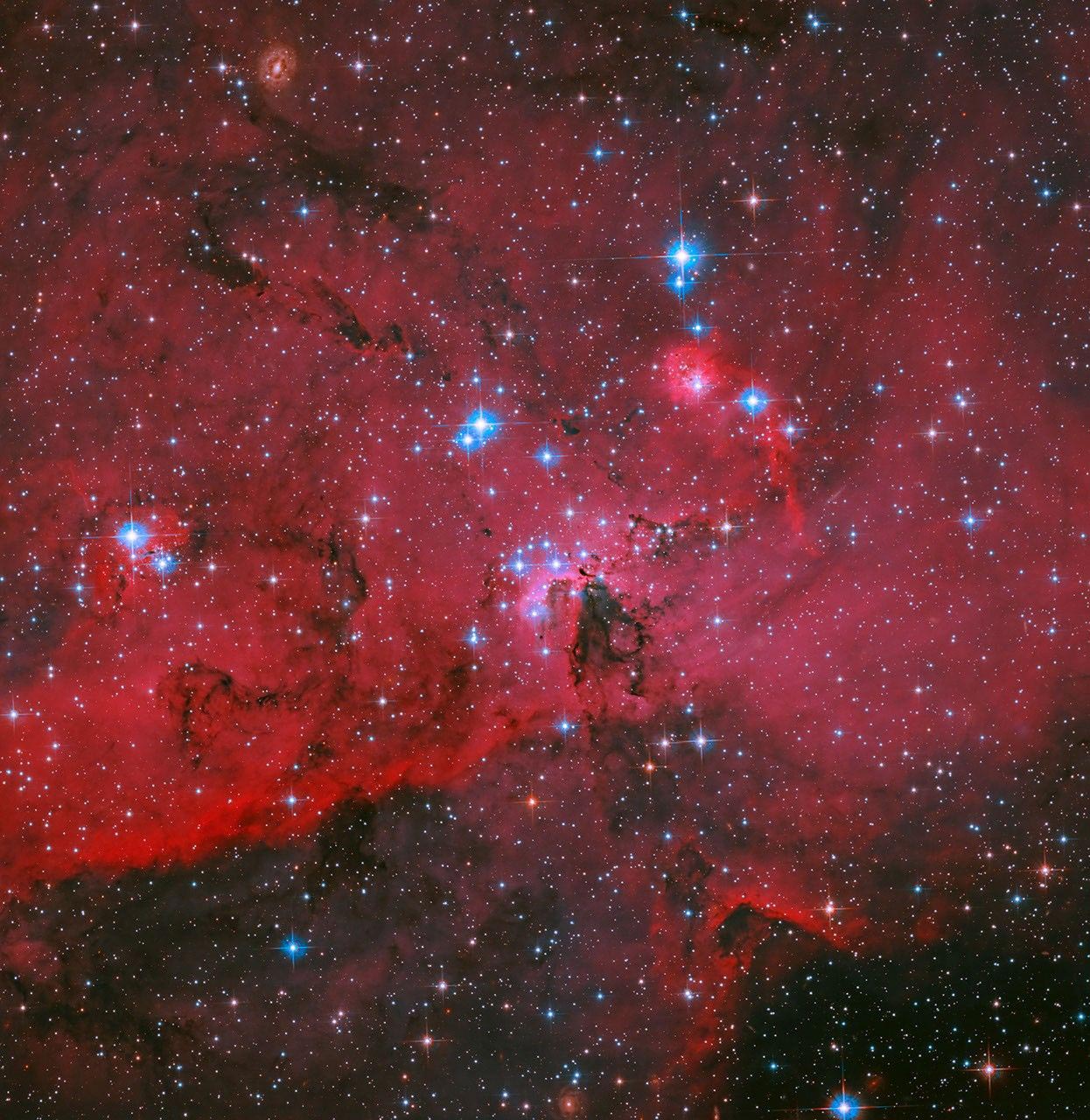
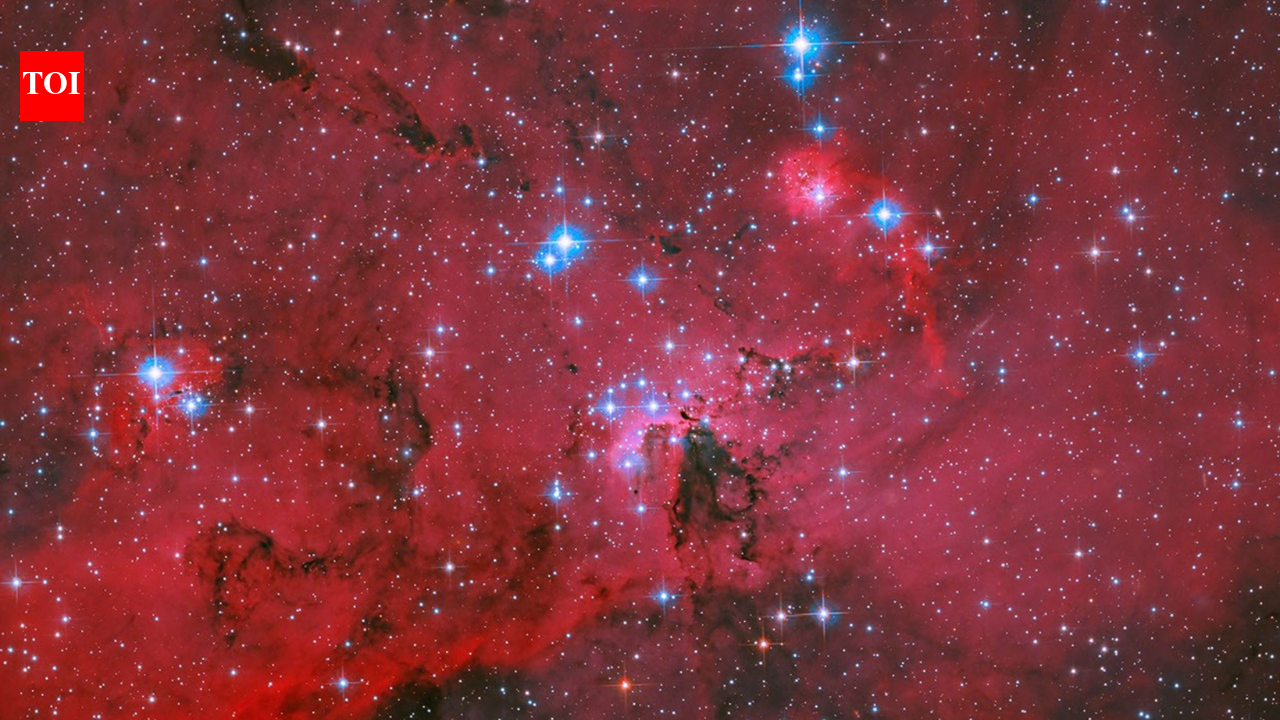
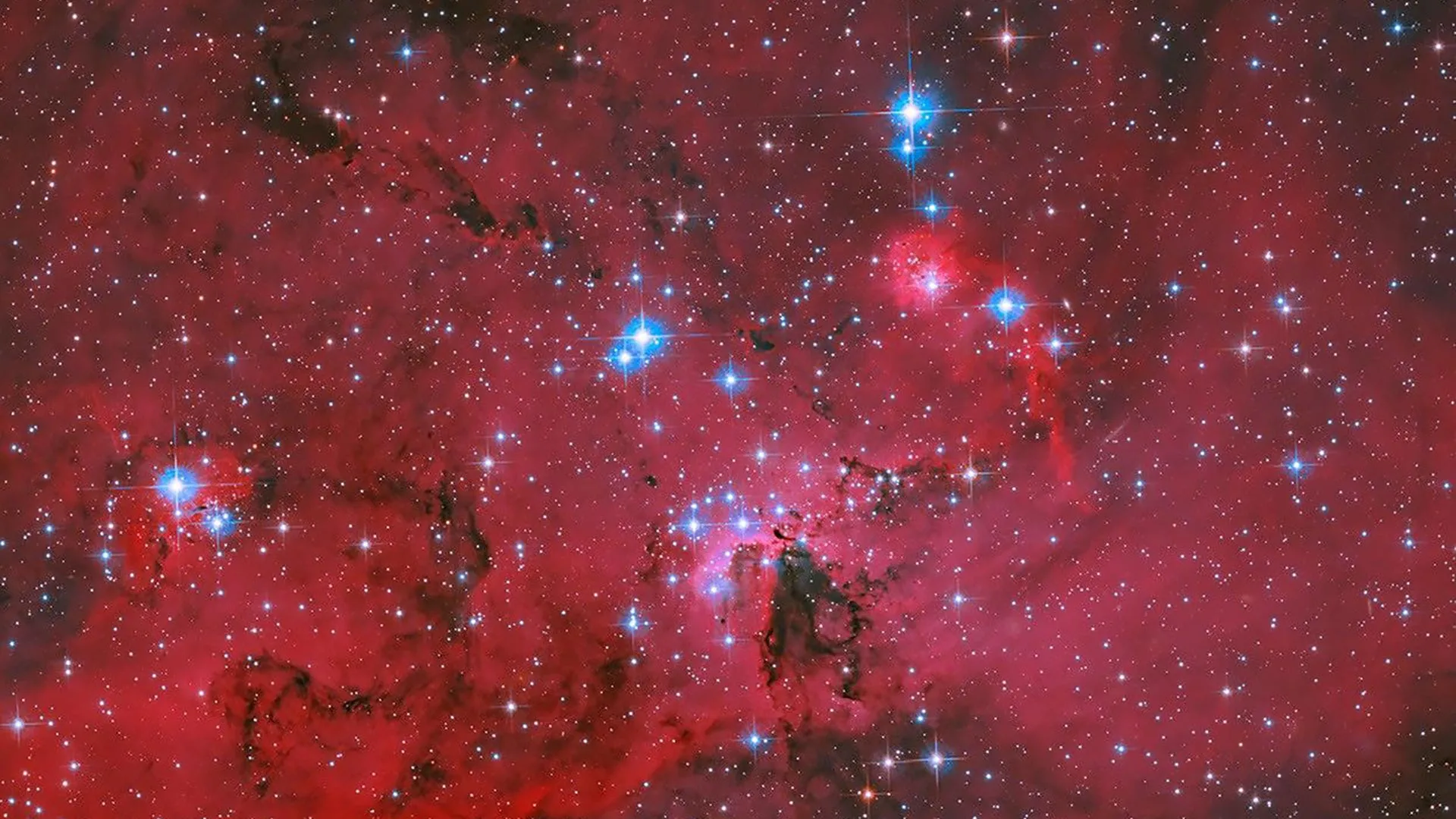
NASA's Hubble Space Telescope has released a high-resolution image of the stellar nursery LH 95, providing astronomers with an unobstructed view of the processes governing how stars are born and mature. Located within the Large Magellanic Cloud — a dwarf galaxy that orbits the Milky Way — the region appears as a display of brilliant blue and white stars set against glowing crimson clouds of hydrogen gas. NASA described the scene as resembling fireworks launched against a background of dissipating smoke.
The observations are significant because LH 95 contains less obscuring dust than similar star-forming regions found within the Milky Way. According to reporting from Scitechdaily and ScienceDaily, this clarity allows researchers to observe thousands of developing stars at various evolutionary stages within a single cosmic neighborhood.
Related YouTube video

The Mechanics of a Stellar Association
LH 95 is categorized as a stellar association, a region where low-mass infant stars coexist with massive blue giants. The most powerful stars in the nursery, each possessing at least three times the mass of the Sun, dominate the environment. These giants emit intense ultraviolet radiation and generate powerful stellar winds that heat and sculpt the surrounding hydrogen gas over time.
While the radiation erodes much of the surrounding area, dense ribbons of dust remain. These appear in the Hubble image as dark filaments that resist the energetic forces of the massive stars, creating a sharp contrast against the glowing nebula.
The image uses specific colors to represent different wavelengths of light rather than what the human eye would naturally see:
- Blue: Represents shorter visible wavelengths.
- Red: Combines longer visible wavelengths with some near-infrared light.
- Crimson Glow: The result of hydrogen-alpha emissions, which NASA identifies as a key indicator of active star formation.
Redefining Stellar Growth
By utilizing hydrogen-alpha light, astronomers were able to pinpoint very young stars embedded within the glowing gas. The study identified approximately 2,500 pre-main-sequence stars. These are objects that have accumulated nearly all of their required mass but have not yet "turned on" because they have not yet begun nuclear fusion in their cores.
These stars formed from collapsing clouds of gas and are currently contracting. Once their cores reach sufficient heat and density, they will begin fusing hydrogen to become full stars. According to Newswav, the disks of gas and dust feeding these stars also serve as the potential birthplaces for future planets.
The data from LH 95 has led to a refinement of existing stellar models. While researchers confirmed that the accretion rate, the speed at which a star gathers material, decreases as the star ages, they discovered that this process can persist for several million years. This duration is longer than some previous assumptions suggested, providing a clearer picture of how young stars build their final mass and how their surrounding disks evolve before disappearing.
Generational Overlap and Cosmic Lifespans
The observations reveal that star formation in LH 95 did not occur in a single burst of activity. Instead, the region has produced multiple generations of stars over an extended period, which now exist side-by-side. This sequential formation allows researchers to study how massive stars influence later generations through radiation and stellar winds.
A specific example of this generational gap is the most massive star in the region, located slightly left of center near the top of the image. This star contains roughly 60 to 70 times the mass of the Sun. Despite its size, it is estimated to be about one million years younger than its neighbors, which are approximately 4 million years old.
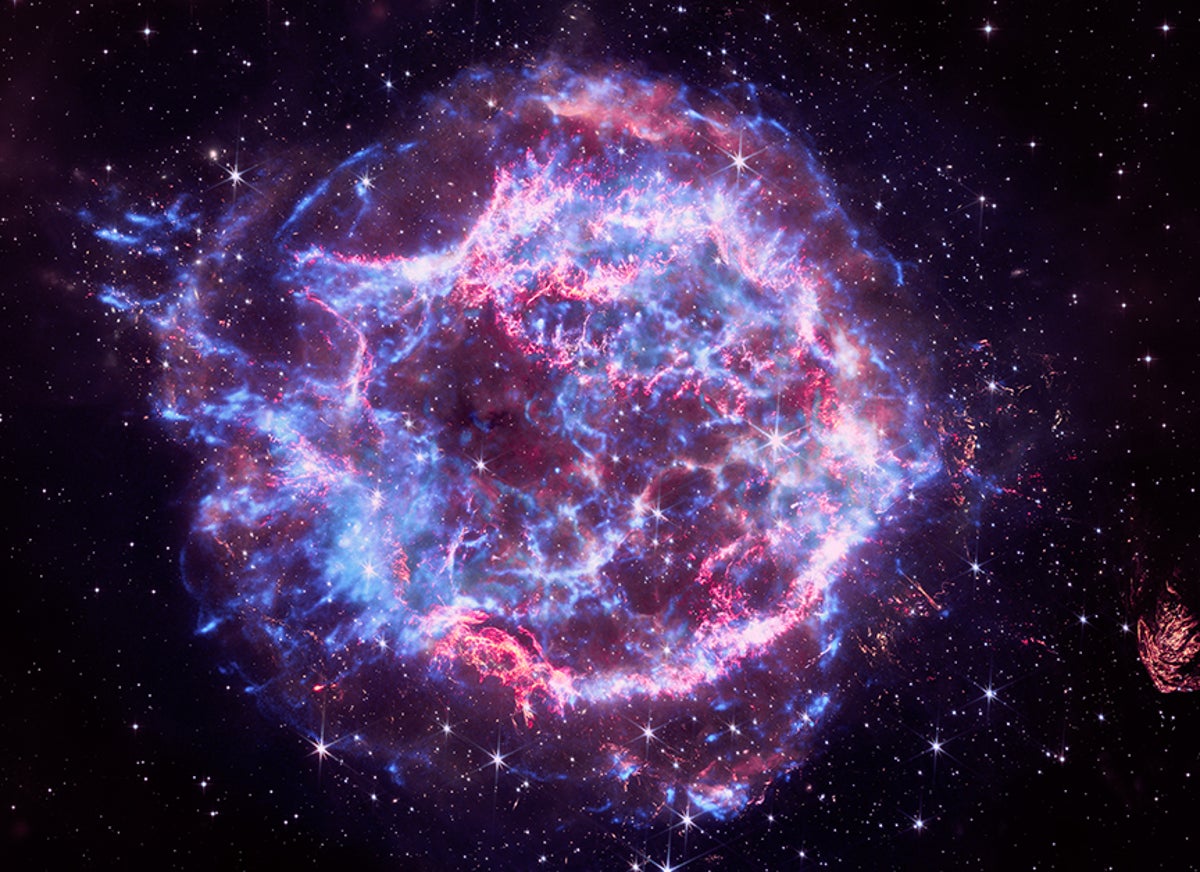
Such massive stars are characterized by rapid fuel consumption. Astronomers note that these giants will eventually end their lives in supernova explosions, which helps seed future generations of stars with heavy elements.
Future Observations
The discoveries in LH 95 are part of the ongoing legacy of the Hubble Space Telescope, which has been in orbit for more than 30 years. Hubble's work is now being augmented by the infrared capabilities of the James Webb Space Telescope.
Further expansion of these observations is expected with the launch of the Nancy Grace Roman Space Telescope, which is currently scheduled for late summer.
How significant is this development?
Contribute your assessment to the aggregated reader intelligence ledger.
Archypedia is dedicated to independent, evidence-backed reporting. This briefing was synthesized from primary source reporting, corroborated across independent newsrooms, and verified against our Editorial Standards.
Transparency record
Evidence behind this report
This report synthesizes 7 distinct sources. Open the source ledger below to compare the underlying coverage.
- science.nasa.gov
- scitechdaily.com
- sciencedaily.com
- miragenews.com
- en.bb.lv
- newswav.com
- scientificamerican.com
Prepared under the Archypedia Editorial Policy by the Niko Vale editorial desk profile. AI-assisted tools may support drafting and verification; public accountability remains with Archypedia. Report an error.