NASA's Hubble Spots Star-Spangled Cosmic Scene
To commemorate the U.S. 250th anniversary, NASA has released a high-resolution image of the massive Messier 3 globular cluster containing 500,000 stars.
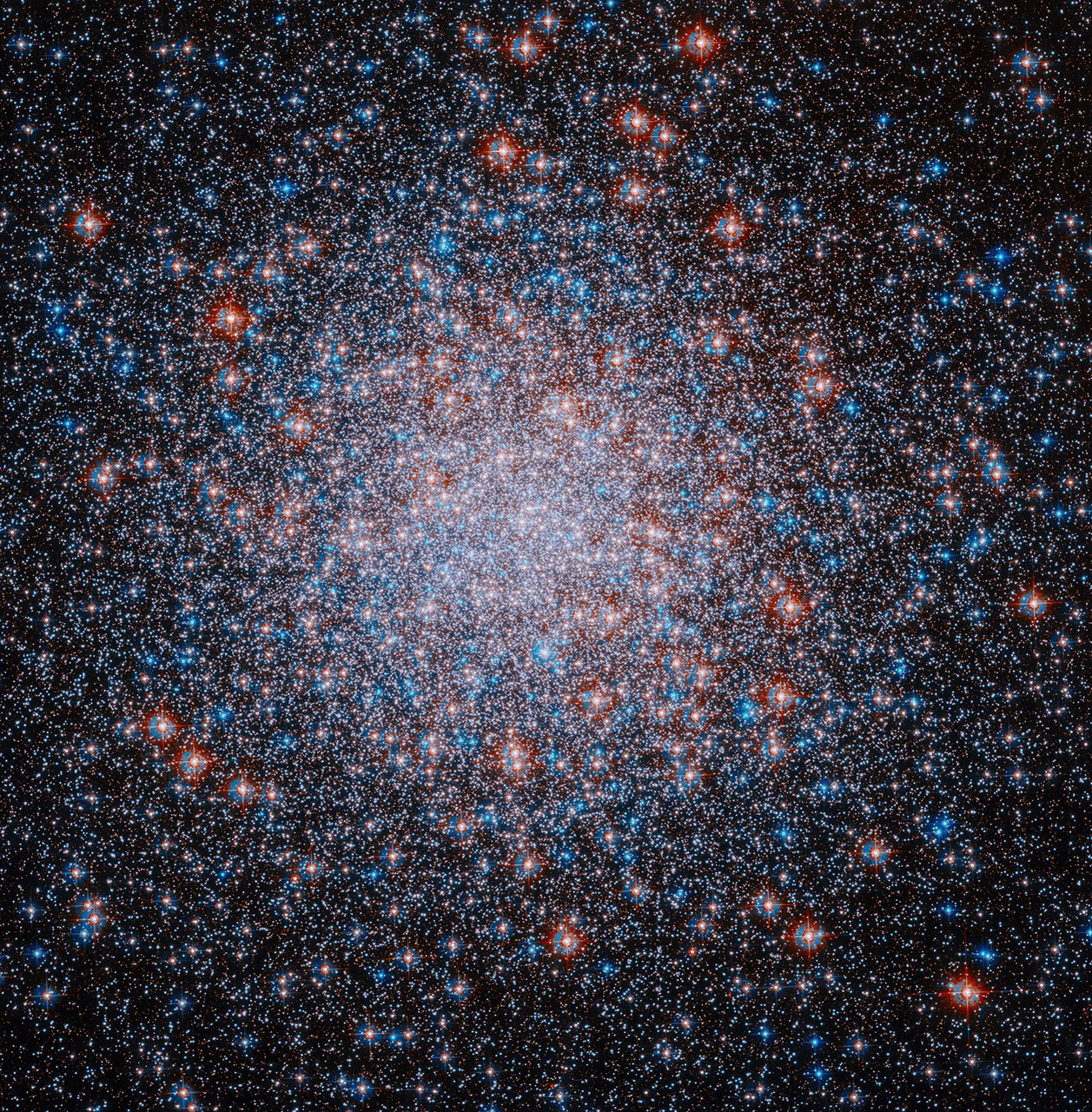
As the United States observes its 250th anniversary this July 2026, NASA’s Hubble Space Telescope has unveiled a patriotic celestial portrait. The high-resolution image captures Messier 3 (M3) — also cataloged as NGC 5272 — a massive globular cluster located in the outer regions of the Milky Way. The scene, which features more than 500,000 stars, presents a striking display of red, white, and blue hues that NASA officials are highlighting in honor of the nation's milestone.
The imagery is part of a deliberate effort to commemorate the nation's founding, with Hubble releasing 13 images for the nation's 13 original colonies. Beyond the celebratory nature of the release, the observation serves a rigorous scientific purpose. M3 is a priority for researchers because it is one of the most massive globular clusters in our galaxy and holds a unique record for its stellar population.
Related video and Instagram post

A Laboratory for Ancient Stars
Globular clusters are spherical, gravitationally bound collections of ancient stars, all believed to have formed from the same primordial cloud of gas. M3 stands out to astronomers for two specific, "oddball" characteristics:
- RR Lyrae Variables: M3 contains more than 240 of these stars, the highest count of any globular cluster in the Milky Way. Because the light of these stars fluctuates in a predictable way, their intrinsic brightness serves as a cosmic yardstick for measuring distances across the universe.
- Blue Stragglers: The cluster contains roughly 70 identified blue straggler candidates. While these stars appear youthful and bright blue, distinguishing them from the older, redder stars that make up the majority of the cluster, they are actually older stars that have been "rejuvenated" by drawing mass from companion stars.
According to NASA, the complex history of M3 may stem from a merger. Scientists theorize that the cluster is the result of two smaller groups of stars from a dwarf galaxy that was eventually consumed by the Milky Way.
The Chronology of the Galaxy
The imaging of M3 is a segment of a broader Hubble Treasury program, a long-term survey tasked with observing approximately half of the Milky Way’s globular clusters. By documenting these "fossils" of the universe, astronomers aim to construct a detailed chronology of how the Milky Way galaxy formed.
Hubble continues to work alongside other major observatories to refine these models. The James Webb Space Telescope, which excels in the infrared spectrum, is utilized to weave together a comprehensive picture of our vast universe. Looking ahead, the scientific community expects further clarity from the upcoming Nancy Grace Roman Space Telescope, which is slated for launch as early as fall 2026.
Connecting with the Cosmos
For those interested in exploring these celestial records, NASA maintains digital tools that allow public access to the archive of over three decades of observations. Users can search by birth month and date to find specific cosmic wonders captured by Hubble on their own birthdays. Additionally, those seeking a more immersive experience can visit Smithsonian Starstruck, an immersive virtual reality exhibit that debuted in Washington, D.C., in May 2026.
As researchers continue to analyze the data from M3 and similar structures, the focus remains on distinguishing between stars that formed in place and those that arrived via satellite galaxies.
How significant is this development?
Contribute your assessment to the aggregated reader intelligence ledger.
Archypedia is dedicated to independent, evidence-backed reporting. This briefing was synthesized from primary source reporting, corroborated across independent newsrooms, and verified against our Editorial Standards.
Transparency record
Evidence behind this report
This report synthesizes 6 distinct sources. Open the source ledger below to compare the underlying coverage.
- science.nasa.gov
- floridatoday.com
- vibewire.com.au
- memesita.com
- arstechnica.com
- tnblackboard.blogspot.com
Prepared under the Archypedia Editorial Policy by the Niko Vale editorial desk profile. AI-assisted tools may support drafting and verification; public accountability remains with Archypedia. Report an error.