HKU Astronomer Joins Study Weighing Ancient Black Hole
Astronomers have successfully measured the mass of a dormant supermassive black hole in the early universe by leveraging gravitational lensing.
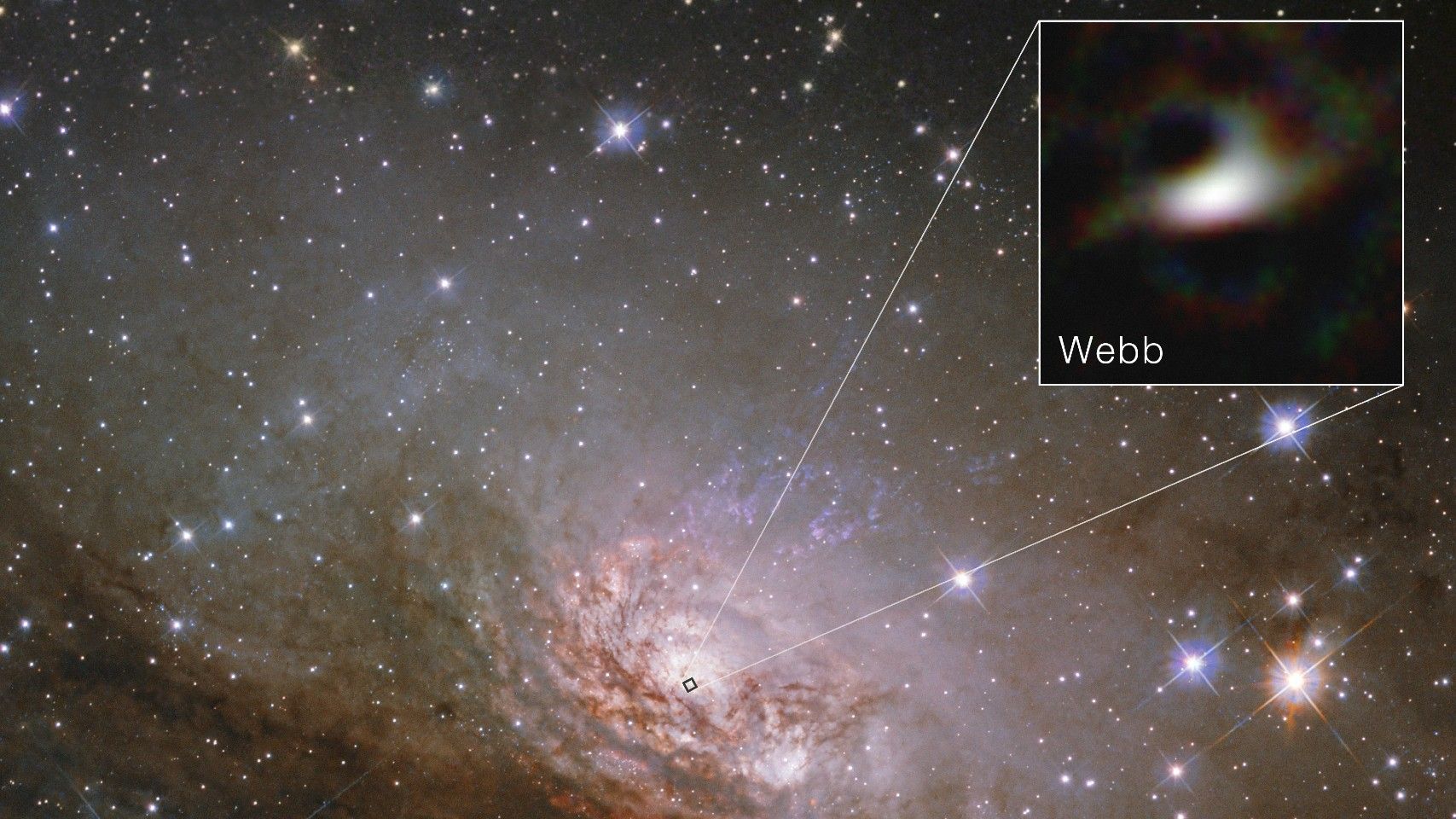
Astronomers have achieved a milestone in observational physics, successfully measuring the mass of a dormant supermassive black hole located approximately 10 billion years ago. The study, involving researchers from The University of Hong Kong (HKU) and the Hong Kong Institute for Astronomy and Astrophysics (Hkiaa), utilized the James Webb Space Telescope (JWST) to observe the galaxy MRG-M0138 as it existed when the universe was roughly one quarter of its current age.
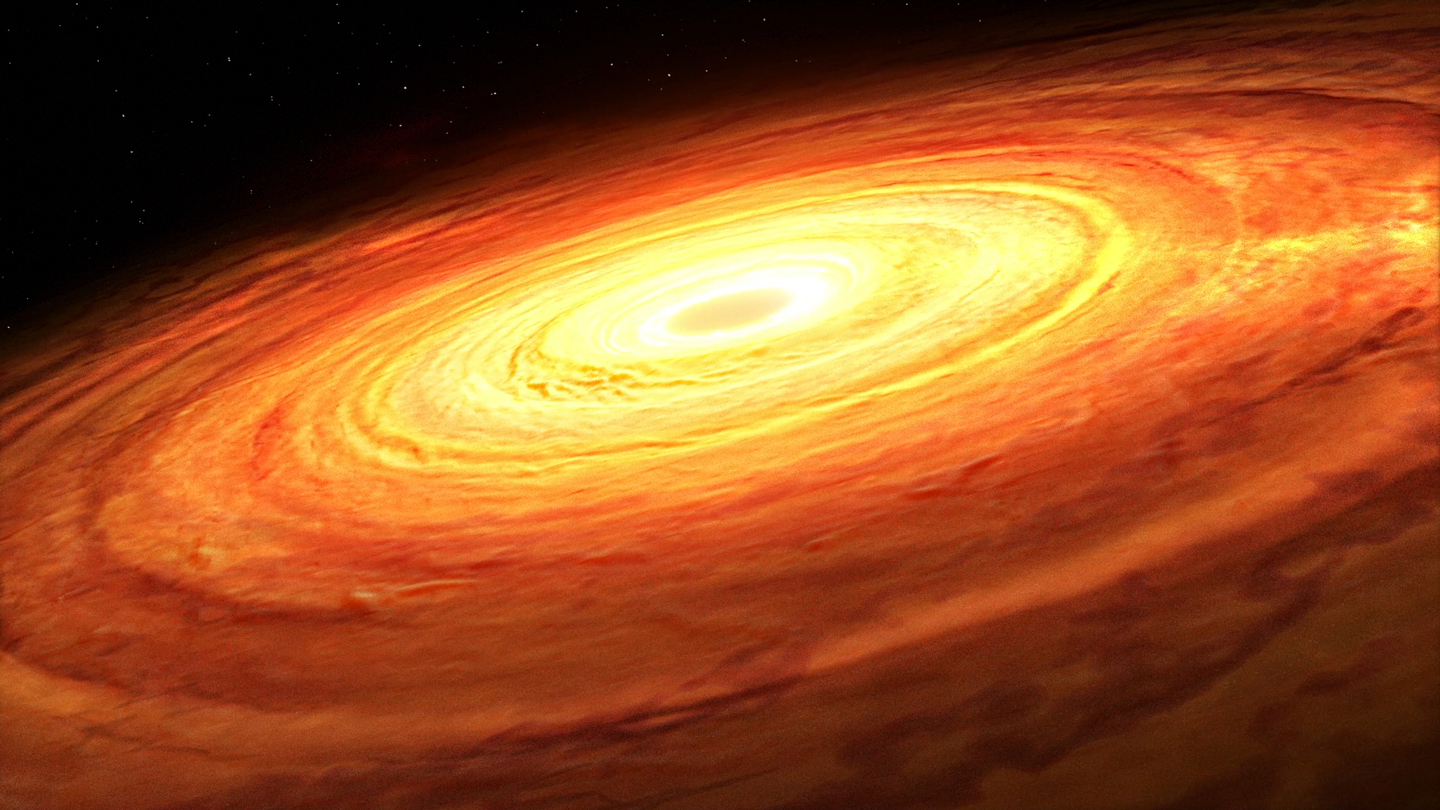
For decades, weighing inactive black holes in the distant universe has been considered an insurmountable challenge. Unlike quasars, which announce their presence through intense radiation as they consume surrounding matter, dormant black holes emit negligible light. Traditionally, astronomers have relied on tracking the movement of stars near a black hole to determine its gravitational influence, a technique used to study the supermassive black hole at the center of the Milky Way. However, resolving these stellar motions in galaxies billions of light-years away has previously been impossible.
Related media

The Cosmic Magnifying Glass
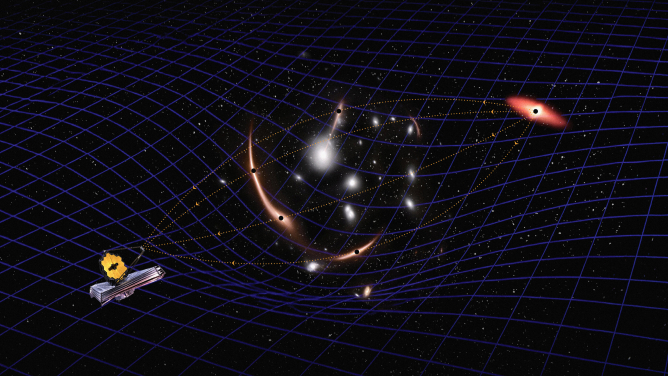
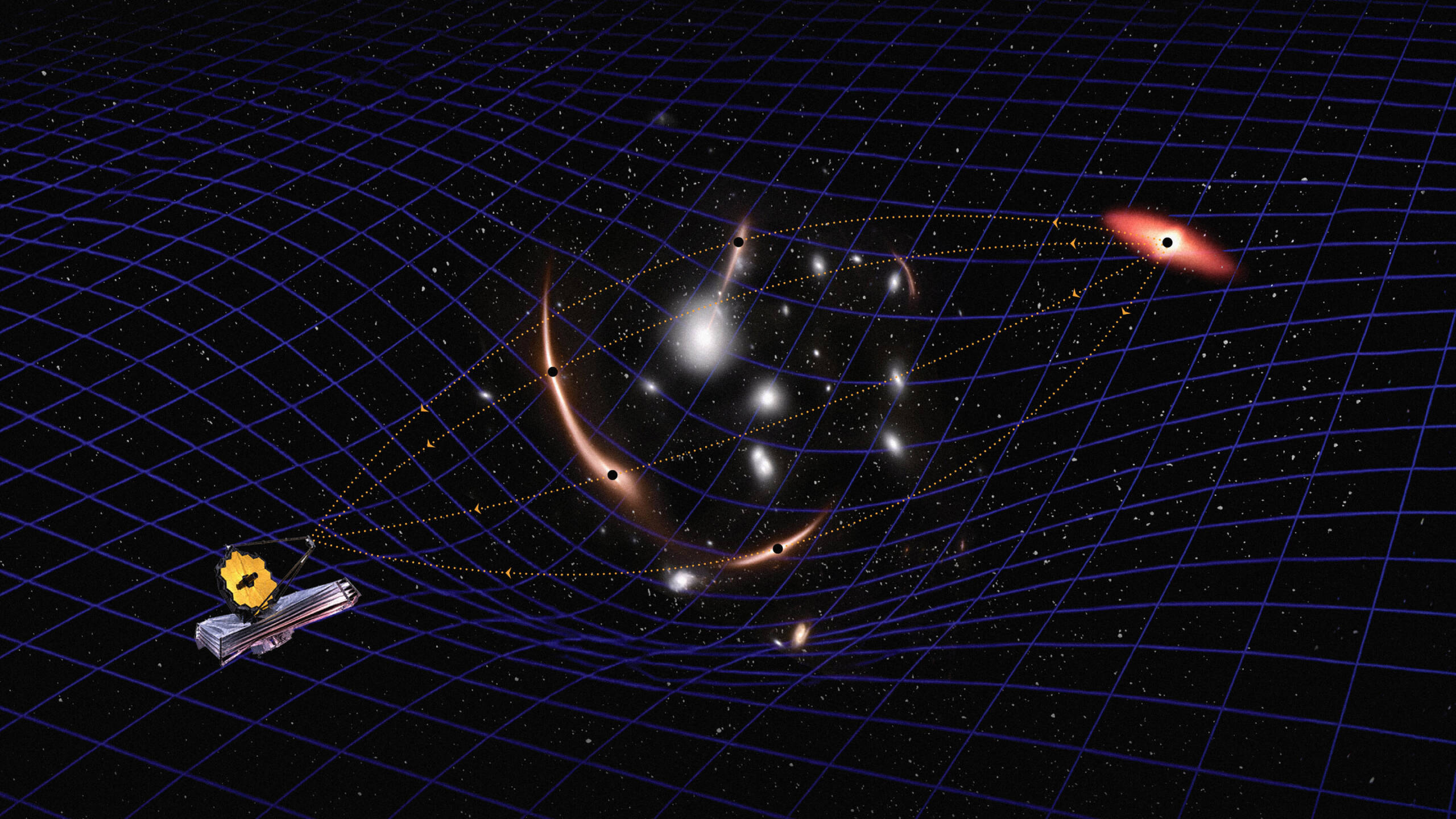
The research team, led by Dr. Andrew Newman of Carnegie Observatories, overcame these distance limitations by leveraging strong gravitational lensing. A massive foreground galaxy cluster served as a natural magnifying glass, bending and amplifying the light from MRG-M0138 by approximately 30 times. This magnification allowed the team to discern the motions of stars near the center of the distant galaxy in unprecedented detail.
The findings indicate that the dormant black hole at the center of MRG-M0138 holds a mass of approximately six billion suns. Professor Meng Gu, who participated in the study while at the HKU Department of Physics and is now at Tsinghua University, described the ability to apply this direct weighing method to such an early phase of cosmic history as a significant breakthrough. The data suggests that the central engine of the galaxy had reached a mature mass while the host galaxy was still in the process of building up its stellar population.
Compared to the mass of the galaxy’s central stellar bulge, the black hole is roughly 12 times more massive than what is typically observed in local galaxies. However, when measured against the galaxy’s stellar velocity dispersion—a metric reflecting the depth of the central gravitational potential—the black hole appears consistent with modern standards. This disparity offers a potential resolution to long-standing questions regarding whether supermassive black holes and their host galaxies evolve in lockstep or if one matures significantly faster than the other.
Unprecedented High-Energy Transients
In a separate, high-energy discovery, international teams have also analyzed a rare cosmic event designated EP250702a. Detected on 2 July 2025, by the China-led Einstein Probe space telescope, this X-ray transient displayed behavior that scientists believe characterizes an intermediate-mass black hole tearing apart and consuming a white dwarf star. Researchers from HKU and the HKIAA provided theoretical modeling for the event, which was published in Science Bulletin.
The event was notable for its rapid evolution and extreme luminosity, peaking at approximately 3 × 1049 erg s-1. Unlike typical gamma-ray bursts, this source exhibited steady X-ray emission a day before the primary explosion. Analysis suggests that the tidal forces exerted by an intermediate-mass black hole on a dense white dwarf created the observed jet energies, marking a potential first in multi-messenger astronomy.
Comparative Methods of Measurement
As the field of astrophysics advances, scientists are diversifying the techniques used to calculate black hole mass. The choice of method often depends on the black hole's state and its distance from Earth:
| Method | Application | Mechanism |
|---|---|---|
| Stellar Dynamics | Nearby galaxies / Early universe (with lensing) | Measuring orbits of stars/gas via gravity |
| Flicker Analysis | Accretion disks | Monitoring light variability in gas disks |
What to Watch Next
The success of the JWST observations in the MRG-M0138 study indicates a shift in how astronomers will approach deep-space surveys. Researchers expect that as these datasets grow, they will provide a clearer understanding of the growth timeline of galaxies and black holes.
Additionally, the study of transients like EP250702a continues to highlight the role of the Einstein Probe in identifying unpredictable high-energy phenomena, offering new avenues for locating elusive intermediate-mass black holes that have historically remained hidden from view.
How significant is this development?
Contribute your assessment to the aggregated reader intelligence ledger.
Archypedia is dedicated to independent, evidence-backed reporting. This briefing was synthesized from primary source reporting, corroborated across independent newsrooms, and verified against our Editorial Standards.
Transparency record
Evidence behind this report
This report synthesizes 9 distinct sources. Open the source ledger below to compare the underlying coverage.
- miragenews.com
- hkiaa.hku.hk
- fys.kuleuven.be
- sciencenews.org
- scitechdaily.com
- smartscience.blog
- sciencedaily.com
- universiteitleiden.nl
- scifac.hku.hk
Prepared under the Archypedia Editorial Policy by the Niko Vale editorial desk profile. AI-assisted tools may support drafting and verification; public accountability remains with Archypedia. Report an error.