Great ape laughter reveals 15-million-year-old roots of human speech
University of Warwick researchers found that rhythmic patterns in great ape laughter provide a vocal fossil for the evolution of human vocal control.
Laughter is often described as a universal language, but new research suggests it may also be the evolutionary precursor to human speech. According to a study published in the journal Communications Biology, the rhythmic patterns found in the laughter of great apes and humans offer a rare "vocal fossil" that sheds light on how our ancestors developed the vocal control necessary for complex language.
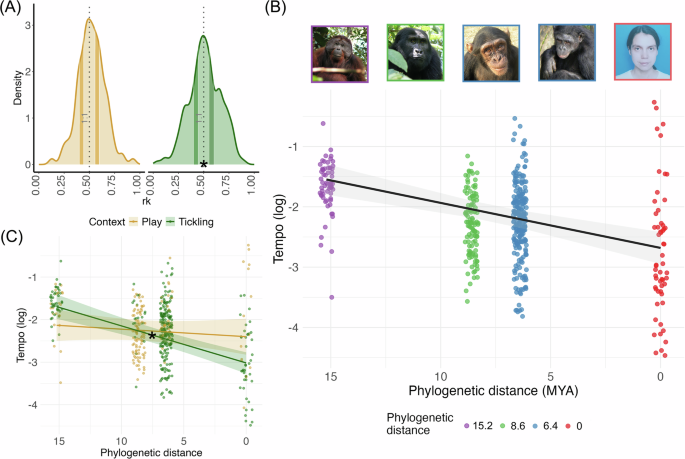
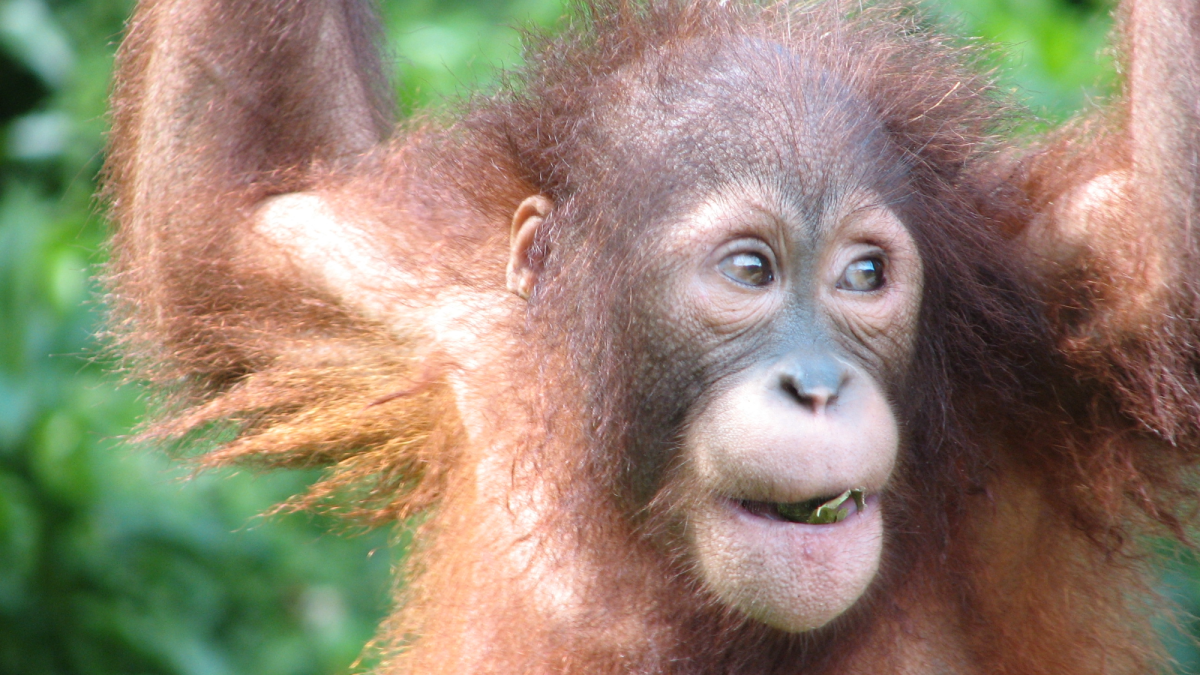
Researchers at the University of Warwick have identified that the underlying beat pattern of laughter remains consistent across all living great apes, including orangutans, gorillas, bonobos, chimpanzees, and humans. By analyzing 140 laughter sequences, the team determined that all these species produce laughter with evenly spaced, rhythmic intervals between successive sounds. This suggests that the fundamental rhythmic machinery required for vocalization was present in a shared ancestor approximately 15 million years ago.
Related media

This discovery challenges the long-held scientific notion that humans suddenly acquired the capacity for advanced vocal control. Instead, the findings suggest that humans exist on a continuum, representing a progressive refinement of vocal capacities that have been developing for millions of years. "Contrary to the classic notion that the first humans suddenly acquired vocal control capacities remarkably different from their predecessors, laughter evolution tells us that humans lay on a continuum, a prolongation of vocal control capacities that were already being cumulatively honed in for 15 million years," said Adriano Lameria, an associate professor at the University of Warwick, via Neuroscience News.
The research, which involved recording apes during playful tickling sessions and comparing them to the laughter of young children, highlighted significant departures in how modern humans use this primitive vocalization. While the basic rhythmic foundation is shared, human laughter has evolved to become faster, more variable, and highly sensitive to social context. Unlike other great apes, which primarily laugh in response to physical stimulation like play, humans can consciously modulate their laughter to convey nuanced meanings—such as a polite giggle during a meeting or a nervous chuckle after a social blunder.
"By comparing how different species laugh, we can see that a basic rhythmic structure has remained unchanged since our last common ancestor. That's extraordinary."
Chiara De Gregorio, researcher with the Department of Psychology at the University of Warwick, via Discovermagazine
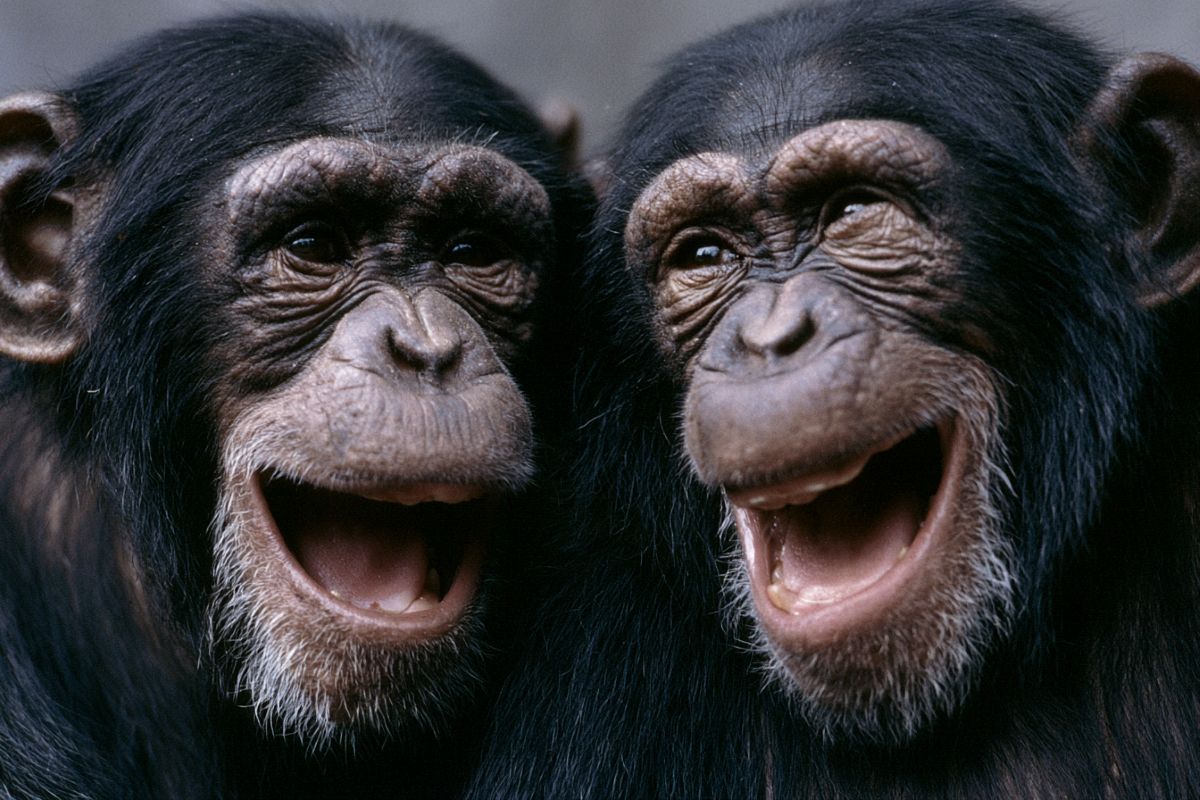
The study notes that chimpanzees and bonobos, being our closest relatives, exhibit laughter that is generally more similar to our own than that of gorillas or orangutans. However, Sunday Times reports that humans alone possess the degree of rhythmic complexity and flexibility that serves as a cornerstone for spoken communication. Because language leaves no physical fossils, researchers are relying on these living vocal patterns to trace the transition from non-linguistic expression to modern speech.
Key Observations in Primate Laughter
- Universal Rhythm: All living great apes share a rhythmic, isochronous structure in their laughter, inherited from a common ancestor 15 million years ago.
- Evolutionary Trajectory: Human laughter has accelerated and gained variability over time, moving away from the more rigid patterns seen in other apes.
- Contextual Control: Humans are the only species in the study capable of adapting laughter based on social situations, a skill linked to the development of sophisticated vocal control.
- Functional Roots: In non-human primates, laughter functions primarily as a social signal during play to maintain positive bonds and prevent aggression during rough-and-tumble interactions.
For now, the University of Warwick team plans to continue mapping these vocal transformations. The study underscores that our ability to speak is not an isolated miracle, but the result of a 15-million-year-old process of honing vocal control, one laugh at a time.
How significant is this development?
Contribute your assessment to the aggregated reader intelligence ledger.
Archypedia is dedicated to independent, evidence-backed reporting. This briefing was synthesized from primary source reporting, corroborated across independent newsrooms, and verified against our Editorial Standards.
Transparency record
Evidence behind this report
This report synthesizes 12 distinct sources. Open the source ledger below to compare the underlying coverage.
- discovermagazine.com
- nature.com
- sundaytimes.timeslive.co.za
- neurosciencenews.com
- popsci.com
- timesofindia.indiatimes.com
- aol.com
- discoverwildlife.com
- nationalgeographic.com
- forbes.com
- bbc.co.uk
- srnnews.com
Prepared under the Archypedia Editorial Policy by the Niko Vale editorial desk profile. AI-assisted tools may support drafting and verification; public accountability remains with Archypedia. Report an error.