Asteroids shaped early Earth's surface
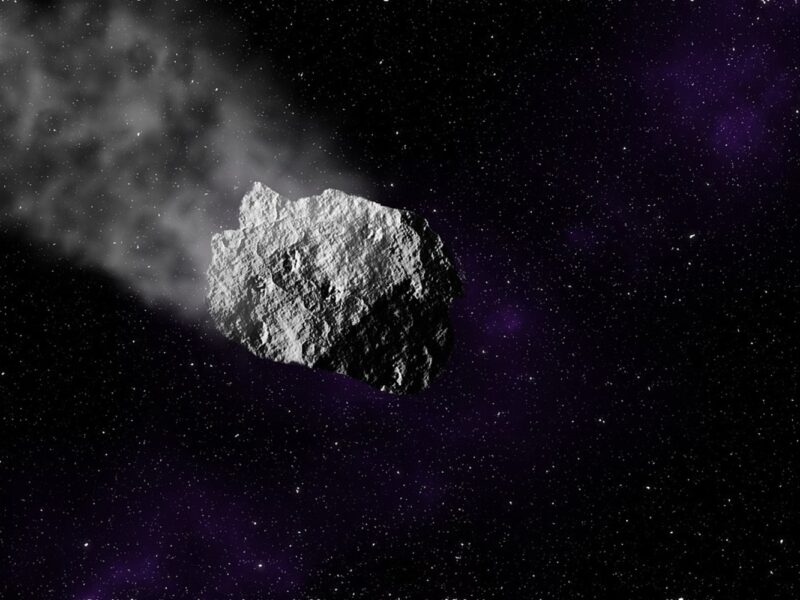
A study in Science suggests asteroid collisions kept the Hadean crust molten and unstable for millions of years, fundamentally shaping Earth's evolution. Parallel research indicates these impacts also created subterranean environments that potentially fostered the origins of life.

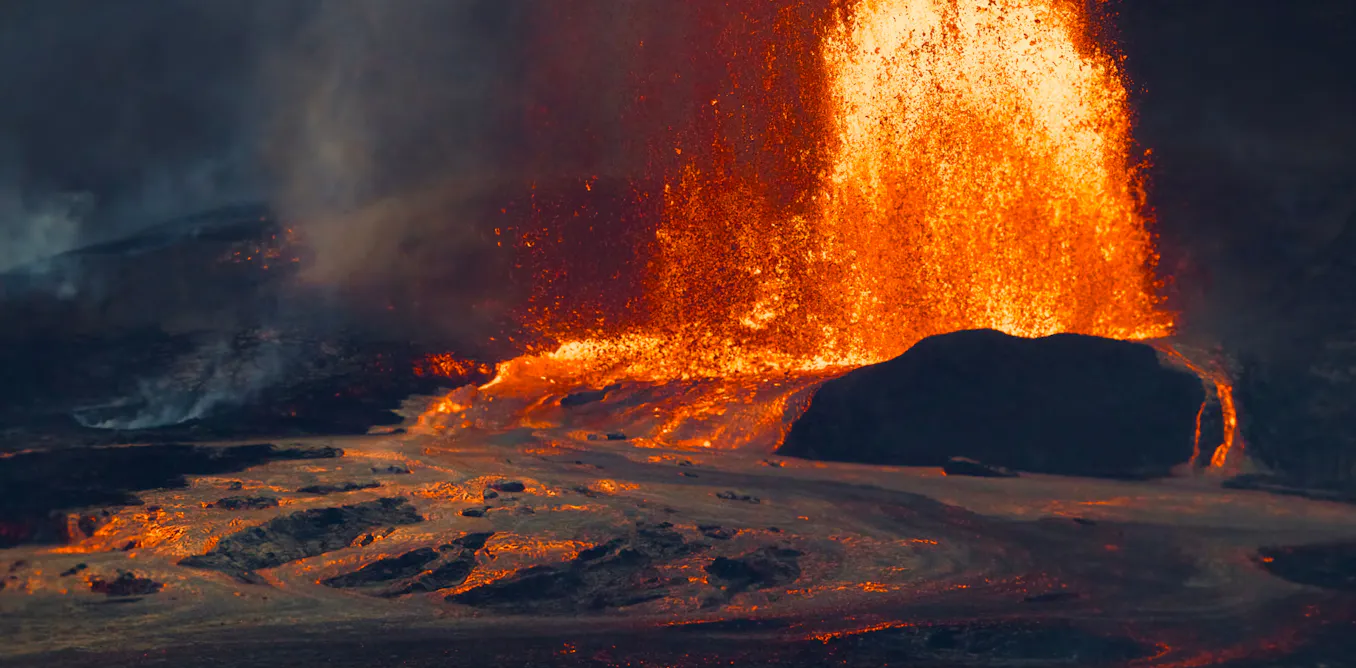
New research indicates that asteroid impacts served as the dominant force in shaping the early Earth, fundamentally altering the planet's surface and interior for hundreds of millions of years. Contrary to the view that these collisions were merely isolated, destructive surface events, a study published in the journal Science titled "Impact heating and the hidden Hadean" argues that the energy delivered by these impacts was transferred deep into the Earth's mantle. This persistent heat kept the planet's crust thin, weak, and partially molten throughout the Hadean eon, the period covering the first 500 million years of Earth's history.
Led by researchers from Curtin University, the Queensland University of Technology (QUT), and Macquarie University, the modeling suggests that the extra heat from frequent impacts surpassed all of Earth's internal heat sources combined. As Professor Tim Johnson of Curtin University noted, the energy from these early solar system collisions had to go somewhere, and its transfer into the mantle triggered the rise and melting of vast volumes of magma. This process explains the scarcity of intact rocks from the Hadean, as the crust was subjected to constant recycling and renewal. While this instability prevented the formation of stable continents early on, the researchers suggest the same process eventually enriched the crust with silica, laying the necessary groundwork for continental foundations.
Related media

The study identifies a transition occurring around 3.9 billion years ago, when the frequency of impacts in the inner solar system declined, as evidenced by the lunar surface. This timeline aligns with the appearance of the oldest preserved continental rocks on Earth. According to Professor Craig O'Neill of QUT, the early Earth did not possess strong tectonic plates in the modern sense; instead, it was a dynamic, mobile, and repeatedly reshaped environment.
Parallel research published in AGU Advances by scientists at the Southwest Research Institute offers further context regarding the potential biological implications of this bombardment. Lead author Amanda Alexander and her team used shock physics modeling to quantify how impacts fractured the crust, creating widespread hydrothermal systems. These underground networks of hot, circulating water, fueled by both impact heat and internal geothermal gradients, may have provided critical environments for prebiotic chemistry. The researchers estimate that around 4.3 billion years ago, the upper 8 kilometers of the Earth's crust were highly permeable, with significant portions remaining open to fluid flow until 3.5 billion years ago.
While the study from Curtin University and QUT focuses on the geological delay of continental formation, the research from the Southwest Research Institute shifts the narrative toward the creative capacity of these violent events. Together, these findings characterize the early Earth as a planet transformed by a cycle of destruction and renewal, where the same forces that kept the crust from stabilizing for millions of years simultaneously constructed the chemical and physical architecture required for the origin of life.
Scientists intend to continue refining these models to better understand how impact-induced permeability influenced the geochemical evolution of the near-surface environment. These findings also inform the search for life on other planetary bodies, as researchers suggest that impact craters on Mars or other moons may offer similarly promising environments to investigate the conditions under which life first emerged.
How significant is this development?
Contribute your assessment to the aggregated reader intelligence ledger.
Archypedia is dedicated to independent, evidence-backed reporting. This briefing was synthesized from primary source reporting, corroborated across independent newsrooms, and verified against our Editorial Standards.
Transparency record
Evidence behind this report
This report synthesizes 12 distinct sources. Open the source ledger below to compare the underlying coverage.
- eurekalert.org
- newsbytesapp.com
- yahoo.com
- curtin.edu.au
- theconversation.com
- courthousenews.com
- smbtech.au
- indiatoday.in
- sciencedaily.com
- swri.org
- earth.com
- scitechdaily.com
Prepared under the Archypedia Editorial Policy by the Niko Vale editorial desk profile. AI-assisted tools may support drafting and verification; public accountability remains with Archypedia. Report an error.