
Science
Great apes and humans share rhythmic laughter patterns dating back 15 million
A study identifying shared rhythmic structures in the laughter of humans and great apes suggests our vocal control evolved gradually over millions of years.
A study identifying shared rhythmic structures in the laughter of humans and great apes suggests our vocal control evolved gradually over millions of years.
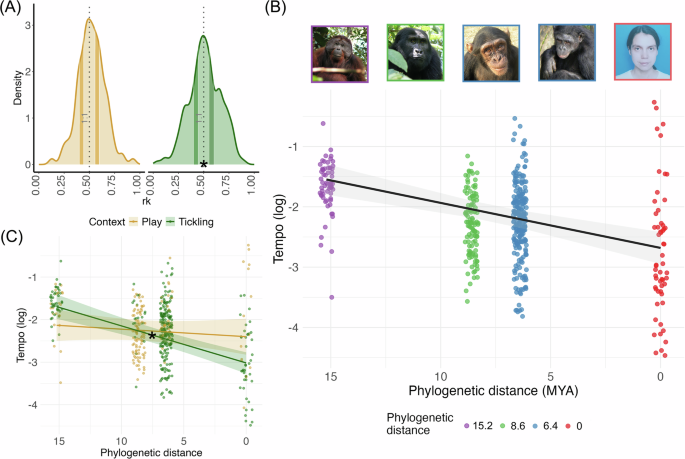
University of Warwick researchers found that rhythmic patterns in great ape laughter provide a vocal fossil for the evolution of human vocal control.

A study of humans and great apes has found that rhythmic laughter is an ancient, shared trait that evolved 15 million years ago. Researchers used tickle-induced vocalizations to uncover the biological roots of our vocal control.