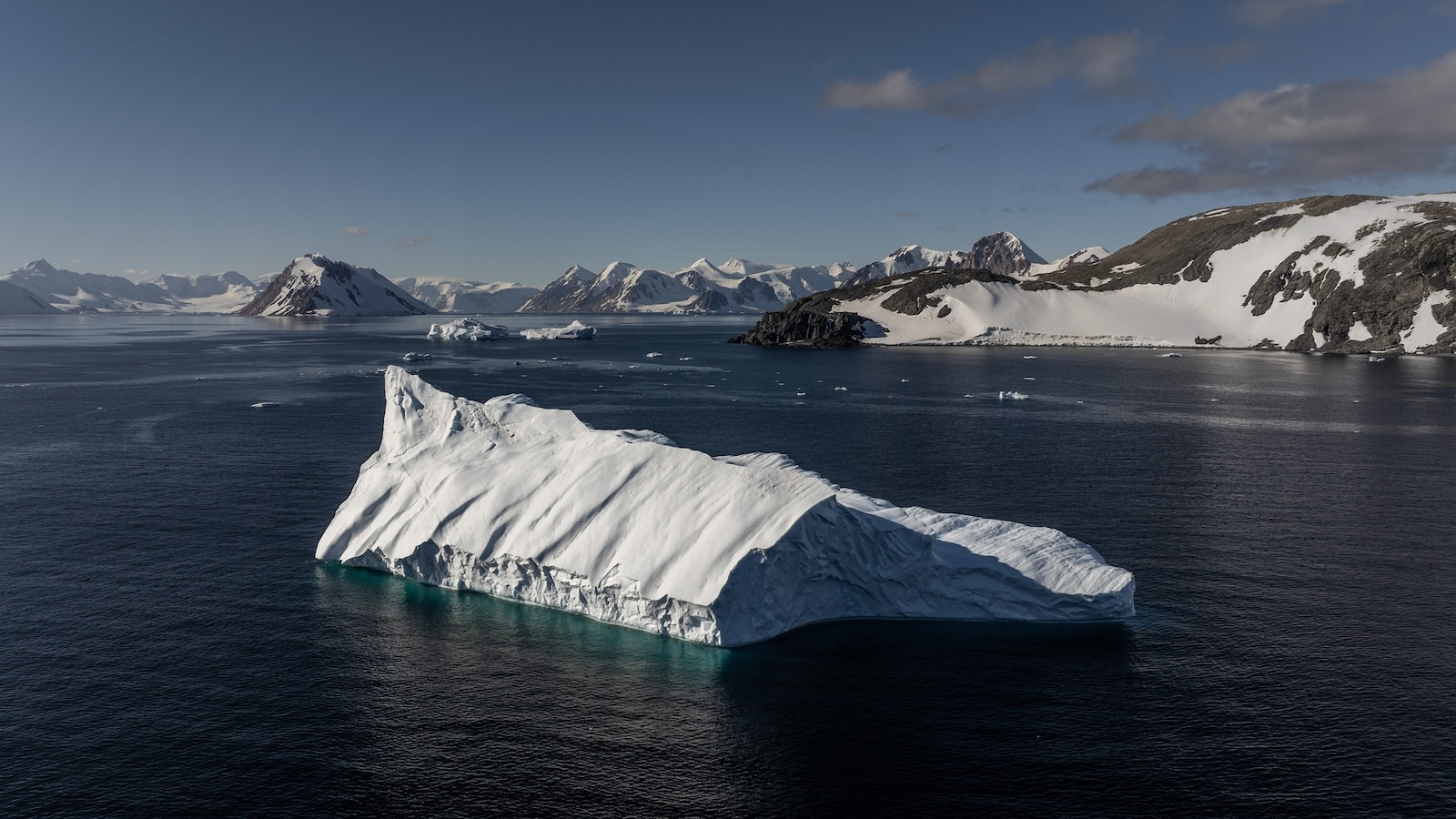
Pine Island Glacier retreat accelerated by human activity study finds
A study from Northumbria and Bangor University identifies human activity as a key driver behind the retreat of the Pine Island Glacier. Scientists warn this ice loss is part of an irreversible process that contributes to global sea-level rise.

The Pine Island Glacier, a critical artery draining the West Antarctic Ice Sheet into the Amundsen Sea, is currently experiencing an accelerated retreat that research now links directly to human-driven climate change. Scientists warn that this shift is not merely a modern phenomenon but the continuation of an irreversible process that began decades ago. As the glacier stands as one of the single largest contributors to global sea-level rise, the confirmation of its vulnerability to human influence suggests that the impacts of contemporary greenhouse gas emissions will persist for centuries.
A History of Irreversible Change
Recent research published in The Cryosphere provides the first direct quantitative link between human activity and the retreat of a major Antarctic outlet glacier. By comparing simulation models that account for human-driven warming against scenarios that exclude it, researchers determined that human-induced climate change intensified the glacier's landward withdrawal by approximately 18-20% since the 1940s. This adds several kilometers to the glacier’s retreat, a scale of change deemed highly unlikely to have occurred without the influence of global industrial activity.
Related media


The historical context of this retreat is equally significant. According to investigations by Northumbria University and Bangor University, the glacier passed a definitive "tipping point" between the 1940s and the 1970s. During this period, the glacier — which previously sat on a seabed ridge for an estimated 5,000 to 10,000 years — detached from that stable position. The trigger for this movement was likely a climate anomaly in the 1940s, potentially linked to a large El Niño event, which allowed warm ocean water to circulate beneath the ice shelf. Once this process began, the resulting mass loss became irreversible, meaning that even if temperatures had cooled, the glacier could not have returned to its original position.
Mechanisms of Instability
The phenomenon behind this decline is known as "marine ice sheet instability." Once a glacier retreats past a certain point, it can enter a state of self-sustaining collapse regardless of whether the initial climate trigger is reversed. As Dr. Alex Bradley of King's College London noted, the study highlights how human-influenced ocean warming, which is thought to have begun in the 1960s, further accelerated the retreat after the initial detachment.
"Our results show that climate change made the retreat of the Pine Island Glacier substantially worse. Without sustained warming of the surrounding ocean since the mid twentieth century, the glacier would not have retreated as far as it has."
Dr. Alex Bradley, lead author of the study, via Brightsurf
While the glacier experienced a temporary period of stabilization in the 1990s as it encountered a different section of bedrock, experts caution that this pause is deceptive. Professor Hilmar Gudmundsson of Northumbria University describes the stabilization as a result of the specific topography under the Amundsen Sea, noting that it was, in effect, a matter of luck that the retreat did not continue unabated during that time.
Future Implications and Global Reach
The research into the past serves as a diagnostic tool for predicting future stability. Models suggest that Pine Island Glacier may see another brief period of stabilization later this century, but this is expected to be temporary if global warming continues unchecked. Researchers warn that as the planet moves into the twenty-second century, human influence is projected to become the dominant driver of retreat once more.
| Period | Event |
|---|---|
| Prior to 1940s | Glacier remained stable on a seabed ridge for millennia. |
| 1940s–1970s | Glacier reached a tipping point; detached from the ridge due to warm water intrusion. |
| Late 1980s–1990s | Retreat slowed as the grounding line hit a shallower section of bedrock. |
| Future | Predicted further irreversible loss unless global warming is capped. |
What to Watch Next
- Monitoring Grounding Lines: Scientists continue to track the grounding line, the point where the glacier begins to float, as its position is the primary indicator of further destabilization.
- Policy Developments: Following discussions at major climate summits like COP28, further international efforts are expected to assess the probability of large-scale ice sheet collapses through projects like TiPACCs (Tipping Points in the Antarctic Climate System).
- Emission Targets: Ongoing modeling will test whether limiting global warming within specific thresholds can prevent the glacier from crossing future, even more significant, tipping points.
For now, the consensus among the scientific community is that the retreat of Pine Island Glacier is not a gradual, measured response to climate change, but a high-stakes process that, once pushed past a critical threshold, accelerates independently. As Dr. Brad Reed stated, the ability to model these past events gives researchers higher confidence in their future predictions, and those predictions indicate that the window for preventing further irreversible damage is closing.
How significant is this development?
Contribute your assessment to the aggregated reader intelligence ledger.
Archypedia is dedicated to independent, evidence-backed reporting. This briefing was synthesized from primary source reporting, corroborated across independent newsrooms, and verified against our Editorial Standards.
Transparency record
Evidence behind this report
This report synthesizes 8 distinct sources. Open the source ledger below to compare the underlying coverage.
- brightsurf.com
- miragenews.com
- bangor.ac.uk
- newsroom.northumbria.ac.uk
- yahoo.com
- creators.yahoo.com
- scitechdaily.com
- science.thewire.in
Prepared under the Archypedia Editorial Policy by the Niko Vale editorial desk profile. AI-assisted tools may support drafting and verification; public accountability remains with Archypedia. Report an error.