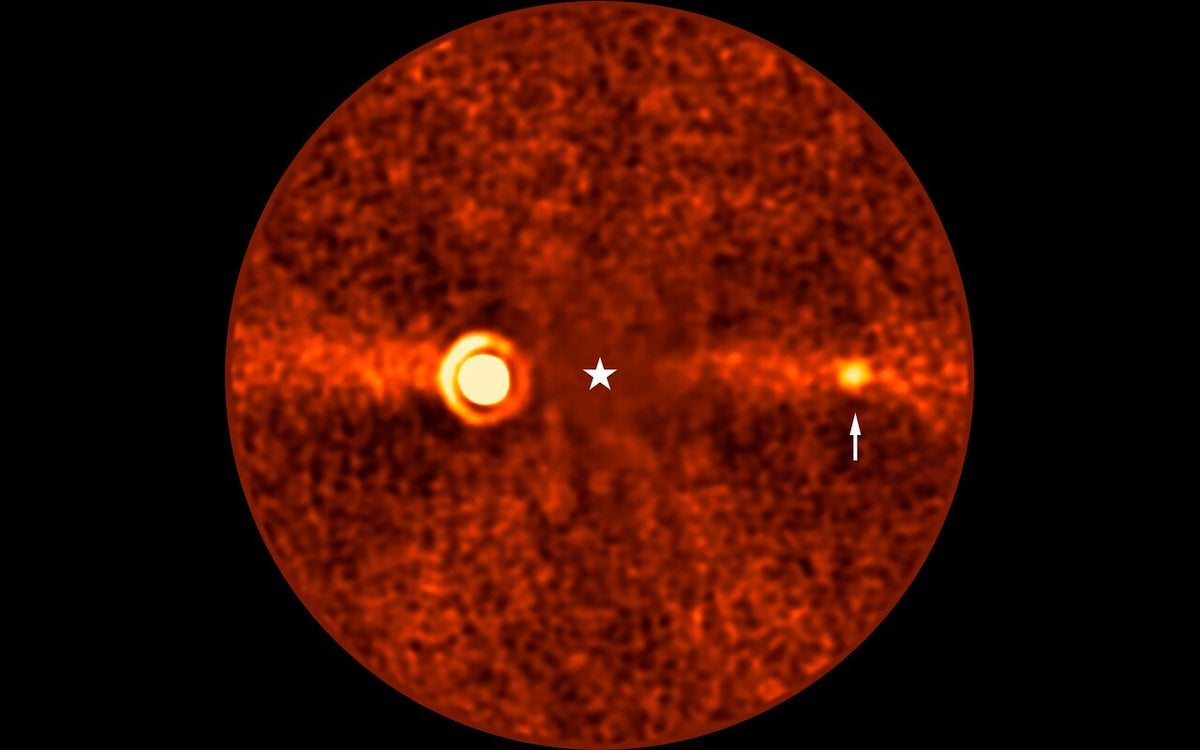
GJ 3378b identified as potentially habitable super-Earth 25 light-years away
New research indicates that GJ 3378b is a rocky super-Earth rather than a gas giant, making it a key candidate for future studies of habitability.
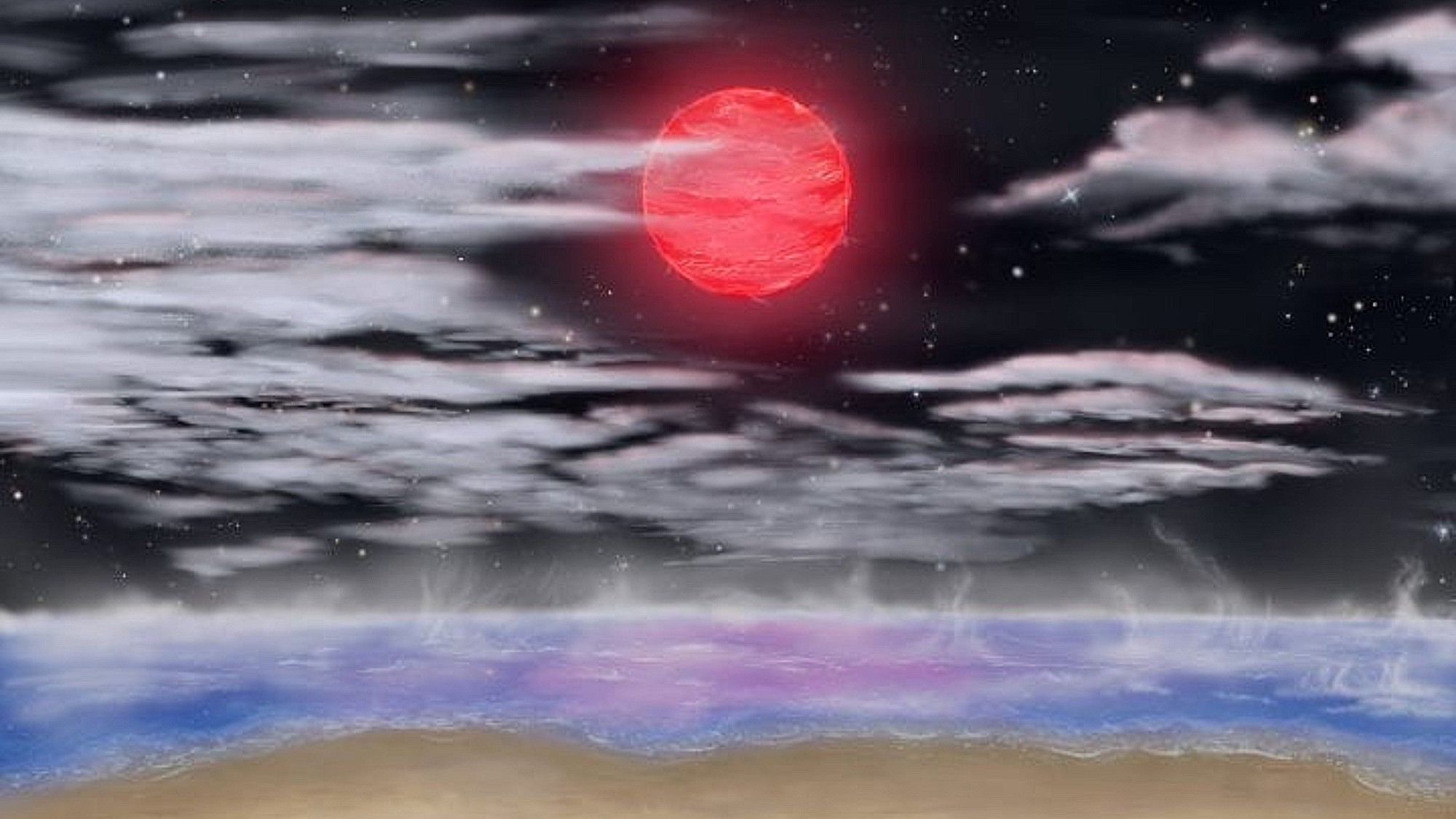
Astronomers have identified a potentially habitable world located 25 light-years from Earth, a distance described as a "next-door neighbor" in the scale of the Milky Way galaxy. The exoplanet, designated GJ 3378b, orbits a faint red dwarf star in the constellation Camelopardalis. While the world was initially detected in 2024 using the Canada–France–Hawaii Telescope, recent analysis by a team led by the University of California, Irvine, has fundamentally revised the understanding of the planet’s physical properties.
The updated findings, reported on 30 June in The Astrophysical Journal, indicate that GJ 3378b is a "super-Earth" with a mass approximately 2.3 times that of our home planet. This is a significant departure from original estimates, which had placed the mass at 5.26 times that of Earth, suggesting a mini-Neptune composition. By using the Habitable-zone Planet Finder on the Hobby-Eberly Telescope at the McDonald Observatory in Texas and the NEID Spectrometer on the WIYN Telescope at Kitt Peak National Observatory in Arizona, researchers determined that the planet’s smaller mass points toward a rocky composition rather than a gas-dominated one.
Related media



The discovery is particularly notable due to the planet's location within its host star's habitable zone, the region where temperatures may allow liquid water to persist on a surface. Observations revealed that the planet completes an orbit every 21 days — a revision from the previously recorded 25-day period. This orbital shift confirms that the planet remains well within the "sweet spot" for potential habitability, receiving roughly 90 percent of the radiation that Earth receives from the sun.
Despite the excitement, researchers maintain a cautious outlook regarding the presence of life. The planet resides at what scientists term the "cosmic shoreline," a precarious boundary near red dwarf stars where intense stellar winds and radiation can potentially strip away an atmosphere. Paul Robertson, associate professor of astronomy at the University of California, Irvine, noted that while an atmosphere is essential for life, it remains currently impossible to determine if GJ 3378b possesses one. "If a planet in the habitable zone has a proper atmosphere, we can justify further research looking for biosignatures," said Gogod James, a student in the research group.
The detection method for GJ 3378b did not involve a transit — where a planet blocks a portion of its star's light, but instead relied on measuring the gravitational "wobble" the planet induces on its host star. Because the planet does not cross the face of its star from our perspective, traditional transit spectroscopy cannot be used to analyze its atmosphere. Consequently, the astronomical community faces a significant waiting period to determine if the planet is truly a viable environment for life.
What to watch next
- Atmospheric Analysis: Current technology cannot confirm an atmosphere for GJ 3378b. Researchers expect that the question of its habitability will remain open for years to come.
- Future Observatories: Astronomers are looking toward the launch of NASA’s Habitable Worlds Observatory in the 2040s. This platform is expected to possess the imaging capability necessary to confirm the existence of an atmosphere and search for chemical biosignatures.
- Ongoing Survey: The scientific team continues to prioritize the reconnaissance of the local solar neighborhood to identify similar nearby targets that offer the highest probability for detecting signs of biological activity.
The discovery contributes to a broader effort by the international scientific community to characterize the exoplanets that populate the solar neighborhood. As Michael Endl of the University of Texas at Austin stated, "We really want to know, are we alone in the universe? We are still in the reconnaissance phase of our solar neighborhood." For now, GJ 3378b serves as a primary candidate for future study, representing a concrete step in the ongoing search for habitable worlds beyond our own.
How significant is this development?
Contribute your assessment to the aggregated reader intelligence ledger.
Archypedia is dedicated to independent, evidence-backed reporting. This briefing was synthesized from primary source reporting, corroborated across independent newsrooms, and verified against our Editorial Standards.
Transparency record
Evidence behind this report
This report synthesizes 8 distinct sources. Open the source ledger below to compare the underlying coverage.
- space.com
- news.uci.edu
- thedebrief.org
- astrobiology.com
- knowridge.com
- yahoo.com
- newsbreak.com
- nationalgeographic.com
Prepared under the Archypedia Editorial Policy by the Niko Vale editorial desk profile. AI-assisted tools may support drafting and verification; public accountability remains with Archypedia. Report an error.