ESO Study Warns 1.7 Million Satellites Threaten Future of Astronomy
An ESO study warns that the proposed launch of over 1.7 million satellites poses an existential threat to astronomy by causing severe light pollution. Researchers are advocating for a strict orbital limit of 100,000 satellites to preserve the viability of ground-based observations.

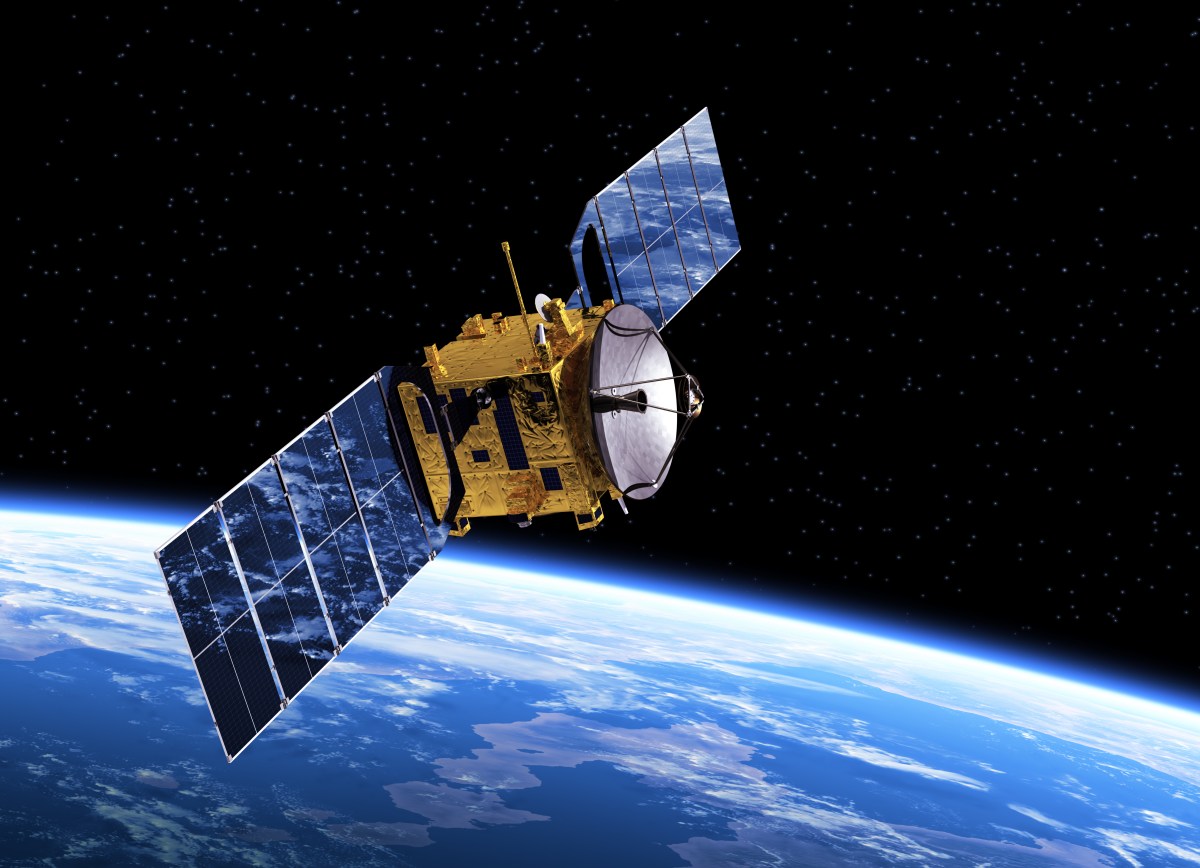
The night sky is currently undergoing a rapid transformation that researchers warn could permanently alter humanity’s access to the cosmos. According to a new study led by the European Southern Observatory (ESO) and accepted for publication in Astronomy & Astrophysics, plans to launch over 1.7 million satellites into low-Earth orbit represent an existential threat to modern ground-based astronomy. The findings suggest that the current trajectory of satellite deployment, dominated by commercial mega-constellations, has pushed the orbital environment beyond a point of sustainability for scientific observation.
The research, authored by Eso astronomer Olivier Hainaut, provides the first calculation of how the collective brightness of these proposed constellations will impact the night sky. While there are currently approximately 14,000 satellites orbiting Earth—a surge from fewer than 2,000 a decade ago—the proposed expansion could see that figure reach 1.7 million. This proliferation is driven primarily by SpaceX’s Starlink network, and plans for new orbital data centers. Other major projects contributing to this growth include E-Space’s "Cinnamon" constellation and China’s CTC-1 and CTC-2 systems.
Related media


A primary concern highlighted by the study is the U.S. Startup Reflect Orbital, which aims to launch satellites equipped with large mirrors to provide sunlight to regions on Earth during the night. The startup plans to launch a prototype soon and expand to 50,000 satellites by 2035. Hainaut’s simulations indicate that these mirror-satellites would be the brightest objects ever placed in orbit. Even when not directed at an observer, each would appear as bright as Venus. If positioned within a reflected beam, a satellite could appear four times brighter than the full moon.
Impact on Scientific Observation
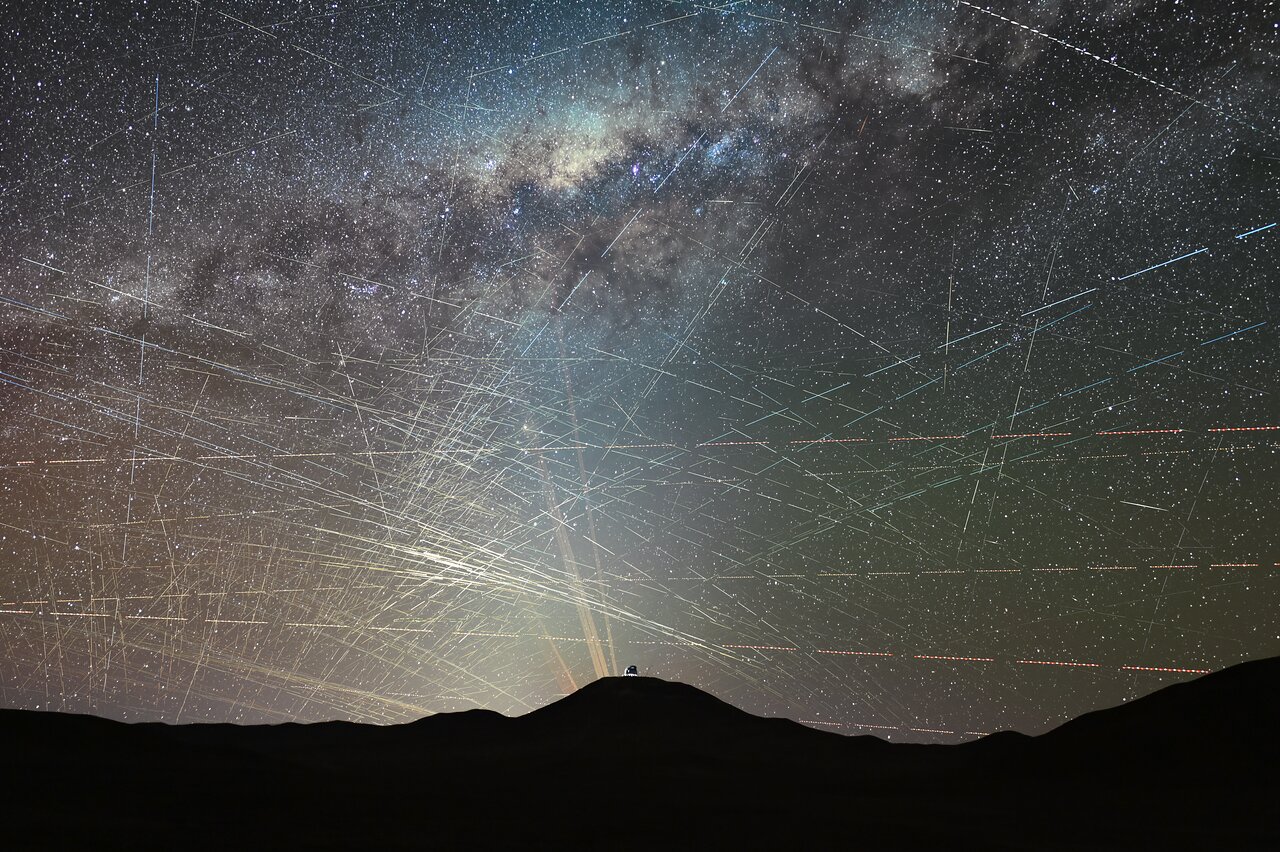
The intrusion of these satellites into the field of view of sensitive telescopes creates a twofold problem for astronomers. First, solar-illuminated satellites leave bright streaks across long-exposure images, which can saturate detectors and create "ghost trails" that render data unusable. Simulations using the Very Large Telescope (VLT) in Chile suggest that SpaceX's planned constellation alone could result in field-of-view losses of up to 28% for observations taken two hours after sunset. Instruments like those at the Vera C. Rubin Observatory are deemed even more vulnerable to this interference.
Beyond individual streaks, the study quantifies a "diffuse" light pollution effect. Even satellites too faint to be seen directly contribute to an artificial sky glow as their light scatters through the atmosphere. The Eso warns that the full deployment of the Reflect Orbital constellation could make the overall night sky three to four times brighter, effectively obscuring faint targets such as distant galaxies, Earth-like exoplanets, and near-Earth asteroids.
Regulatory Status
The findings have been submitted as part of a formal response to the U.S. Federal Communications Commission (FCC) by the ESO, the Royal Astronomical Society, and the International Astronomical Union. The FCC is currently reviewing pending applications from SpaceX and Reflect Orbital. According to Betty Kioko, an institutional affairs officer at the ESO, the commission has received over 1,800 comments regarding the Reflect Orbital application and nearly 1,500 comments concerning the expansion of the SpaceX fleet.
A spokesperson for Reflect Orbital stated that the company is commissioning independent research into the environmental impact of its technology and is committed to avoiding the redirection of light near observatories. Nonetheless, the scientific community remains skeptical of mitigation efforts. Hainaut argues that current voluntary measures by operators are no longer sufficient.
Path Forward: A Limit on Orbit
To preserve the viability of ground-based astronomy, the ESO study proposes a strict limit: the total number of satellites in low-Earth orbit should not exceed 100,000. Furthermore, researchers emphasize that all satellites must remain fainter than visual magnitude 7, rendering them invisible to the naked eye even under ideal viewing conditions.
While the study focuses on astronomy, it notes that the rapid increase in satellite density carries broader environmental risks, including potential interference with biological rhythms and ecosystems due to increased light pollution, as well as atmospheric impacts caused by the eventual reentry and burning of thousands of retired satellites.
As ESO Director General Xavier Barcons noted, the situation demands that astronomers, engineers, and satellite operators collaborate on mitigation measures to ensure that the "celestial seashore" of orbit remains accessible for both current and future generations.
How significant is this development?
Contribute your assessment to the aggregated reader intelligence ledger.
Archypedia is dedicated to independent, evidence-backed reporting. This briefing was synthesized from primary source reporting, corroborated across independent newsrooms, and verified against our Editorial Standards.
Transparency record
Evidence behind this report
This report synthesizes 8 distinct sources. Open the source ledger below to compare the underlying coverage.
- eso.org
- forbes.com
- insiderpaper.com
- sigmaearth.com
- miragenews.com
- uk.news.yahoo.com
- athens-times.com
- theedadvocate.org
Prepared under the Archypedia Editorial Policy by the Niko Vale editorial desk profile. AI-assisted tools may support drafting and verification; public accountability remains with Archypedia. Report an error.