Apple iPhone 17 Demand Boosts Asian Supplier Stocks
Strong pre-order demand for the iPhone 17 has led Apple to increase production, triggering gains for Asian supply chain partners. Investors are also monitoring Apple's evolving manufacturing balance between China and India.

Shares of Apple suppliers across Asia recorded significant gains as of Friday, 3 July 2026, driven by reports of robust pre-order demand for the iPhone 17 lineup. Investor confidence rose following indications that the current product cycle may outperform the previous year's, with data suggesting that the entry-level model is exceeding initial internal sales expectations.
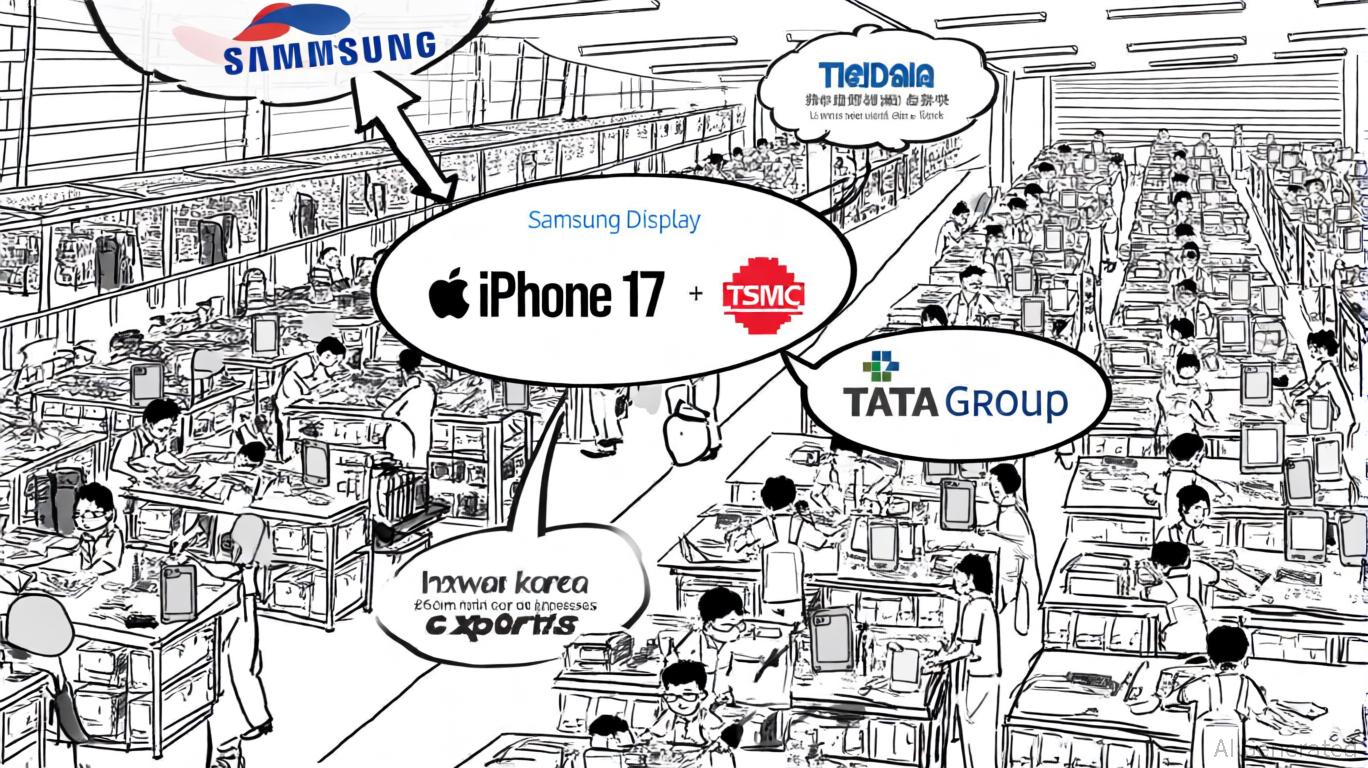
Apple has directed key manufacturing partners to increase production output for the standard iPhone 17, which retails for $799, by at least 30%. Luxshare Precision, a primary assembler, received instructions to scale its daily production of the base model by approximately 40%. The rally impacted a broad range of firms within the supply chain: in Shenzhen, Luxshare Precision shares rose 10%, while Taiwan-based Foxconn saw gains of up to 2%. Other regional suppliers also recorded movement, including Lens Technology, which increased by 16% in Hong Kong, and AAC Technologies, which climbed over 10%. In South Korea, LG Display advanced 3.2%, bolstered by strong demand for OLED panels.
Related media


This market activity coincides with broader preparations for the upcoming 2026 product cycle. Apple reportedly plans to launch the iPhone 18 series alongside its first foldable model, the iPhone Fold, in September 2026. While engineering challenges in testing had previously raised concerns about the foldable device's timeline, reports indicate it remains on schedule for a September debut. Apple appears to be anticipating a "halo effect" from the foldable device, projecting sales of approximately 95 million units for the iPhone 18 lineup, a 10% increase over the 85 million target set for the iPhone 17.
Supply Chain Evolution: India and China
Apple continues a complex transition in its global manufacturing footprint, balancing its historical reliance on China with a strategic expansion into India. In the 12 months ended March, Apple assembled US$22 billion worth of iPhones in India, marking an increase of nearly 60% over the previous year. Apple aims to assemble 32% of its global output in India by 2026-27, with the country recently overtaking China as the top exporter of smartphones to the U.S.
Despite this progress, the shift faces systemic hurdles. Reports indicate that yield rates at certain Indian facilities have hovered around 50%, and the manufacturing ecosystem remains less mature than the established infrastructure in China. Because of these constraints, even devices assembled in India often rely on components sourced from Chinese manufacturers. Furthermore, Apple has encountered logistical challenges, including reports that China has at times delayed the export of manufacturing equipment destined for India.
Strategic Outlook and Market Catalysts
As Apple navigates this transition, industry analysts and investors are monitoring several key indicators:
- Production Scalability: The ability of assembly plants in India to improve yield rates and throughput to meet the aggressive targets set for the 2026 iPhone 18 launch.
- Component Competition: The potential for the Chinese manufacturer BOE to regain a larger role in the display supply chain. With a capacity to produce approximately 100 million panels annually, BOE’s reintegration could provide Apple with increased leverage to negotiate component pricing with dominant suppliers like Samsung Display and LG Display.
- Geopolitical and Trade Developments: Ongoing trade discussions between Washington and Beijing remain a decisive factor.
While the current rally in Asian supplier stocks reflects strong immediate demand for the iPhone 17, the long-term health of these partnerships remains tied to Apple’s ability to manage its intricate, globally distributed sourcing model. As the company moves toward its 2026 targets, the balance between manufacturing in India and China will continue to shape the financial prospects for its regional partners.
How significant is this development?
Contribute your assessment to the aggregated reader intelligence ledger.
Archypedia is dedicated to independent, evidence-backed reporting. This briefing was synthesized from primary source reporting, corroborated across independent newsrooms, and verified against our Editorial Standards.
Transparency record
Evidence behind this report
This report synthesizes 11 distinct sources. Open the source ledger below to compare the underlying coverage.
- thecryptagon.com
- econotimes.com
- 9to5mac.com
- ainvest.com
- techwireasia.com
- macrumors.com
- zignify.net
- fortuneindia.com
- el7.ai
- dw.com
- thehindu.com
Prepared under the Archypedia Editorial Policy by the Niko Vale editorial desk profile. AI-assisted tools may support drafting and verification; public accountability remains with Archypedia. Report an error.


