Antarctica froze before the Arctic due to tectonic uplift of mountains
New research reveals that tectonic mantle waves raised the Antarctic landscape, allowing ice to form millions of years before global cooling reached the Arctic.

Earth’s polar regions have long presented a climatic puzzle: while both the Arctic and Antarctica are currently characterized by vast expanses of ice, the two regions did not freeze over simultaneously. Geologic evidence confirms that the southernmost continent transitioned into an ice-house climate approximately 34 million years ago, roughly 25 million years before the Arctic established its own permanent ice cover. Researchers now suggest that this polar asymmetry stems from tectonic forces that reshaped the Antarctic landscape long before global cooling became the dominant driver of glaciation.
For most of Earth’s history, the planet existed in a warm "greenhouse" state, and ice caps were rare occurrences. The recent study, published in the journal Science on Thursday, July 2, 2026, attributes the early freezing of Antarctica to a geological process initiated during the breakup of the supercontinent Gondwana. As landmasses—including Africa, South America, Australia, Arabia, and the Indian subcontinent—separated and drifted toward their modern positions, they triggered slow-moving disturbances deep within the Earth known as mantle waves. According to study co-leader Thomas Gernon of the University of Southampton, these waves removed dense rock from the underside of tectonic plates, causing the continents to rise and form high plateaus and mountain ranges.
Related media

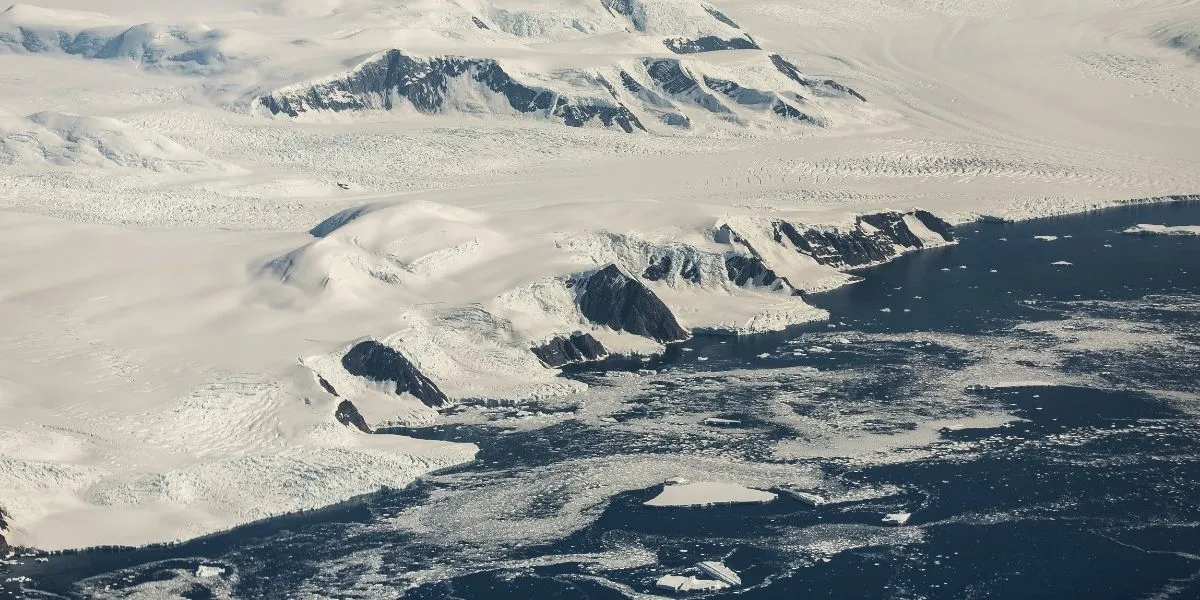
In Antarctica, this uplift drove the formation of the Gamburtsev Mountains, an enigmatic range now buried under the world’s largest ice sheet. While these mountains can reach heights of up to 11,120 feet (3,390 meters), the uplift pushed the landscape above a critical elevation threshold. Simulations indicated that by approximately 45 million years ago, large areas of the eastern Antarctic landscape had risen between 4,920 feet and 6,560 feet (1.5 km to 2 km), a threshold crucial for allowing snow to persist year-round. By 34 million years ago, nearly 90% of the region lay above this elevation, facilitating the stabilization of permanent ice even while global temperatures were roughly 9 degrees Fahrenheit (5 degrees Celsius) warmer than today.
This localized topography explains why Antarctica moved into the Oligocene epoch as a glaciated continent while the Arctic remained ice-free. As noted by researchers, the Arctic lacks a land-based foundation at the North Pole; it is situated in the middle of the Arctic Ocean. Consequently, there was no terrain to reach the necessary elevation to foster permanent ice until the climate cooled sufficiently through reduced atmospheric carbon dioxide concentrations. Large Arctic ice sheets did not stabilize until less than 10 million years ago.
Previously, some researchers noted a conflict between computer climate models and deep-sea mud core data, which appeared to show warming oceans coinciding with the growth of ice sheets. Studies of microfossils, such as forams found in Tanzanian drilling projects, have since helped reconcile these records, confirming that the world's oceans did cool as ice sheets appeared. This transition also involved the formation of the Antarctic Circumpolar Current, which thermally isolated the continent from warmer waters.
Chronology of Polar Glaciation
| Event | Approximate Timing |
|---|---|
| Gondwana breakup begins (triggering mantle waves) | 160+ million years ago |
| Appearance of mountain glaciers in Antarctica | 40 million years ago |
| Antarctic landscape crosses elevation threshold | 45–34 million years ago |
| East Antarctic Ice Sheet formation | 34 million years ago |
| Arctic ice sheet stabilization | Less than 10 million years ago |
While the tectonic history of the Gamburtsev Mountains provides a clear picture of the past, the implications for the future remain a subject of active research. Benjamin Mills of the University of Leeds, who supervised related research on Earth's rare ice caps, warned that the current ice-covered state is not the historical norm for the planet. As modern society relies on this climate, Antarctica's cold and dry desert continues to be studied for clues regarding how the Earth responds to greenhouse gases and shifts in global topography.
How significant is this development?
Contribute your assessment to the aggregated reader intelligence ledger.
Archypedia is dedicated to independent, evidence-backed reporting. This briefing was synthesized from primary source reporting, corroborated across independent newsrooms, and verified against our Editorial Standards.
Transparency record
Evidence behind this report
This report synthesizes 9 distinct sources. Open the source ledger below to compare the underlying coverage.
- beyondpenguins.ehe.osu.edu
- whtc.com
- museum.wales
- earthsky.org
- mikegravel.org
- polarguidebook.com
- yahoo.com
- eos.org
- en.wikipedia.org
Prepared under the Archypedia Editorial Policy by the Niko Vale editorial desk profile. AI-assisted tools may support drafting and verification; public accountability remains with Archypedia. Report an error.