NASA launches robotic mission to rescue Swift observatory from orbit decay
A robotic spacecraft is attempting an unprecedented salvage mission to rescue the decaying Neil Gehrels Swift Observatory from atmospheric reentry. This high-risk effort marks the first time an American robotic craft will attempt to service an uncrewed U.S. government satellite.
On Friday, 3 July 2026, a robotic rescue mission launched to salvage the Neil Gehrels Swift Observatory, a telescope that has been steadily losing altitude and nearing an uncontrolled reentry into Earth’s atmosphere. The mission represents the first time an American robotic spacecraft has been deployed to capture and service an uncrewed U.S. Government satellite. The rescue is considered a "high risk" endeavor, as the observatory was never designed to be captured or serviced in space.
The observatory, which launched in 2004 to study high-energy cosmic phenomena such as gamma-ray bursts, began experiencing accelerated orbital decay due to increased solar activity. This activity expanded Earth's atmosphere, creating greater drag on the satellite. While the observatory originally operated at an altitude of 373 miles (600 km), it has descended to approximately 220 miles (360 km). Engineers and mission officials noted that the rescue would become impossible if the satellite dipped below 185 miles (300 km), a threshold it was expected to reach by October.
Related media
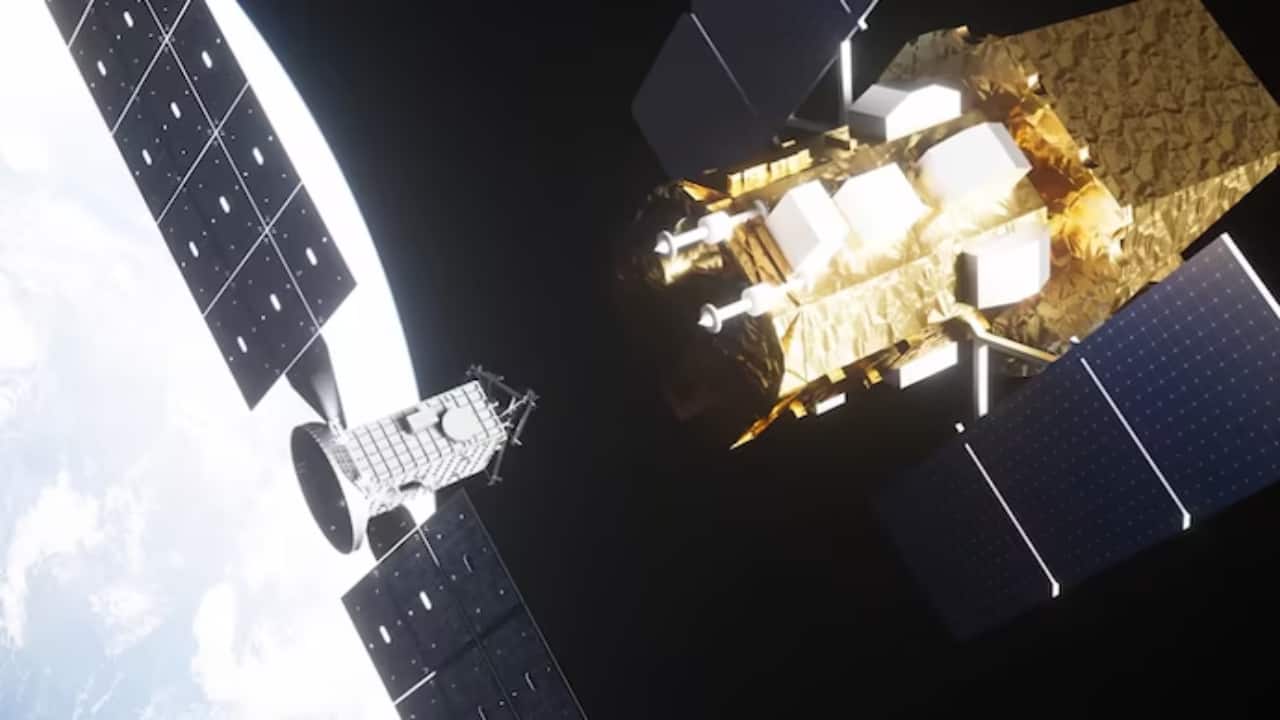
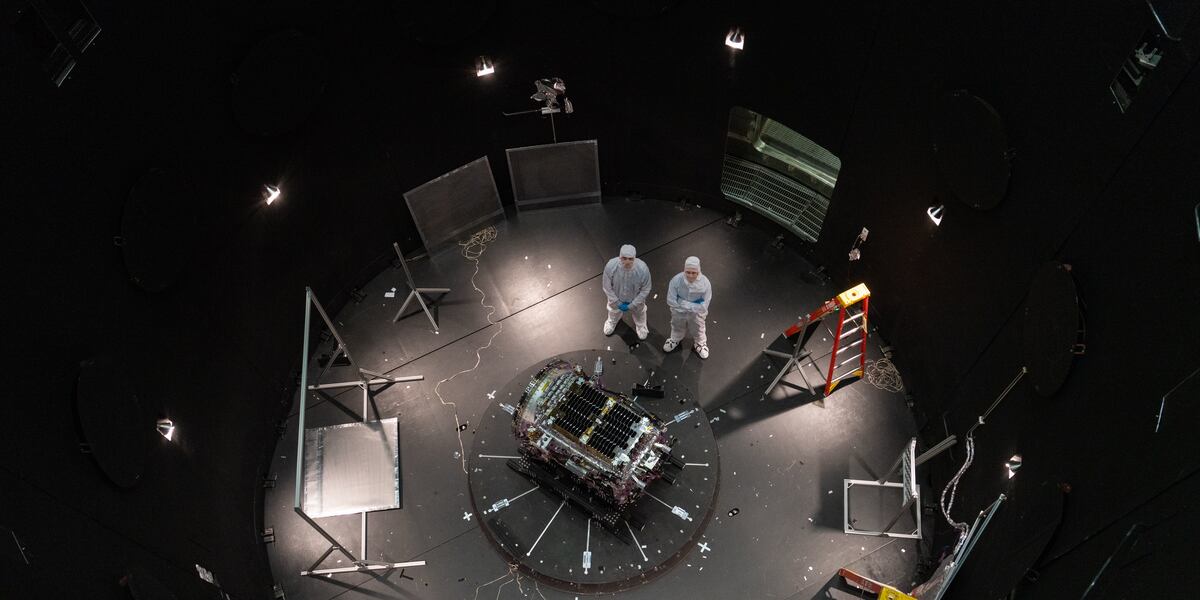
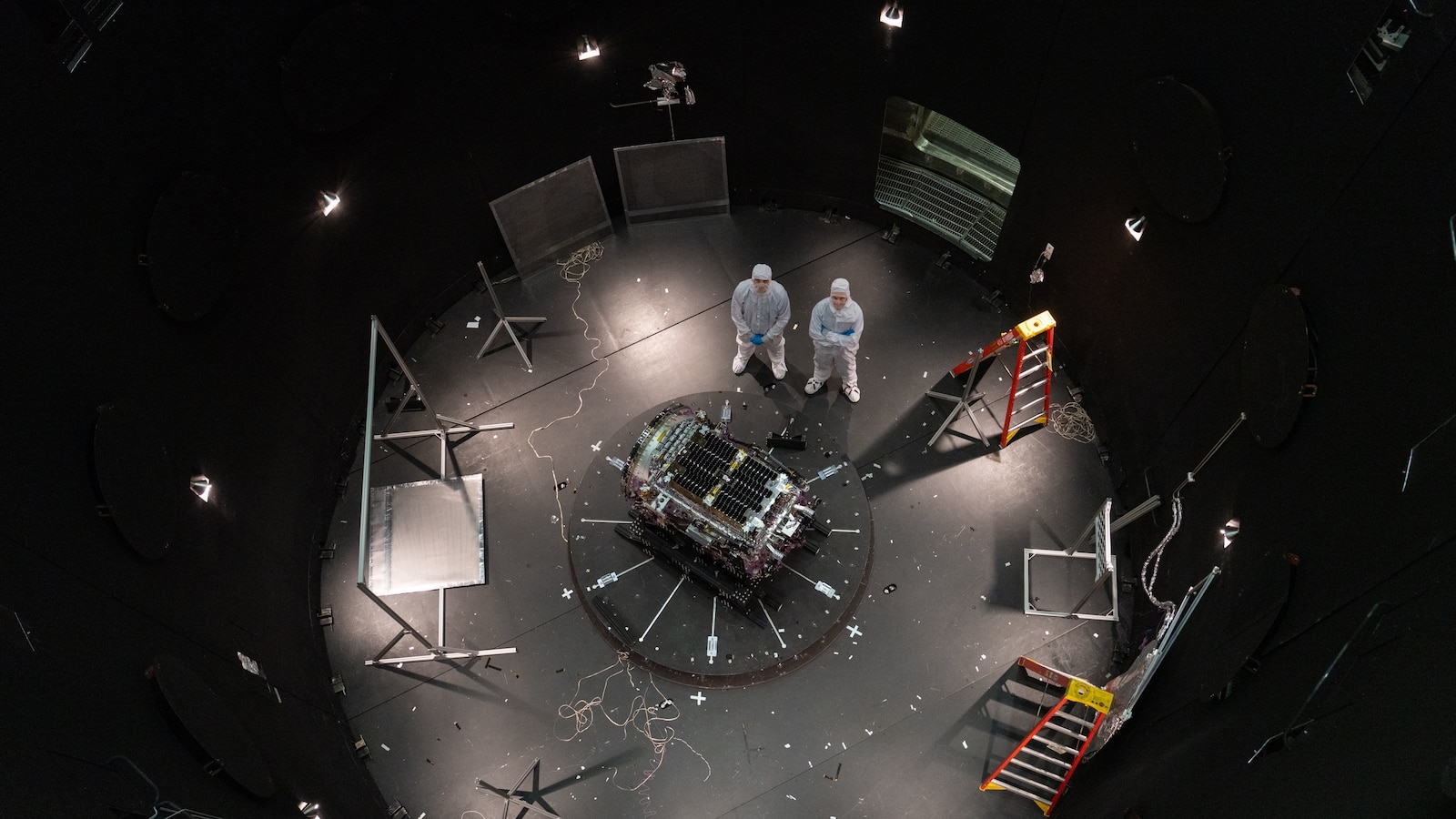
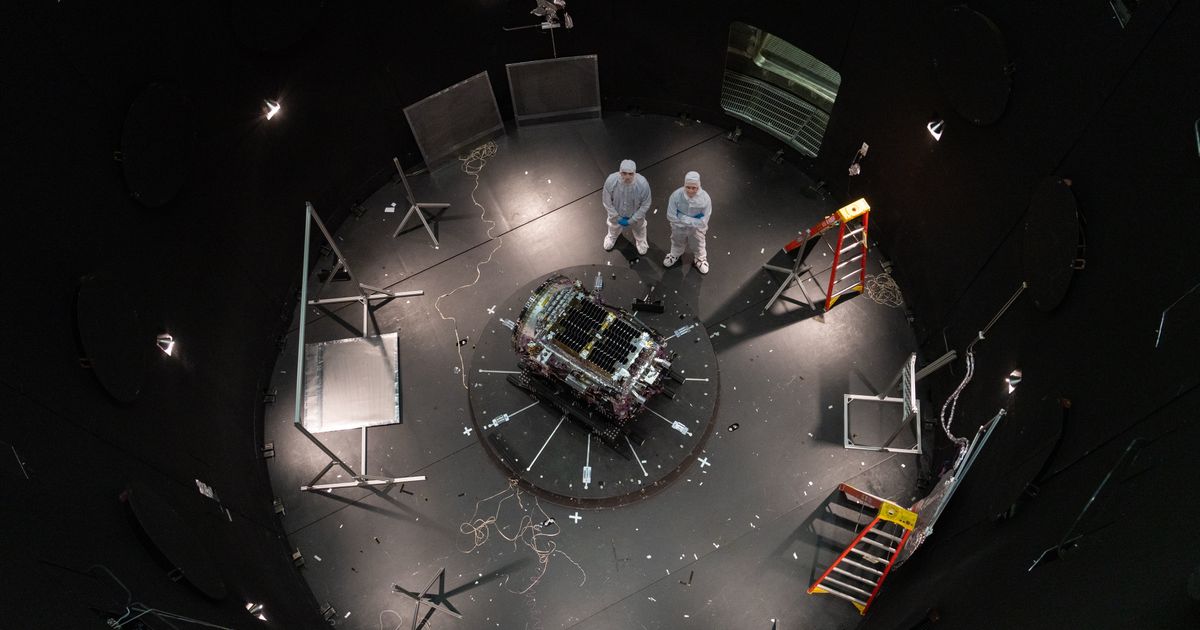
NASA awarded a $30 million contract to Arizona-based startup Katalyst Space Technologies in September 2025 to develop a solution. The company produced the LINK spacecraft, a robotic servicer roughly the size of a kitchen refrigerator. Equipped with three robotic arms featuring finger-like grippers that resemble a Lego mini figure, the craft is designed to grapple the telescope. The mission relies on a "graceful lift" approach, where LINK will fire small thrusters to gradually raise the pair to a stable orbit over several months.
The mission timeline includes several phases:
- Systems Check: Following its successful launch aboard a Northrop Grumman Pegasus XL rocket, which was released from an L-1011 Stargazer aircraft at an altitude of approximately 40,000 feet, the LINK spacecraft will spend several weeks initializing its power, navigation, and sensor systems.
- Rendezvous and Inspection: Approximately three to four weeks post-launch, the craft will draw alongside the observatory. LINK will circle the telescope to capture imagery, allowing engineers to determine the safest grapple points on the aging structure.
- Capture and Boost: Once secured, the craft will spend two to three months firing its ion thrusters to push the telescope back toward its original 373-mile altitude.
"I have to be honest. No one thought it was going to be possible. No one thought we would get as far as we’ve already gotten today,"
Shawn Domagal-Goldman, NASA’s astrophysics director, via AP News
If the mission proves successful, NASA officials suggest the technique could establish a new precedent for orbital maintenance. This capability may eventually be applied to the Hubble Space Telescope, which is also losing altitude and could potentially receive a life-extending boost in 2028. Katalyst Space Technologies has indicated that its next-generation robotic systems, currently in development, are intended to service satellites at much higher altitudes, potentially supporting future infrastructure such as data centers and solar farms in orbit.
For the scientific community, the recovery of Swift is paramount. The telescope acts as a "first responder," capable of pivoting quickly to observe transient events like exploding stars. Operations were ceased in February to minimize atmospheric drag and conserve the remaining altitude. If the salvage operation succeeds, the telescope may resume scientific observations by September.
Ghonhee Lee, CEO of Katalyst Space Technologies, framed the mission as a necessary evolution in space operations, stating:
"NASA has all these big senior observatories … all of them can benefit from a service like this. So what we’re proving with this mission is this is a new play in the playbook that’s available,"
Ghonhee Lee, CEO of Katalyst Space Technologies, via AP News
NASA's decision to pursue this rescue rather than allow for reentry is driven by the fact that the agency currently lacks the budget to replace the observatory's unique multiwavelength capabilities. Whether the mission achieves its goal depends on the complex, slow-motion integration of a robotic arm with a spacecraft never intended to be handled, with official reports stressing that there is no guarantee of success.
How significant is this development?
Contribute your assessment to the aggregated reader intelligence ledger.
Archypedia is dedicated to independent, evidence-backed reporting. This briefing was synthesized from primary source reporting, corroborated across independent newsrooms, and verified against our Editorial Standards.
Transparency record
Evidence behind this report
This report synthesizes 11 distinct sources. Open the source ledger below to compare the underlying coverage.
- apnews.com
- yahoo.com
- moneycontrol.com
- kold.com
- abcnews.com
- science.nasa.gov
- space.com
- usatoday.com
- adn.com
- latimes.com
- sciencenews.org
Prepared under the Archypedia Editorial Policy by the Niko Vale editorial desk profile. AI-assisted tools may support drafting and verification; public accountability remains with Archypedia. Report an error.