NASA launches robotic mission to boost Swift telescope to higher orbit
NASA has contracted Katalyst Space Technologies to perform an autonomous rescue of the aging Swift telescope, which is losing altitude due to solar activity. The mission aims to demonstrate in-orbit maintenance and extend the lifespan of critical scientific assets.
NASA has initiated a high-stakes, rapid-response mission to prevent the Neil Gehrels Swift Observatory from falling out of orbit and incinerating in Earth’s atmosphere. The aging telescope, which has tracked the universe's most powerful explosions since 2004, is descending toward a "point of no return" as increased solar activity causes the upper atmosphere to expand, creating significant drag. With the mission now facing a critical deadline, a robotic spacecraft is poised to launch as early as June 30, 2026, from the Kwajalein Atoll in the Marshall Islands.
The salvage operation represents a fundamental shift in how the space agency manages its aging assets. Rather than allowing the observatory to reenter the atmosphere, NASA contracted the Arizona-based startup Katalyst Space Technologies to design and build a robotic rescuer, known as LINK, in under a year. This marks the first time an American commercial entity will attempt to autonomously capture and boost a government satellite that was never intended to be serviced, repaired, or docked with in space.
Related media


The "First Responder" at Risk
Since its launch, Swift has acted as NASA's first responder
for transient astronomical events, according to mission officials. The observatory is capable of rapidly pivoting its ultraviolet, X-ray, and gamma-ray instruments to capture the fading afterglow of gamma-ray bursts—catastrophic cosmic explosions that can release more energy in seconds than the Sun produces over its entire lifetime. Because these events occur without warning, astronomers rely on Swift to provide immediate alerts that allow larger, less nimble observatories to study the phenomena.
Despite its ongoing scientific utility, Swift's altitude has steadily decayed from its original 373 miles (600 kilometers) to roughly 224 miles (360 kilometers). NASA has already suspended science operations and modified the satellite's orientation to reduce drag, buying limited time. Experts estimate there is a 50 percent chance of uncontrolled reentry by mid-2026, with that risk rising to 90 percent by the end of the year.
A Daring Robotic Rescue
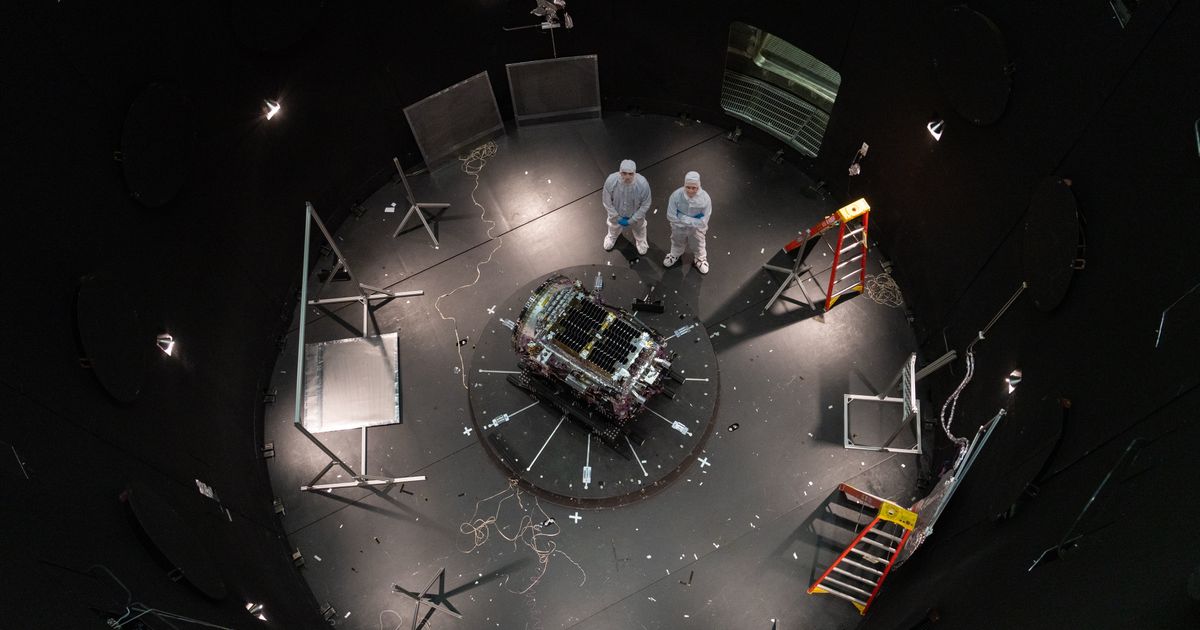

The rescue spacecraft, LINK, is roughly the size of a kitchen refrigerator and features a 40-foot (12-meter) solar wingspan. Its most critical components are three robotic arms equipped with pinching grippers designed to latch onto the main structure of the telescope. Because Swift lacks docking ports, the robotic servicer must rely on advanced navigation software to perform proximity operations, effectively acting as an autonomous vehicle that can adjust its position by inches while both crafts travel at speeds of 17,000 mph.
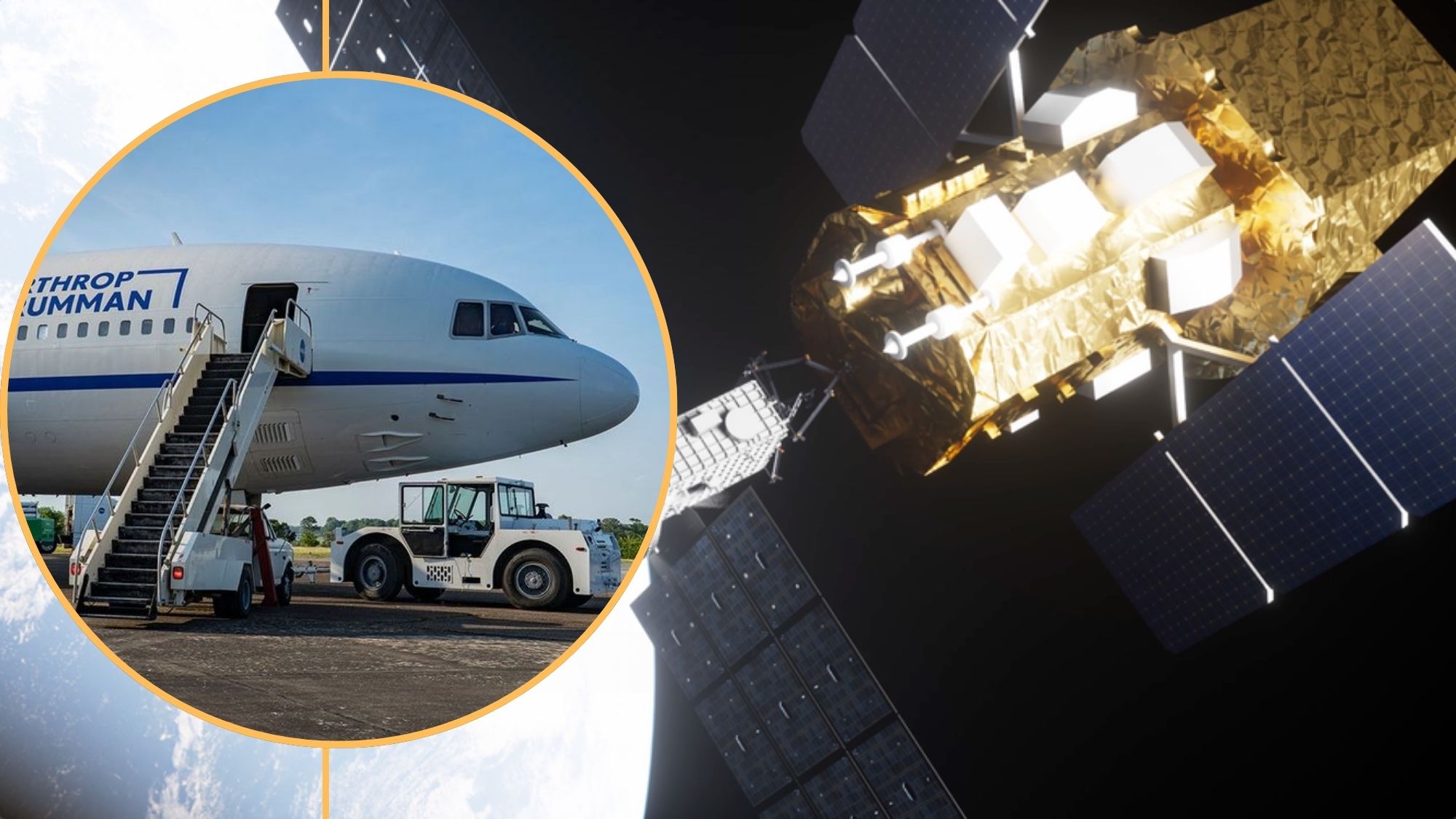
The mission involves a complex launch profile: a Northrop Grumman Pegasus XL rocket will be carried to 40,000 feet beneath a Stargazer L-1011 aircraft before being dropped and ignited over the Pacific Ocean. Once in orbit, LINK will perform a month-long rendezvous before attempting to raise the observatory’s orbit to a more stable altitude of approximately 373 miles (600 kilometers).
Strategic and Economic Implications
The $30 million contract underscores a growing push to move away from the throwaway culture
of early space exploration. NASA officials emphasize that building a replacement for Swift would be significantly more expensive than the current rescue attempt. By proving that commercial robots can extend the life of existing hardware, the agency aims to open a new market for in-orbit maintenance, refueling, and construction.
What to Watch Next
- June 30, 2026: Planned launch of the Pegasus XL rocket from the Kwajalein Atoll.
NASA officials acknowledge that success is not guaranteed. However, they argue that the risk-tolerant approach is necessary for the future of the space economy. If the mission succeeds, it could set a precedent for future efforts to service other prominent assets, including the 36-year-old Hubble Space Telescope, which may eventually require similar assistance to maintain its orbit by 2028.
How significant is this development?
Contribute your assessment to the aggregated reader intelligence ledger.
Archypedia is dedicated to independent, evidence-backed reporting. This briefing was synthesized from primary source reporting, corroborated across independent newsrooms, and verified against our Editorial Standards.
Transparency record
Evidence behind this report
This report synthesizes 10 distinct sources. Open the source ledger below to compare the underlying coverage.
- apnews.com
- wral.com
- usatoday.com
- mashable.com
- earthsky.org
- forbes.com
- astronomy.com
- katalystspace.com
- arstechnica.com
- abcnews.com
Prepared under the Archypedia Editorial Policy by the Niko Vale editorial desk profile. AI-assisted tools may support drafting and verification; public accountability remains with Archypedia. Report an error.