Pakistan bus crash kills 40 in ravine near Balochistan border
A bus traveling from Quetta to Peshawar veered off a mountain road near the Balochistan border, resulting in 40 fatalities and eight injuries. Officials have launched an investigation into the cause of the crash.

At least 40 people died and eight others sustained injuries early on Friday when a passenger bus veered off a mountain highway and plunged into a rocky ravine in southwestern Pakistan. The crash occurred in the remote Dana Sar area, near the border between Balochistan and Khyber Pakhtunkhwa provinces.
The vehicle was traveling from the provincial capital of Quetta to Peshawar when it lost control. According to Shahid Rind, a spokesperson for the Balochistan government, the bus was carrying 48 passengers at the time of the incident. The vehicle had become overcrowded after the driver stopped during the journey to accommodate travelers from another bus that had experienced a mechanical breakdown.
Related media
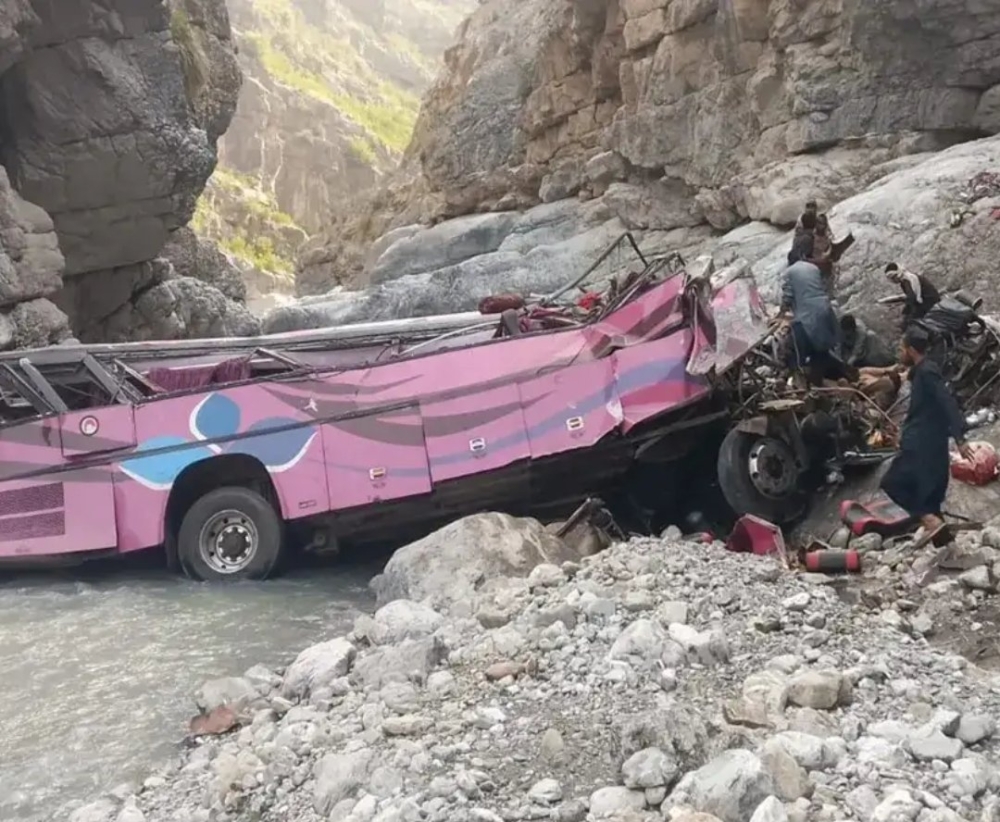

The wreckage came to rest at the bottom of a ravine estimated to be 70 to 80 feet, or approximately 21 to 24 metres, deep. Sanaullah Sherani, the head of the Zhob district emergency center, reported that the mountainous, rugged terrain significantly hampered initial recovery efforts. Rescue teams from both Balochistan and Khyber Pakhtunkhwa were dispatched to the site, where they utilized cutters and machines to retrieve the deceased and survivors from the bus. Injured passengers received initial medical treatment at the scene before being transported to the district headquarters hospital in Zhob.
While investigations into the disaster are ongoing, an injured survivor shared an account with local media from a hospital bed, suggesting that the crash was preceded by conflict. The survivor alleged that passengers had objected to the driver’s decision to board the additional people from the stranded bus. This led to a verbal argument, during which the survivor claimed that one passenger grabbed the driver by the neck, causing the bus to lose control. Police have not independently verified this claim, though local officials have noted that speeding is being investigated as a likely contributing factor in the disaster.
The recovery of the victims remains a priority. Hazrat Wali Kakar, a regional government administrator, confirmed that most of the deceased were identified through documents recovered at the scene, though at least three bodies remained unidentified in the immediate aftermath. Shah Fahad, director general of emergency services in Khyber Pakhtunkhwa, stated that his agency is coordinating with Balochistan authorities to manage the aftermath, including the potential transport of remains to the victims' respective hometowns.
The scale of the tragedy has drawn formal responses from national and provincial leadership. President Asif Ali Zardari expressed sorrow over the loss of life and instructed relevant authorities to provide comprehensive medical care to the survivors. Balochistan Chief Minister Sarfraz Bugti issued a statement of grief and has ordered a formal inquiry into the circumstances that led to the bus plunging into the ravine.
This incident is categorized as one of the deadliest road accidents in the region in recent years. Road safety remains a persistent challenge across Pakistan, with fatal crashes frequently attributed to a combination of poor road infrastructure, reckless driving, and the inadequate enforcement of traffic laws, particularly in mountainous corridors. The crash follows a series of recent transport incidents, including a collision in May involving a minibus and a stationary bus in northwest Pakistan that resulted in 17 deaths.
How significant is this development?
Contribute your assessment to the aggregated reader intelligence ledger.
Archypedia is dedicated to independent, evidence-backed reporting. This briefing was synthesized from primary source reporting, corroborated across independent newsrooms, and verified against our Editorial Standards.
Transparency record
Evidence behind this report
This report synthesizes 12 distinct sources. Open the source ledger below to compare the underlying coverage.
- apnews.com
- yahoo.com
- cbsnews.com
- malaymail.com
- uk.news.yahoo.com
- aljazeera.com
- mirror.co.uk
- hindustantimes.com
- thedailystar.net
- abcnews.com
- themedialine.org
- aol.com
Prepared under the Archypedia Editorial Policy by the Samir Haddad editorial desk profile. AI-assisted tools may support drafting and verification; public accountability remains with Archypedia. Report an error.