China’s Tianwen-2 spacecraft arrives at asteroid Kamo’oalewa for sampling
China's Tianwen-2 mission has reached the quasi-satellite Kamoʻoalewa, initiating an effort to collect regolith and resolve the object's mysterious origins.

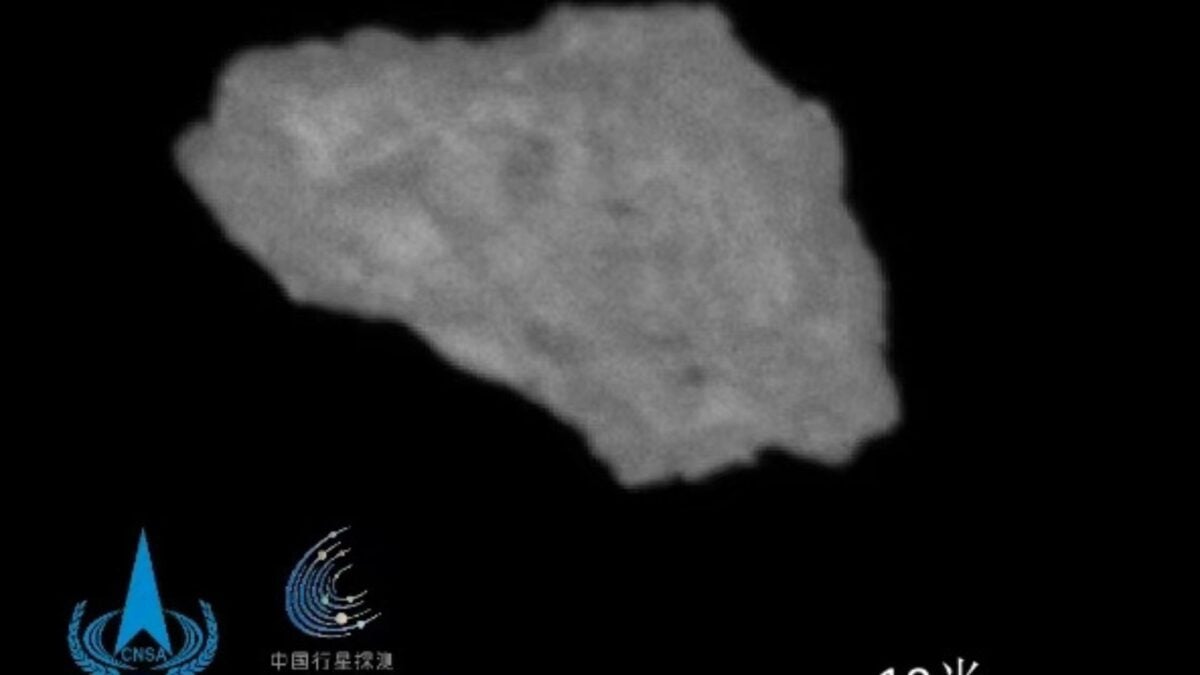
China’s Tianwen-2 spacecraft has arrived at its target, the near-Earth asteroid 469219 Kamoʻoalewa, marking a significant advancement in the nation’s deep-space exploration program. The probe reached 469219 Kamoʻoalewa, also known as 2016 HO3, on July 4 after just over 13 months of interplanetary travel. While the China National Space Administration (CNSA) has not officially confirmed the status of the operation, amateur radio observers operating telescopes in Germany and the Netherlands have successfully tracked the vessel’s maneuvers to confirm its arrival.
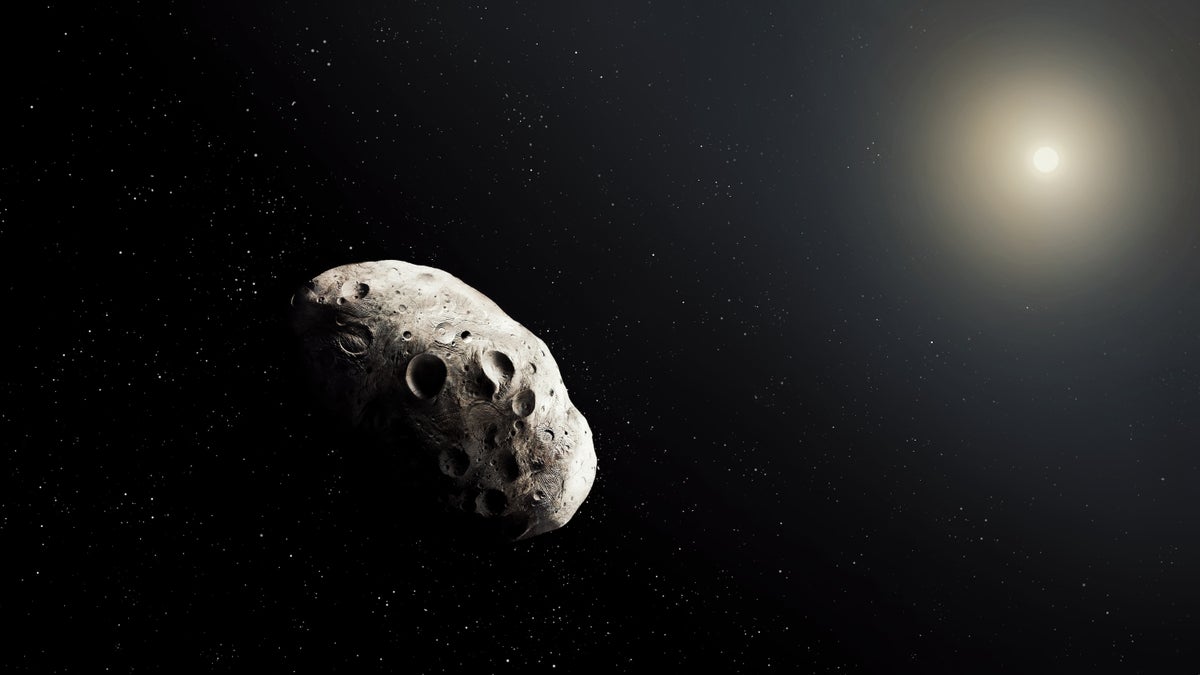
Kamoʻoalewa, a "quasi-satellite" discovered in 2016, is a small object ranging from 40 to 100 meters across. Unlike typical asteroids that originate from the main belt between Mars and Jupiter, this body orbits the sun in sync with Earth, maintaining a rare, temporary relationship that researchers estimate could last for several hundred years. Its designation in the Hawaiian language translates to "oscillating celestial object."
Related media

Scientific Objectives and Origins
The mission aims to resolve a persistent debate regarding the asteroid's composition and origin. Some researchers hypothesize that Kamoʻoalewa is a relic ejected from the far side of the moon, potentially linked to the impact that formed the 22-kilometer-wide Giordano Bruno crater. Others, such as Mikael Granvik of the University of Helsinki and Luleå University of Technology, suggest the object is more likely a migrant from the main asteroid belt, noting that statistical models make a lunar origin appear less probable.
"What makes [this mission] extraordinary is that we don't yet know [the object's] composition or origin. We'll only obtain definitive answers after completing our exploration."
Li Chunlai, researcher with the Chinese Academy of Sciences' National Astronomical Observatories and chief commander of Tianwen-2's ground application system, via Live Science
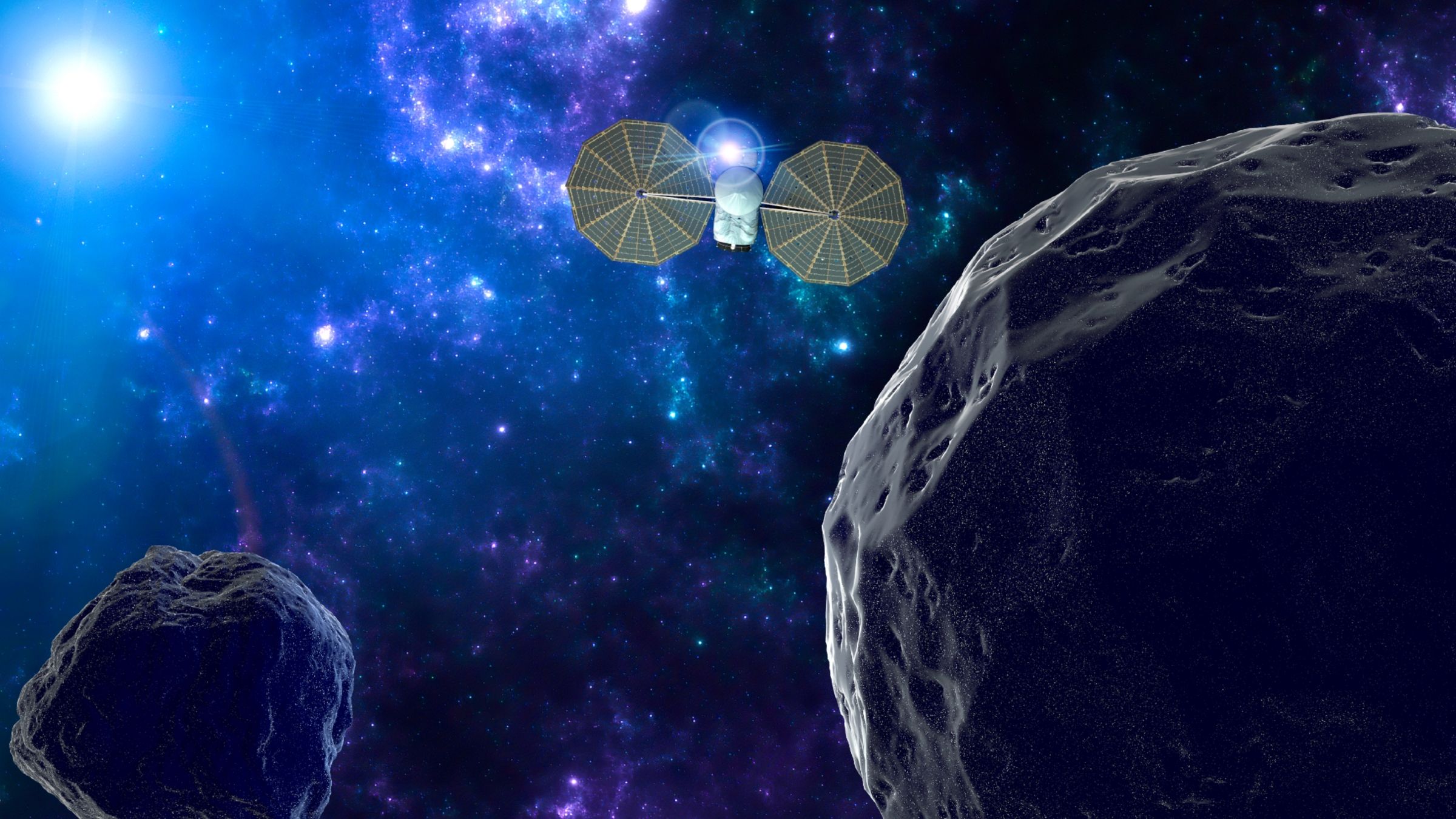
The spacecraft is equipped with an array of instruments, including multispectral cameras, spectrometers, a magnetometer, and dust analyzers. By returning a sample to Earth, scientists hope to establish whether the regolith matches the isotopic composition of lunar material, which would provide critical data for understanding solar system impact physics and early surface evolution.
Sampling and Engineering Challenges
Tianwen-2 is tasked with the complex challenge of sampling a body that rotates rapidly—roughly once every 28 minutes. Because the surface characteristics remain unknown, the mission utilizes three distinct sampling methodologies:
- Touch-and-go: A gas-driven mechanism that briefly contacts the surface to collect grains.
- Hover: The use of a robotic arm to scoop material while maintaining a stable position relative to the spinning target.
- Anchor-and-attach: A claw-and-spike system designed to grapple the asteroid, which would represent a first-of-its-kind technique for a sample-return mission.
Patrick Michel, director of research at the French National Center for Scientific Research, notes that the mission’s design implies a focus on future resource utilization, as such fast-spinning, small objects may serve as essential "gas stations" for long-distance space travel. The mission serves as a critical test for China's autonomous navigation and high-precision deep-space maneuvers, which are viewed as foundational for upcoming missions, including the planned 2028 attempt to collect samples from Mars.
Future Timeline
Following the upcoming sampling phase, the spacecraft will depart the asteroid in April 2027. Its return journey will culminate in a high-velocity atmospheric reentry in November 2027, with a capsule targeted for landing. Upon the completion of this phase, the probe will utilize a gravity-assist maneuver to embark on its secondary mission: a study of the main-belt comet 311P/PANSTARRS, with an expected arrival in 2035.
| Event | Projected Date |
|---|---|
| Launch | 28 May 2025 |
| Departure from Kamoʻoalewa | April 2027 |
| Sample return to Earth | November 2027 |
| Arrival at 311P/PANSTARRS | January 2035 |
While Kamoʻoalewa does not pose a current impact threat to Earth, experts emphasize that studying such objects is vital for developing Planetary defense strategies. Richard Binzel, a planetary scientist at MIT, notes that understanding these bodies is part of a broader effort to categorize near-Earth objects that could, over the span of centuries, pose risks to the planet.
How significant is this development?
Contribute your assessment to the aggregated reader intelligence ledger.
Archypedia is dedicated to independent, evidence-backed reporting. This briefing was synthesized from primary source reporting, corroborated across independent newsrooms, and verified against our Editorial Standards.
Transparency record
Evidence behind this report
This report synthesizes 8 distinct sources. Open the source ledger below to compare the underlying coverage.
- livescience.com
- forbes.com
- scientificamerican.com
- en.wikipedia.org
- yahoo.com
- planetary.org
- newsbreak.com
- gizmodo.com
Prepared under the Archypedia Editorial Policy by the Niko Vale editorial desk profile. AI-assisted tools may support drafting and verification; public accountability remains with Archypedia. Report an error.