uOttawa researchers discover genetically distinct Western toad in Canada
New research reveals that Western toads separated by the Canadian Rockies represent distinct evolutionary lineages, prompting a re-evaluation of conservation needs.

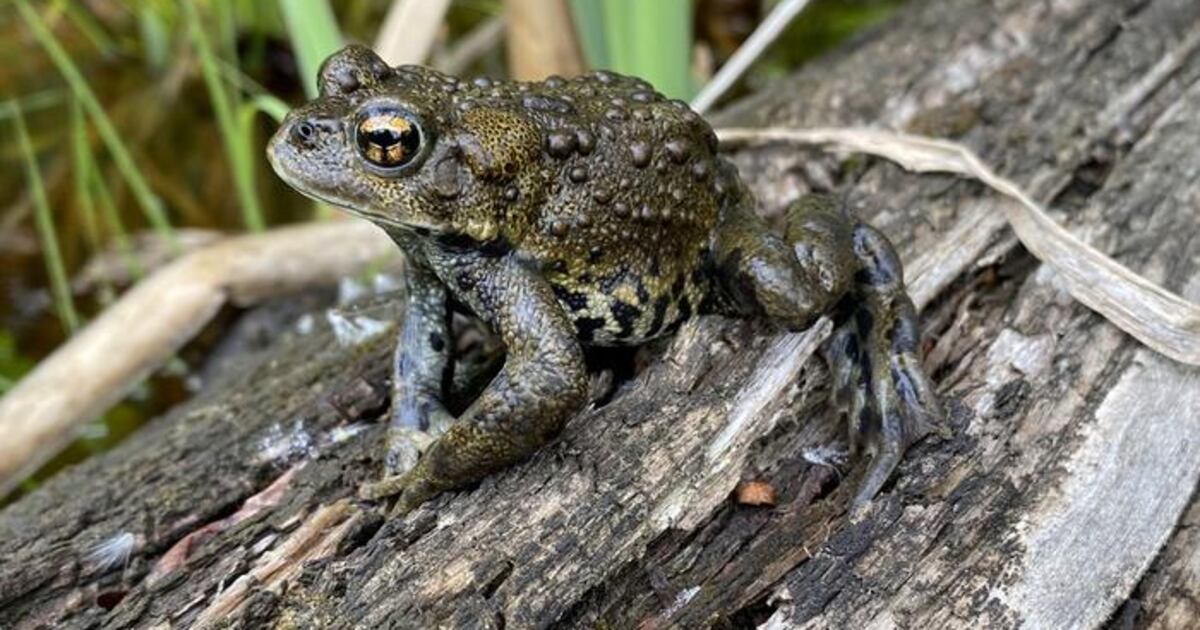
University of Ottawa researchers have identified a genetically distinct population of the Western toad (Anaxyrus boreas) that appears to be exclusive to Canada. This finding challenges the long-held assumption that the species’ regional variations were limited to behavior, suggesting instead that deep genetic divisions exist within the animals found in Alberta and British Columbia.
The discovery, reported in the journal Diversity and Distributions, centers on the distinction between "calling" and "non-calling" toads. Researchers noted that populations east of the Canadian Rockies possess vocal sacs and produce mating calls, while those to the west—and those extending into the southern parts of the species' range—do not. Genetic testing confirms that these are not merely behavioral differences, but indicate separate evolutionary lineages separated by the mountainous terrain and associated climatic barriers.
Related media

A Unique Canadian Identity
While icons like the beaver are often cited as symbols of Canadian wildlife, researchers suggest their continental ranges lack the exclusive genetic footprint now identified in these toads. "Our findings of a genetically distinct group entirely contained to a Canadian province is very unusual," said lead author and PhD student Jayna Bergman. "These genetic results suggest we should be doing more to protect this species, especially the Alberta population of the Western Toad because of its unique complement of the species’ total genetic diversity."
Assistant Professor Julie Lee-Yaw, a member of the research team in the Department of Biology, noted the rarity of this biological split.
"This ‘advertisement call’ provides a notable difference in breeding strategies and may be the only example of such an extreme difference in calls within what are considered the same species."
Julie Lee-Yaw, Assistant Professor, via uOttawa
Uncovering Hidden Biodiversity
In addition to distinguishing between the calling and non-calling groups, the team identified a third, previously unrecognized genetic group of Western toads. This population inhabits the southern Canadian Rocky Mountains, specifically in southeastern British Columbia and southwestern Alberta. Current data suggest this group’s range may extend southward into Montana, though further study is required to confirm its geographic reach and specific mating behaviors.
The research involved an extensive field effort across ponds, wetlands, and lakes in Alberta and British Columbia to gather DNA samples from both adult toads and tadpoles. By utilizing modern genomic techniques, the team was able to detect evolutionary lineages that had been obscured by older, less precise methods of analysis.
Conservation Context
The Western toad is currently listed as a Special Concern under the Species at Risk Act and by the Committee on the Status of Endangered Wildlife in Canada (COSEWIC). Wildlife protection policies in Canada rely heavily on identifying populations that are genetically or behaviorally distinct, as well as understanding geographic barriers to gene flow. The recent findings indicate that the Western toad’s current conservation status may need to be re-evaluated to account for this newly discovered, localized biodiversity.
| Population Type | Geographic Location | Mating Trait |
|---|---|---|
| Calling | East of Canadian Rockies | Possesses vocal sacs; produces mating calls |
| Non-Calling | West of Canadian Rockies | Lacks vocal sacs; no mating calls |
| Southern Rockies Group | SE British Columbia / SW Alberta | Behavior currently under study |
What to Watch Next
- Range Mapping: Future studies will determine if the third genetic group in the southern Rockies is strictly Canadian or if it maintains a presence in the United States.
- Breeding Potential: Researchers plan to investigate whether these distinct groups are still capable of successfully interbreeding. This will provide evidence on whether these toads are in the process of diverging into entirely separate species.
- Conservation Strategy: Policymakers will likely use this data to determine if specific regions, particularly in Alberta, require enhanced protection to preserve their unique genetic contributions to the species as a whole.
How significant is this development?
Contribute your assessment to the aggregated reader intelligence ledger.
Archypedia is dedicated to independent, evidence-backed reporting. This briefing was synthesized from primary source reporting, corroborated across independent newsrooms, and verified against our Editorial Standards.
Transparency record
Evidence behind this report
This report synthesizes 5 distinct sources. Open the source ledger below to compare the underlying coverage.
Prepared under the Archypedia Editorial Policy by the Niko Vale editorial desk profile. AI-assisted tools may support drafting and verification; public accountability remains with Archypedia. Report an error.