North Pacific storm tracks shifting northward faster than climate models predict
New research indicates that North Pacific storm tracks are shifting northward faster than existing models project, contributing to environmental instability.
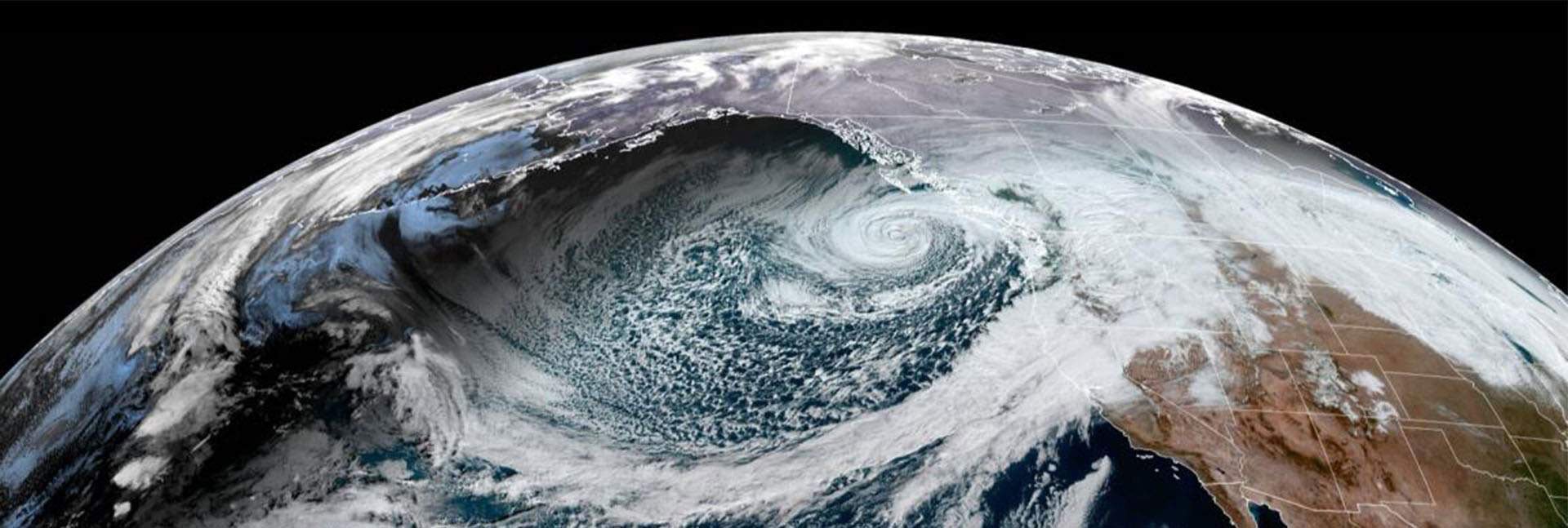
Winter storm tracks in the North Pacific are migrating toward the North Pole at a velocity that surpasses the projections of existing climate models. This shift, identified in research published 7 January 2026 in the journal Nature, serves as a mechanism for transporting heat and moisture away from historical paths. The consequences are geographically distinct: Alaska experiences increased influxes of warmth and moisture, while the American Southwest — notably California and Nevada — suffers from diminished natural ventilation.
This displacement of storm activity is linked to environmental instability in both regions. Alaskan glaciers currently shed approximately 60 billion tons of ice each year, while states to the south endure record-breaking heat and dryness, which elevates the risk of wildfire. The study, led by Dr. Rei Chemke of the Weizmann Institute of Science’s Earth and Planetary Sciences Department and Dr. Janni Yuval of Google Research, employed a long-term metric centered on sea-level pressure. By analyzing decades of consistent data, the authors concluded that the northward migration is a distinct consequence of human-driven climate change rather than standard natural variability.
Related media


"Our preparedness for future climatic change relies on the ability of models to make accurate predictions. The fact that models fail to capture the effect of climate change on the recent northward shift of storm tracks – and its consequences for western North America – suggests that changes in this region may be even more dramatic than we currently expect."
Rei Chemke, researcher at the Weizmann Institute of Science
These omissions extend to the world’s oceans, where calcifying plankton, such as coccolithophores, foraminifers, and pteropods, are often excluded or simplified in major models like CMIP6. According to an international team led by the Universitat Autònoma de Barcelona and published in Science, these microscopic organisms are essential to the "ocean carbon pump," which regulates planetary temperatures by sequestering carbon.
The Science review highlights the process of shallow dissolution
, wherein plankton shells break down in the upper ocean. This mechanism is largely ignored by existing models, potentially leading to errors in calculations regarding carbon movement and ocean response to environmental stress. As Dr. Patrizia Ziveri of the Universitat Autònoma de Barcelona noted, by leaving them out of climate models, we risk overlooking fundamental processes that determine how the Earth system responds to climate change.
Further complicating these projections is the role of warming-induced emissions from terrestrial sources. Research indicates that feedback loops involving wildfires, thawing permafrost, and fermenting wetlands are poorly represented or absent in the models used for the IPCC assessments. These natural emissions could potentially accelerate global average temperature increases by up to 0.6 degrees C. In 2024, the Arctic report card confirmed that northern tundra has transitioned from a carbon sink to a source of emissions, driven by wildfire and permafrost degradation. Scientists warn that ignoring these variables may cause nations to overestimate their remaining "carbon budget" before exceeding climate targets.
Global mean sea level rise provides additional context to these changes. On average, the global mean sea level has risen by three millimeters per year. Studies published in the Proceedings of the National Academy of Sciences, involving experts such as Dr. Jianli Chen and Dr. Yufeng Nie, confirm that melting land ice and thermal expansion are the primary drivers of this rise, with ice loss playing an increasingly dominant role.
Future Developments
- Model Integration: More than 20 independent modeling groups, coordinated by programs like those at Spark Climate Solutions, are working to integrate warming-induced emissions, such as methane from wetlands and carbon from wildfires, into future simulation tools.
- Observation Upgrades: Field teams are installing new sensors, including methane monitoring equipment in the Congo basin and the Amazon, to establish reliable baseline data for CO2 and methane.
- Policy and Assessment: These data sets and refined modeling frameworks are intended to inform the next IPCC climate assessment, with a final report scheduled for completion by late 2029.
- Management Strategies: Ecologists are testing new mitigation efforts, ranging from the application of insulating vegetation on permafrost to changing water chemistry in wetlands to influence microbial activity, aimed at curbing natural emission spikes.
How significant is this development?
Contribute your assessment to the aggregated reader intelligence ledger.
Archypedia is dedicated to independent, evidence-backed reporting. This briefing was synthesized from primary source reporting, corroborated across independent newsrooms, and verified against our Editorial Standards.
Transparency record
Evidence behind this report
This report synthesizes 8 distinct sources. Open the source ledger below to compare the underlying coverage.
- motherjones.com
- scitechdaily.com
- yahoo.com
- wis-wander.weizmann.ac.il
- ecwis.org
- sciencedaily.com
- weizmann.ca
- miragenews.com
Prepared under the Archypedia Editorial Policy by the Niko Vale editorial desk profile. AI-assisted tools may support drafting and verification; public accountability remains with Archypedia. Report an error.