Ape and human laughter study finds shared rhythmic origins in tickle tests
A study of humans and great apes has found that rhythmic laughter is an ancient, shared trait that evolved 15 million years ago. Researchers used tickle-induced vocalizations to uncover the biological roots of our vocal control.

The rhythmic structure of human laughter, once viewed as a singular achievement of our species, appears to be an ancient inheritance shared with great apes. A study published on 25 June 2026 in the journal Communications Biology posits that the capacity for controlled, isochronous vocalization during laughter originated in a common ancestor approximately 15 million years ago. This discovery offers researchers a rare, non-fossilized window into the evolutionary progression of the human phonatory-respiratory system and the eventual emergence of speech.
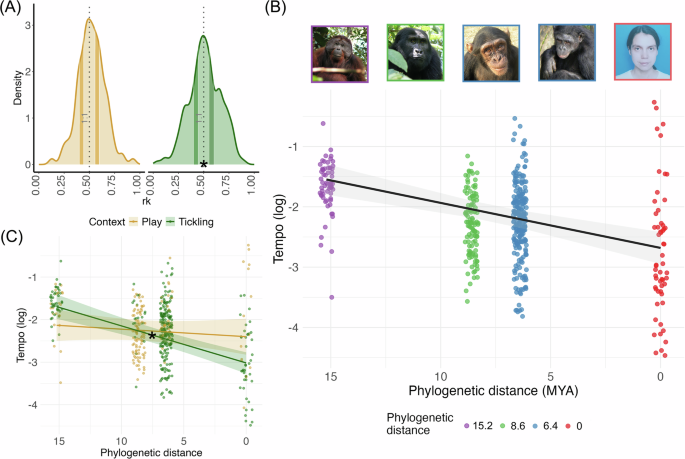
To investigate this continuity in vocal behavior, researchers from the University of Warwick performed an acoustic analysis of 140 laughter sequences. The dataset included recordings from 13 captive juvenile apes—four orangutans, two gorillas, three bonobos, and four chimpanzees—as well as four human children. By utilizing tickling, a method capable of eliciting spontaneous and uninhibited reflexive vocalizations, the team successfully captured laughter in its most natural state. Unlike social play, which involves complex physical activity that can disrupt rhythmic breathing, tickling provided a consistent metric for comparing vocal motor control across the primate lineage.
Related media
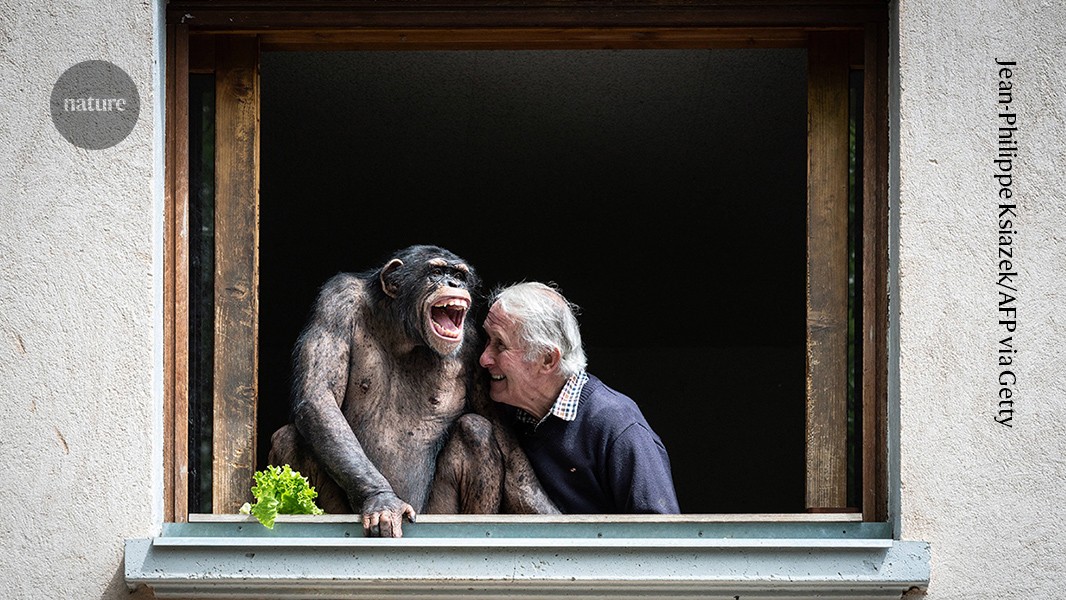
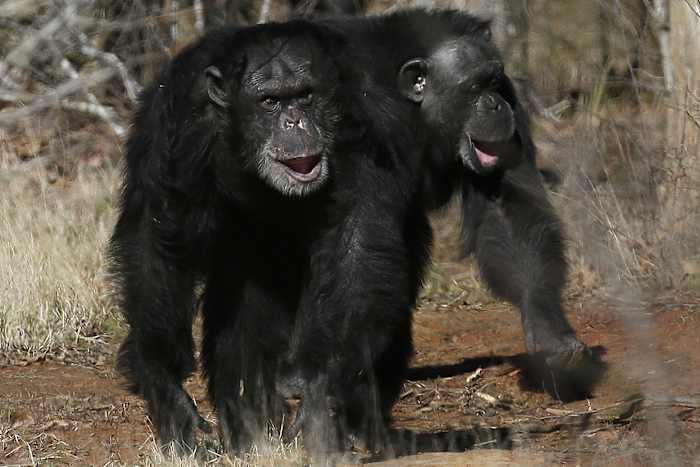
The study found that when tickled, humans and great apes alike produce laughs at regular, isochronous intervals. This rhythmic consistency across such diverse species suggests that the underlying vocal control is a conserved trait rather than a sudden human innovation. As noted in the study, humans appear to exist on a continuum of vocal evolution, possessing a sophisticated refinement of abilities that have been cumulatively honed over millions of years.
"In a way, we are very similar to other great apes because we’ve been laughing in a similar way for 15 million years."
Chiara De Gregorio, study author and researcher at the University of Warwick, via AP
While the fundamental rhythmic "beat" remains constant, human laughter distinguishes itself through remarkable flexibility and variety. Humans are the only species in the study capable of significantly modulating their laughter based on social context, ranging from polite, constrained chuckles to full-bodied guffaws. Other great apes, conversely, maintain relatively fixed patterns and tempos. Researchers observed that chimpanzees and bonobos exhibit faster laughter rhythms than more distant relatives like gorillas and orangutans, reflecting a trend toward increased vocal complexity as species approach the human lineage.
"I think we can say we are the masters of laughter."
Chiara De Gregorio, researcher at the University of Warwick, via The New York Times/Yahoo News
This research builds upon foundational studies in the field, including earlier work which utilized hundreds of recordings to establish that laughter is deeply embedded in human biology. That previous research identified that chimpanzees and bonobos produce longer series of short calls that more closely mirror human patterns than those of distant relatives. It also highlighted that certain apes, specifically gorillas and bonobos, exhibit the ability to exert conscious control over their breathing during bouts of laughter, a capability previously thought to be uniquely human.
Experts unaffiliated with the latest study emphasize the importance of this work for understanding the origins of language, which leaves no fossil record. By examining laughter as a proxy, scientists are beginning to map how vocal control evolved to suit different social lives. However, researchers acknowledge that the current analysis is limited in scale.
"Understand what makes us uniquely human, but also what is similar between humans and other animals."
Brittany Florkiewicz, researcher at Lyon College, via AP/Fortune
Brittany Florkiewicz, an expert in animal communication at Lyon College, noted that the findings underscore a need for further comparative research. Expanding the investigation to include other animals known for playful facial expressions, such as dogs, horses, or cats, could provide additional clarity regarding which vocal characteristics are uniquely human and which are shared across the broader animal kingdom.
Comparative observations in laughter research
| Subject | Key Finding |
|---|---|
| Rhythm | Shared isochronous intervals during tickling across all great apes and humans. |
| Flexibility | Humans uniquely modulate laugh tempo and style based on social context. |
| Breathing | Gorillas and bonobos exhibit evidence of exerting conscious control over breathing during laughter. |
| Evolutionary link | Laughter acts as a proxy for vocal control traits present 15 million years ago. |
Looking ahead, the research team at the University of Warwick intends to investigate the specific functional roles of these vocalizations in different species. While the current study confirms that humans remain the "masters of laughter" regarding variability and adaptive control, it highlights a shared biological heritage that connects modern communication to the evolutionary development of hominids.
How significant is this development?
Contribute your assessment to the aggregated reader intelligence ledger.
Archypedia is dedicated to independent, evidence-backed reporting. This briefing was synthesized from primary source reporting, corroborated across independent newsrooms, and verified against our Editorial Standards.
Transparency record
Evidence behind this report
This report synthesizes 7 distinct sources. Open the source ledger below to compare the underlying coverage.
Prepared under the Archypedia Editorial Policy by the Niko Vale editorial desk profile. AI-assisted tools may support drafting and verification; public accountability remains with Archypedia. Report an error.