Hubble telescope captures images of two merging galaxy clusters
New Hubble imagery confirms that the galaxy cluster CL0016+1609 is a site of active cosmic interaction, allowing researchers to map dark matter distribution.
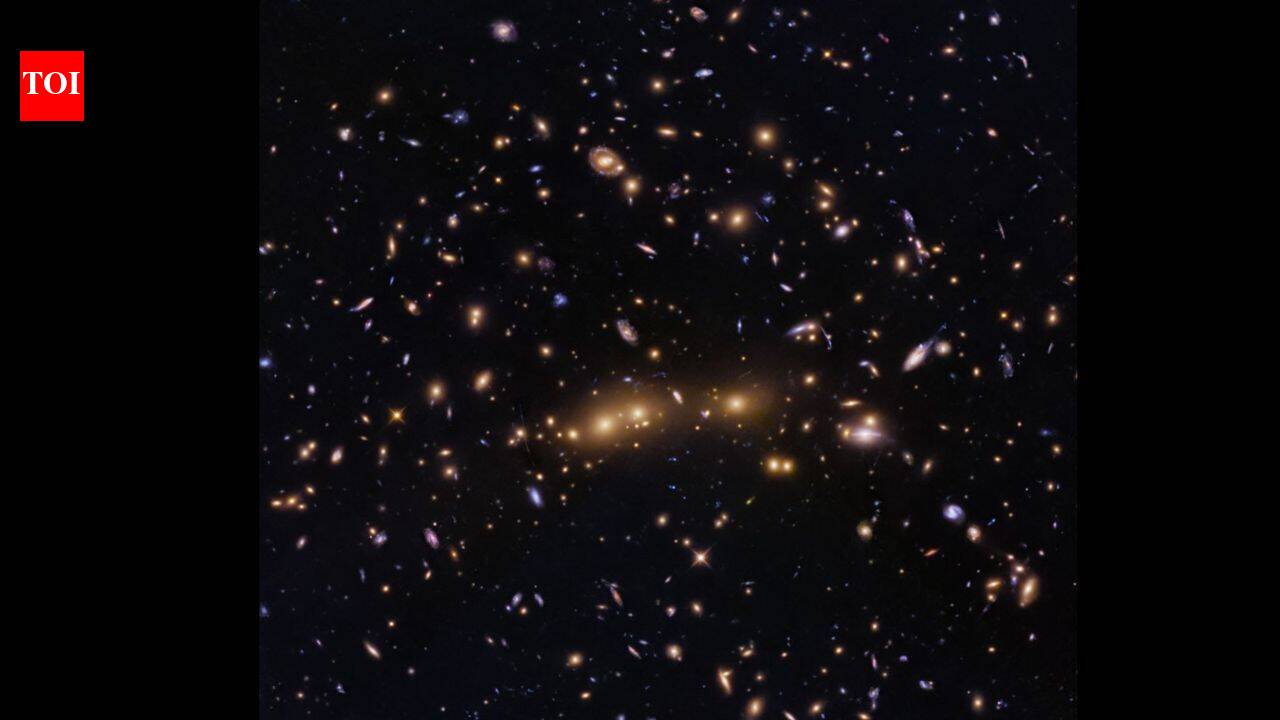
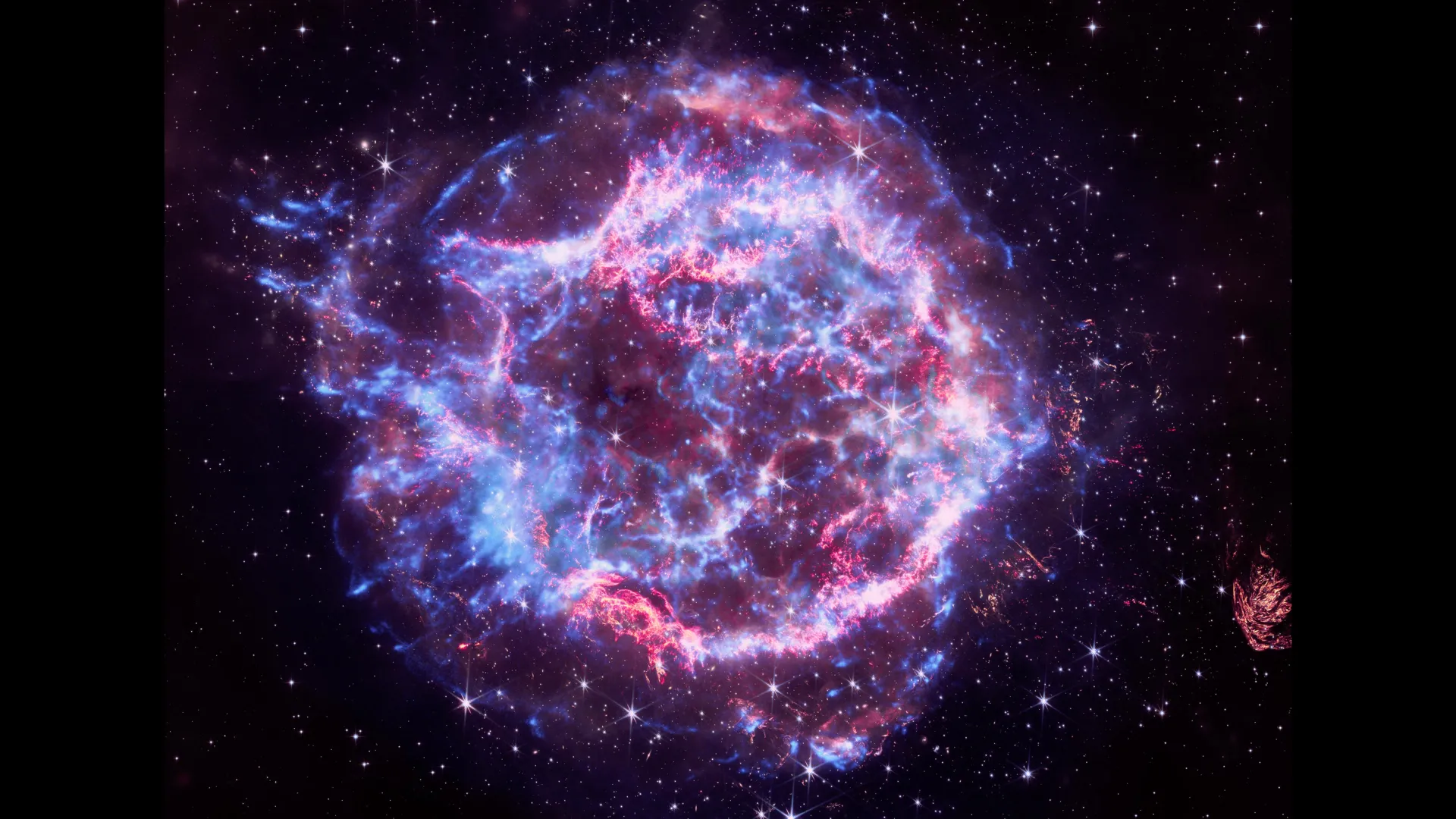
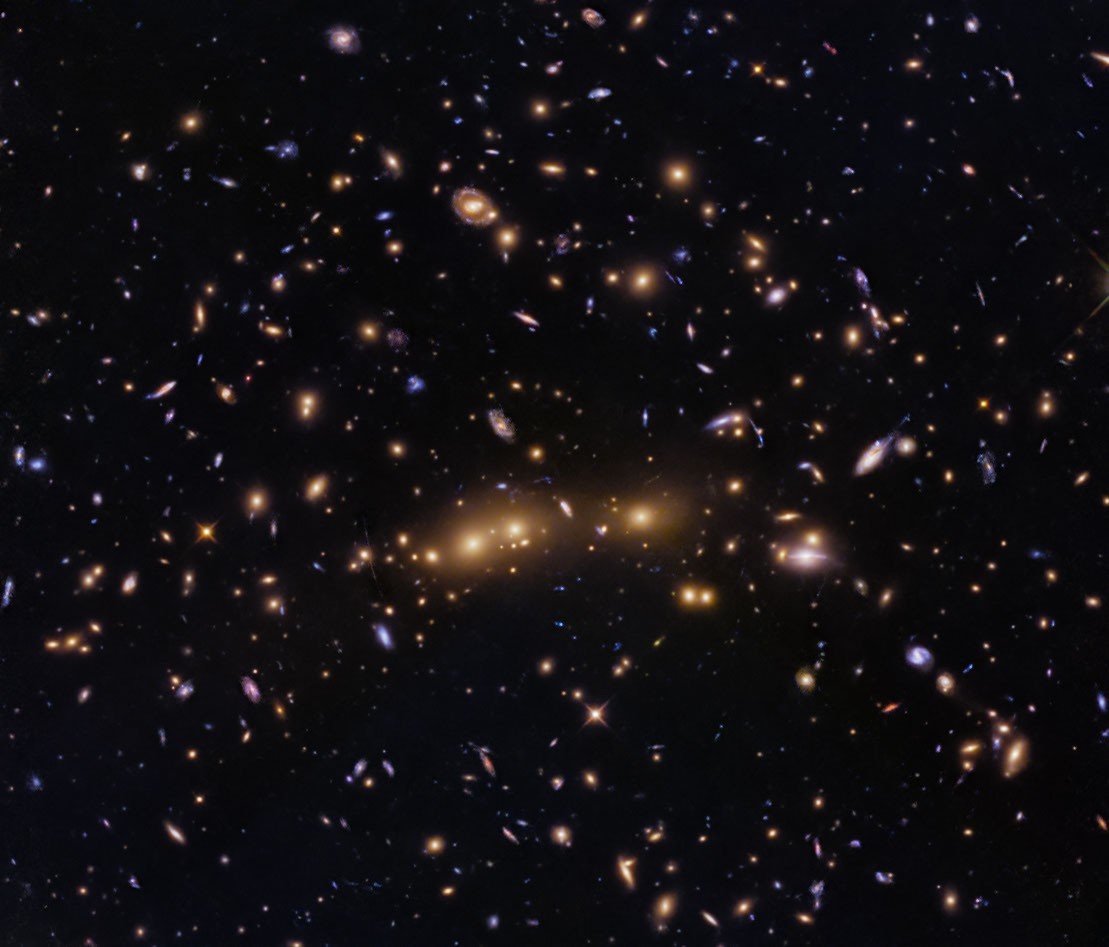
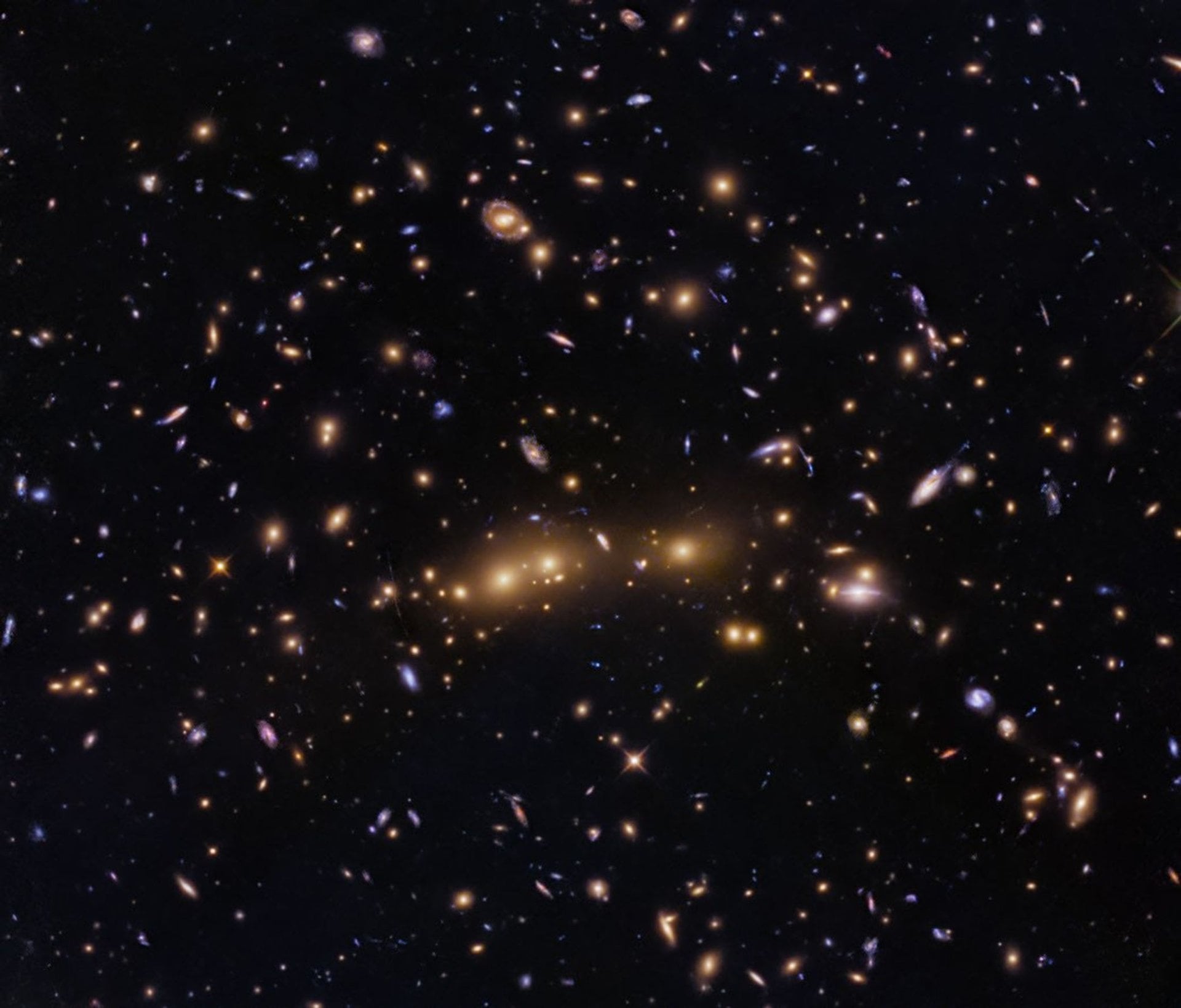
The Hubble Space Telescope has identified that a galaxy cluster previously observed as a single, luminous entity is in fact a site of complex cosmic interaction. The cluster, cataloged as CL0016+1609 or MACS J0018.5+1626, is currently undergoing a merger between two distinct clusters along the line of sight from Earth. This finding, based on data synthesized from Hubble’s Advanced Camera for Surveys and the Chandra X-ray telescope, clarifies the nature of a structure long studied at X-ray and radio wavelengths.
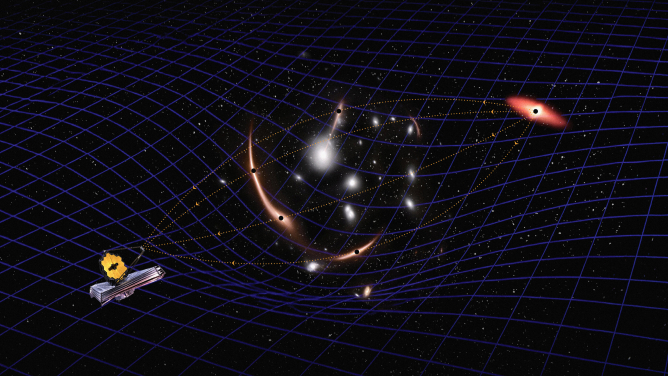
Astronomers utilized the Hubble observations to measure the cluster's dark matter distribution. Although dark matter cannot be imaged directly, it is detectable through the gravitational lensing effects it exerts on background matter. By observing how the cluster’s gravity warps the light of distant galaxies, researchers can map this invisible mass to better understand the evolution of large-scale cosmic structures. The images also incorporate data from Hubble’s Wide Field Camera 3, collected as part of the Reionization Lensing Cluster Survey, or RELICS. This program has identified approximately 300 high-redshift candidate galaxies magnified by the gravity of 46 massive clusters, including CL0016+1609. In the latest imagery, these distant galaxies appear as faint arcs of light, with a notable vertical arc positioned near the center of the cluster's large elliptical galaxies.
Related media

Broader Context of Galactic Evolution
The study of CL0016+1609 is part of a wider effort to track how galaxy clusters grow and change. Recent observations from various space-based observatories have revealed diverse examples of these interactions:
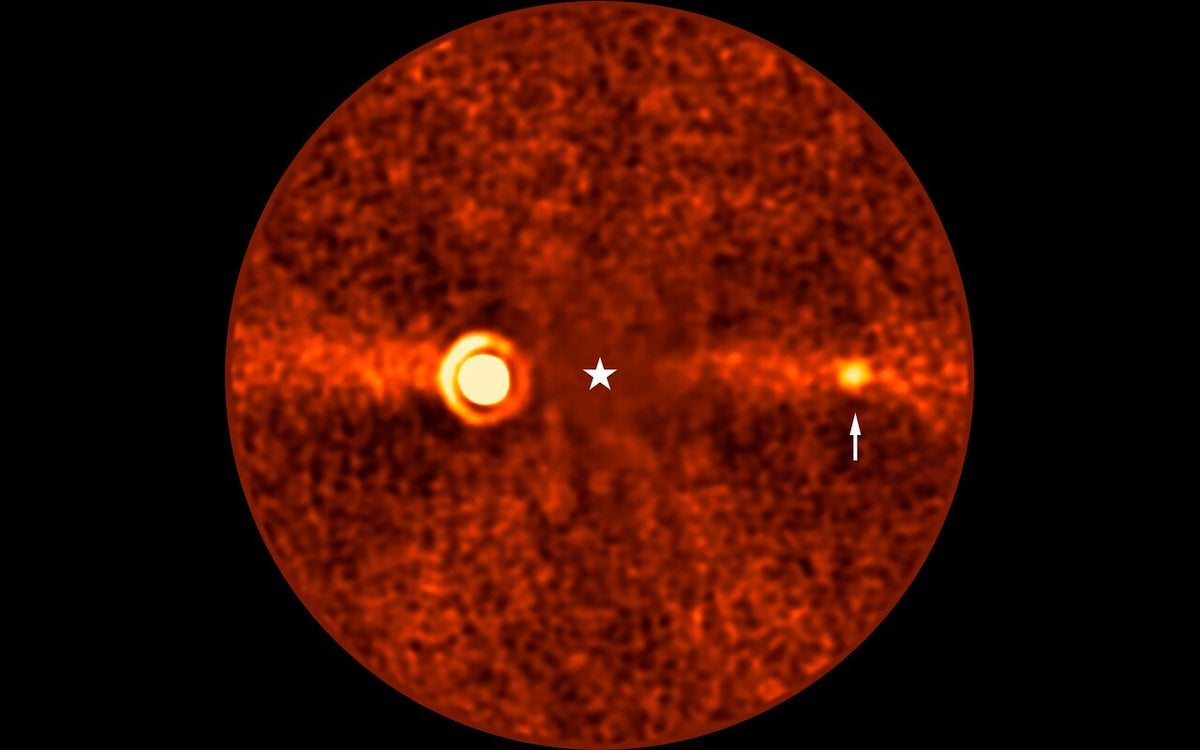
- MACS0416: Located approximately 4.3 billion light-years away, this cluster has been studied by both Hubble and the James Webb Space Telescope. Researchers have identified 14 transient objects—likely individual stars, multiple-star systems, or supernovae—magnified by gravitational lensing. Among these is a highly magnified star system nicknamed “Mothra.”
- Abell 3667: Observations using the Dark Energy Camera on the Víctor M. Blanco Telescope revealed a million light-year-long “bridge” of stray stars between two galaxies. This feature, known as intracluster light, provides optical evidence of a rapid merger between two distinct galaxy clusters.
- XLSSC 122: Situated 10.4 billion light-years away, this cluster was observed by the James Webb Space Telescope. Data revealed the earliest known instance of intracluster light, which researchers found correlates with dark matter mass concentrations. This cluster challenges existing cosmological models regarding the speed at which massive structures formed in the early universe.
The Role of Multi-Observatory Science
As researchers continue to refine their understanding of how galaxy clusters reshape the cosmic environment, the use of multiple observatories is becoming standard practice. While Hubble provides high-resolution imaging of local and intermediate-distance clusters, the James Webb Space Telescope allows scientists to peer further into the early universe, or “cosmic noon,” to observe the formative stages of these structures. Meanwhile, archives such as those from the Blanco telescope continue to provide valuable long-term data for stacking and analysis.
For CL0016+1609, ongoing analysis remains a priority for the scientific community as they attempt to reconcile the observed dark matter concentrations with current cosmological theories. These measurements serve as a test of the framework describing the universe’s development since the Big Bang. Future observations are expected to rely on wide-area surveys, including those using the Sunyaev–Zel'dovich effect to detect potential clusters, as astronomers aim to expand their sample size to dozens or hundreds of such objects.
How significant is this development?
Contribute your assessment to the aggregated reader intelligence ledger.
Archypedia is dedicated to independent, evidence-backed reporting. This briefing was synthesized from primary source reporting, corroborated across independent newsrooms, and verified against our Editorial Standards.
Transparency record
Evidence behind this report
This report synthesizes 10 distinct sources. Open the source ledger below to compare the underlying coverage.
- timesofindia.indiatimes.com
- science.nasa.gov
- universetoday.com
- ipac.caltech.edu
- lifetechnology.com
- scitechdaily.com
- sciencedaily.com
- space.com
- nasa.gov
- aol.com
Prepared under the Archypedia Editorial Policy by the Niko Vale editorial desk profile. AI-assisted tools may support drafting and verification; public accountability remains with Archypedia. Report an error.