Study Reveals How Leukemia Cells Enter and Damage Lungs
Researchers have identified the biological mechanisms behind lung damage in acute myeloid leukemia, providing evidence to support standardized steroid use.

Researchers at NYU Langone Health have identified the specific mechanisms that allow acute myeloid leukemia (AML) cells to infiltrate the lungs, providing a new scientific basis for emergency treatments that have historically relied on physician intuition rather than standardized protocols. The findings, published online June 29, 2026, in Nature Immunology, clarify why some patients experience severe respiratory distress and offer potential targets for future drug development.
AML is a cancer of the bone marrow where abnormal cells multiply instead of developing into healthy blood components. While respiratory failure is a well-known early complication of the disease, the process by which cancer cells migrate to the lungs—and why they trigger such rapid, life-threatening symptoms—has remained a significant gap in clinical understanding. According to researchers, effectively managing these early breathing crises is essential to stabilize patients so that primary AML therapies have the necessary time to work.
Related media
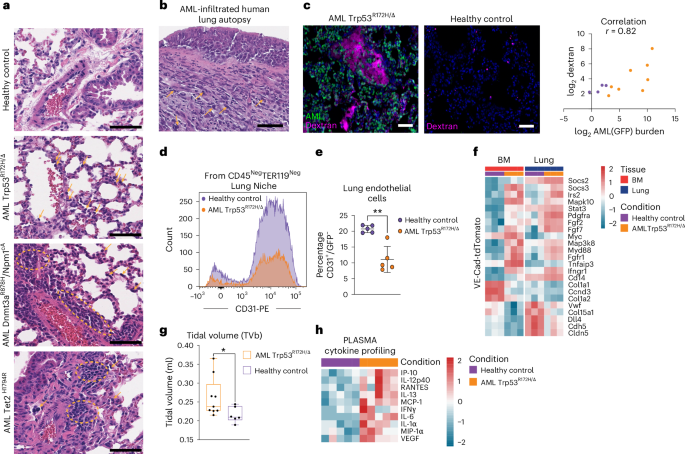

The study, which utilized both mouse models and human tissue biopsies, revealed that AML cells enter the lungs by leaking through thin blood vessels in the alveolar walls. Once inside the connective tissue, or stroma, the cancer cells trigger a structural transformation. They promote an increase in fibroblasts, which in turn produce excess collagen. This process creates scar-like fibrotic tissue that reduces the elasticity required for breathing.
Furthermore, the presence of AML cells disrupts the lung’s internal environment. The study documented a significant reduction in endothelial capillary aerocytes, the specialized cells responsible for facilitating oxygen exchange between the lungs and the bloodstream. Simultaneously, the lung's immune landscape shifts; cell populations capable of attacking the cancer, such as lymphocytes, are replaced by myeloid cells that suppress the immune response.
From Judgement Calls to Guidelines
A notable aspect of the research is the validation of steroid use during respiratory crises. Doctors have frequently administered prednisone to AML patients in distress based on clinical experience. In an analysis of historical patient records, the researchers found that all patients treated with prednisone when their breathing worsened due to leukemic lung infiltration showed dramatically improved
respiratory function within 12 hours. The study team argues this evidence supports elevating early steroid intervention from an observational choice to a formal treatment guideline.
Beyond current treatments, the team identified two proteins that drive the lung inflammation associated with AML:
- Galectin-9: A protein that binds sugar molecules on cell surfaces and helps them communicate. Its production increases in AML cells as a result of inflammatory interactions in the lung.
- IL-33 receptor: A protein located on the surface of leukemia cells that passes on signals in damaged lung tissue when it docks into its receptor.
Experiments showed that blocking either the galectin-9 or IL-33 signaling pathways effectively stopped the migration of cancer cells into the lung tissue. A phase 1 clinical trial (NCT05829226) is currently underway to test an antibody treatment targeting galectin-9 in patients.
Clinical Implications and Future Directions
In addition to direct infiltration, lung complications in leukemia patients can be indirect, often resulting from a weakened immune system that leaves patients vulnerable to bacterial, viral, or fungal infections, according to guidance from Advance Study. certain chemotherapy drugs themselves can occasionally cause pulmonary toxicity, leading to inflammation and scarring that mimics or complicates leukemic infiltration.
Looking ahead, the research team, led by Iannis Aifantis and Varvara Paraskevopoulou, intends to determine whether combining galectin-9 blockade with standard chemotherapy or other targeted therapies offers improved clinical outcomes. With the American Cancer Society estimating that 23,000 people will be diagnosed with AML in 2026, the need for standardized, effective interventions for lung complications remains an urgent priority.
What to Watch Next
- Clinical Trial Progression: Results from the phase 1 study (NCT05829226) assessing galectin-9 blockade will be critical for determining the viability of these new molecular targets.
How significant is this development?
Contribute your assessment to the aggregated reader intelligence ledger.
Archypedia is dedicated to independent, evidence-backed reporting. This briefing was synthesized from primary source reporting, corroborated across independent newsrooms, and verified against our Editorial Standards.
Transparency record
Evidence behind this report
This report synthesizes 8 distinct sources. Open the source ledger below to compare the underlying coverage.
- prnewswire.com
- nyulangone.org
- lifetechnology.com
- advancestudy.org
- finance.yahoo.com
- nature.com
- myleukemiateam.com
- pmc.ncbi.nlm.nih.gov
Prepared under the Archypedia Editorial Policy by the Lina Park editorial desk profile. AI-assisted tools may support drafting and verification; public accountability remains with Archypedia. Report an error.