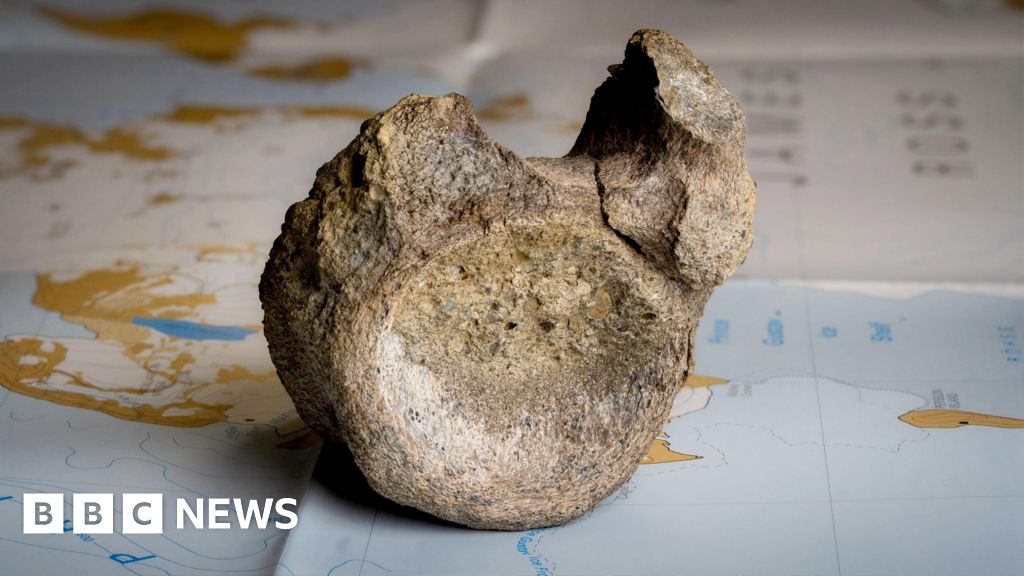
Antarctic titanosaur fossil identified after decades in storage
Stored in a museum for decades, an Antarctic fossil has been identified as a titanosaur vertebra. The discovery offers insight into the ecosystem of the continent during the Late Cretaceous.

A fossil fragment collected in 1985 from Antarctica’s James Ross Island has been identified as a dinosaur tail bone. The specimen, which spent four decades in storage within the geology collections of the British Antarctic Survey (BAS) in Cambridge, has now been confirmed to belong to a titanosaur. The findings were published in the journal Acta Palaeontologica Polonica.
The bone was originally unearthed during a geological mapping expedition led by geologist Mike Thomson. At the time of collection, the fossil was recorded in a field notebook as a vertebra of large reptile
and was initially presumed to be from a marine reptile. Thomson died in 2020, never knowing the true identity of the specimen. Years later, Dr. Mark Evans, collections manager at the BAS, examined the contents of the storage drawers and suspected the bone was not marine in origin.
Related media

Evans consulted with Professor Paul Barrett of the Natural History Museum in London to verify the find. Upon analyzing the fossil, researchers identified a distinct, hollowed-out shape and a rounded surface, features consistent with the ball-and-socket joints of a titanosaur tail.
"As soon as I saw it, I knew what we were dealing with… it was a dead cert we were dealing with a Titanosaur. This is a combination of features that's completely unique to these types of dinosaurs."
Paul Barrett, Professor at the Natural History Museum, via AOL
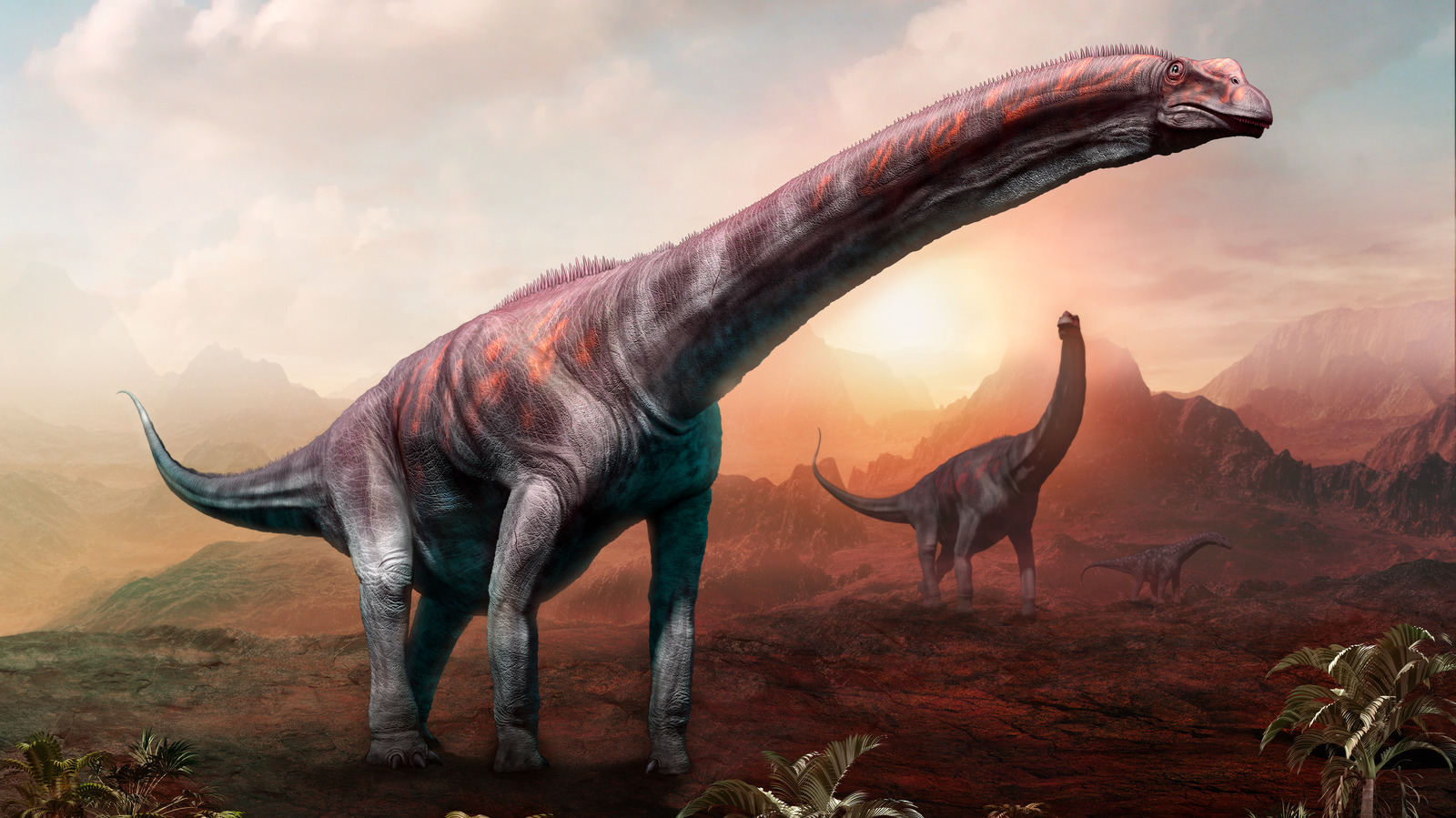
The titanosaur is estimated to have been approximately 23 feet (7 meters) in length. Researchers believe the dinosaur may have been a juvenile or a smaller species, as titanosaurs—a group characterized by long necks and counter-balancing tails—could grow to massive sizes. Evidence suggests the creature lived about 82 million years ago during the Late Cretaceous Period. According to Barrett, scientists hypothesize the carcass floated away from the coast and settled on the sea floor, where it was subsequently encased in marine rock.
This discovery provides new insight into an era when Antarctica was a vastly different environment. While today the continent is largely covered by ice, paleontological records indicate that in the Late Cretaceous, it supported lush forests and diverse ecosystems.
"It shows that an area that we now think is really uninhabitable was once actually very habitable and had this huge cast of characters living on it."
Paul Barrett, Professor at the Natural History Museum, via AOL
Context of Antarctic Paleontology
Antarctic fossil exploration is constrained by extreme climate conditions and thick ice sheets. Research on the continent typically focuses on exposed bedrock in the Transantarctic Mountains or coastal regions like the Antarctic Peninsula. Other notable discoveries on the continent include:
- Cryolophosaurus ellioti and Glacialisaurus hammeri: Discovered in the Transantarctic Mountains during a 1990-1991 expedition, these were the first dinosaurs identified on the continent proper.
- Nothofagus: Fossilized remains of these southern beech trees suggest the region once hosted temperate, dense forests.
- Marine Reptiles and Mammals: Seymour Island has yielded remains of land-dwelling mammals and massive plesiosaurs, highlighting the historical biodiversity of the area.
While the fossil record in Antarctica remains sparse compared to other continents, modern technology continues to aid researchers in re-evaluating collections that have been stored for decades. By peering inside bones and utilizing advanced comparative analysis, scientists hope to piece together how these creatures fit into the broader ecosystems at the southern end of the world during the Cretaceous period.
How significant is this development?
Contribute your assessment to the aggregated reader intelligence ledger.
Archypedia is dedicated to independent, evidence-backed reporting. This briefing was synthesized from primary source reporting, corroborated across independent newsrooms, and verified against our Editorial Standards.
Transparency record
Evidence behind this report
This report synthesizes 9 distinct sources. Open the source ledger below to compare the underlying coverage.
- apnews.com
- ca.news.yahoo.com
- aol.com
- antarcticacruises.com
- sciencing.com
- bbc.com
- extinctanimals.org
- wral.com
- gjsentinel.com
Prepared under the Archypedia Editorial Policy by the Niko Vale editorial desk profile. AI-assisted tools may support drafting and verification; public accountability remains with Archypedia. Report an error.