Hayabusa2 completes close flyby of asteroid Torifune in defense test
JAXA successfully piloted the Hayabusa2 probe through a close-range encounter with asteroid Torifune to refine the precision needed for planetary defense.
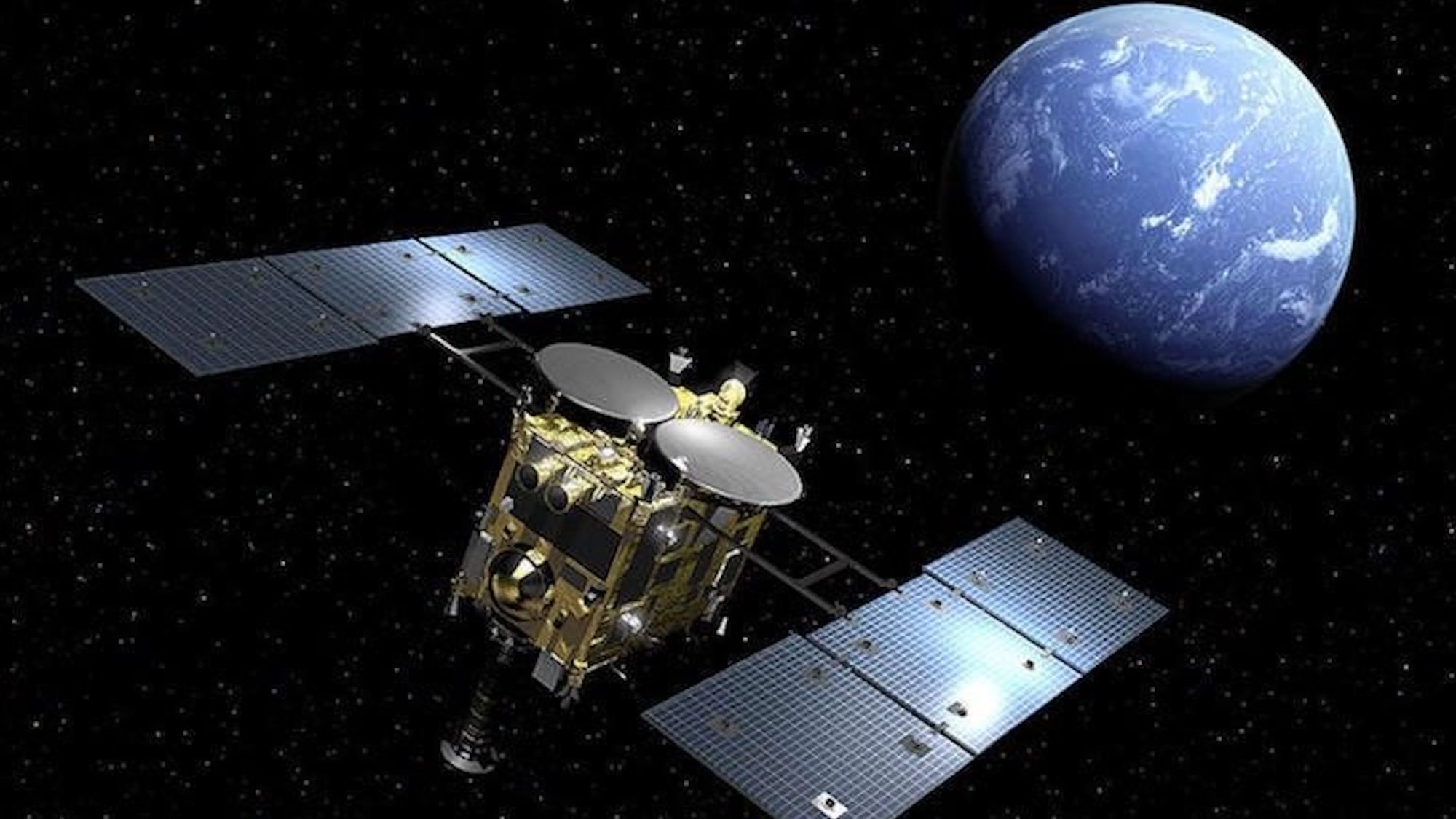
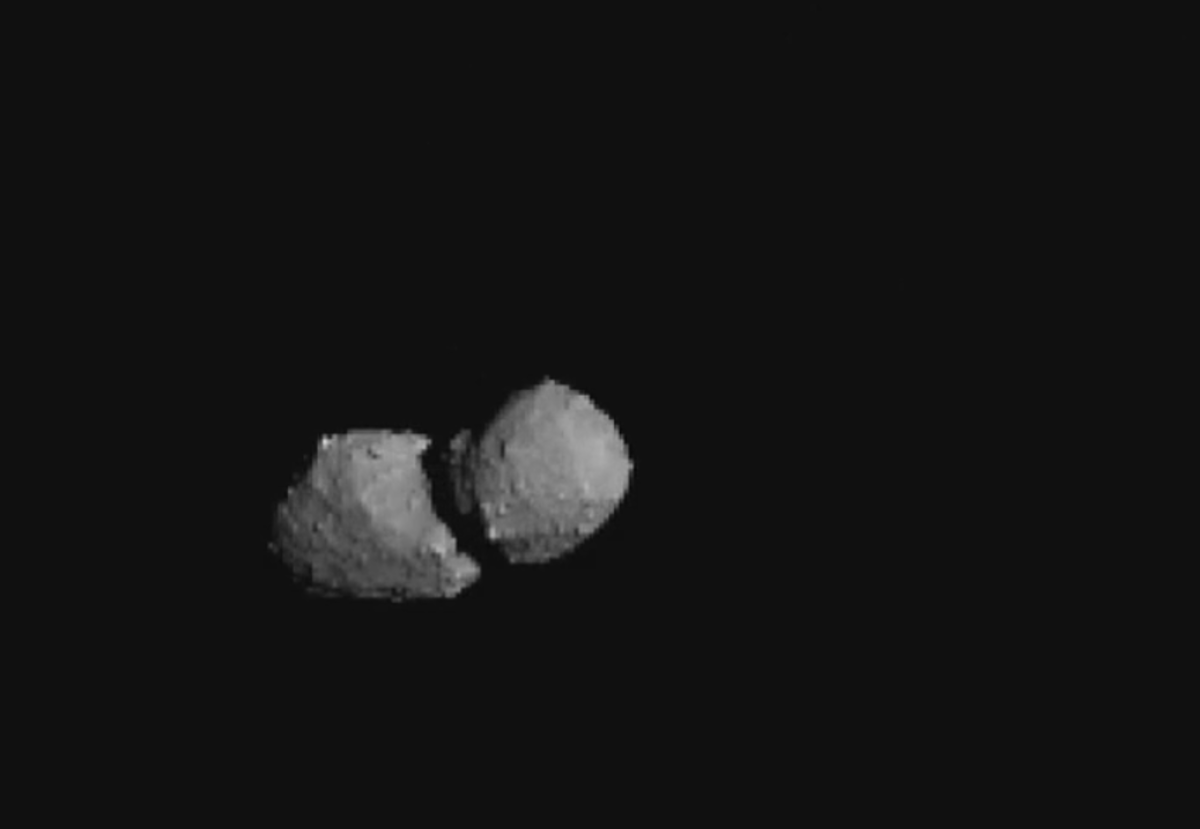
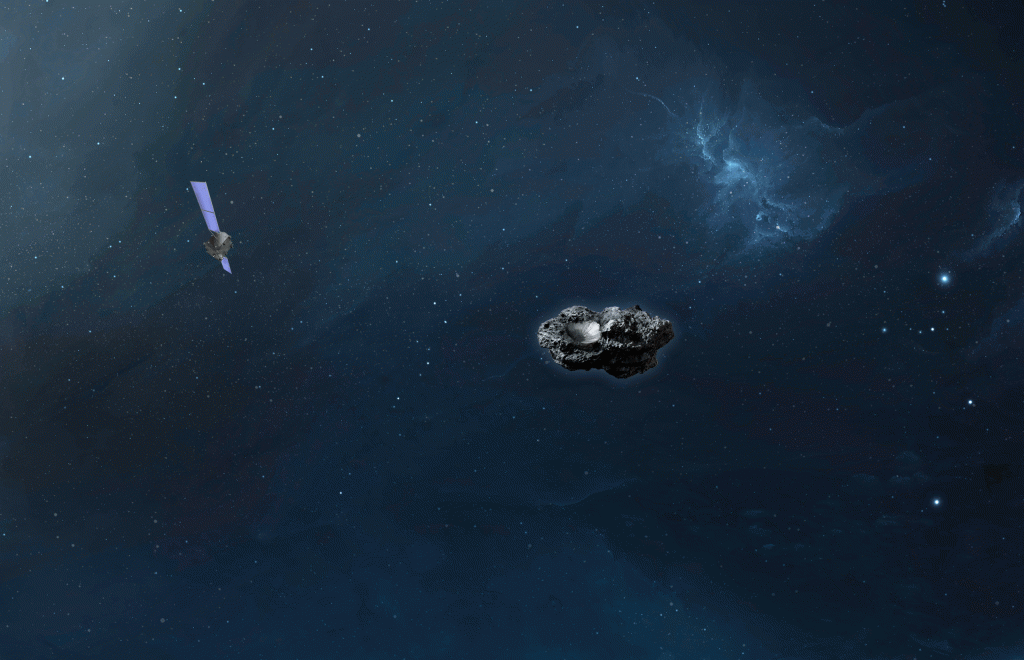
The Japan Aerospace Exploration Agency (JAXA) successfully maneuvered the Hayabusa2 spacecraft through a high-velocity flyby of the near-Earth asteroid Torifune on Sunday. The operation, which took place at 0935 GMT, served as a crucial rehearsal for planetary defense technologies. By executing a close approach at speeds of more than 18,000 kilometres per hour, JAXA aims to demonstrate the navigational precision required to intercept and potentially deflect hazardous Space rocks.
The mission is significant because it refines the ability to target small, elusive objects in deep Space. According to Yuya Mimasu of JAXA, navigating the probe to within approximately 800 meters of the target asteroid is an exercise of extreme difficulty, likened to trying to shoot through a one-yen coin somewhere within the area stretching from Okinawa to Hokkaido
.
Related media


Advancing Planetary Defense
While the flyby of Torifune—formerly designated 2001 CC21—was not a response to any immediate threat, it provides vital data for future defensive measures. Patrick Michel, a project scientist at the European Space Agency, emphasized that understanding an asteroid’s physical characteristics is essential for impact planning. Is the surface consisting of bare rock, or cover(ed) by boulder fields or sand beaches? Only images taken by a spacecraft can reveal this information
, Michel stated. The response of an asteroid to a kinetic impact depends heavily on whether it acts like a solid mass or a porous, sponge-like structure, as previously observed during the Hayabusa2 mission at Ryugu.
The global effort to secure Earth against cosmic threats has gained momentum following the NASA-led Double Asteroid Redirection Test (DART) in 2022, which successfully altered the orbit of the asteroid Dimorphos. While DART proved that kinetic impact can work, scientists require a broader set of data across diverse asteroid types to generalize these findings. JAXA’s current test contributes to this growing science coverage of planetary defense, preparing the agency for complex scenarios where precision is non-negotiable.
Hayabusa2 Mission Profile
- Launch: December 2014
- Primary Objective: Sample return from asteroid Ryugu (completed 2020)
- Current Phase: Extended mission for planetary defense testing
- Target Flyby: Torifune (2001 CC21)
- Future Target (2031): 1998 KY26 (rendezvous and potential landing)
The Path to 1998 KY26
Following the successful encounter with Torifune, Hayabusa2 will continue its deep-space journey toward its ultimate destination: the tiny asteroid 1998 KY26. Expected to arrive in 2031, the mission faces new technical hurdles. The spacecraft was not originally designed for such an environment.
The mission remains proof of the longevity and utility of the Hayabusa2 probe. Despite the complexity of these operations, JAXA officials reported that the spacecraft is functioning normally following Sunday’s encounter. As the agency collects imaging and thermal data from Torifune, the information will be integrated into the international effort to map, monitor, and defend against potentially hazardous objects in the near-Earth environment.
The international community continues to watch the progress of this fleet of exploration vessels, including the Hera mission currently en route to the site of the DART impact. For now, Hayabusa2 moves forward, having successfully checked one more milestone in its extended, high-stakes reconnaissance of the solar system.
How significant is this development?
Contribute your assessment to the aggregated reader intelligence ledger.
Archypedia is dedicated to independent, evidence-backed reporting. This briefing was synthesized from primary source reporting, corroborated across independent newsrooms, and verified against our Editorial Standards.
Transparency record
Evidence behind this report
This report synthesizes 11 distinct sources. Open the source ledger below to compare the underlying coverage.
- en.aletihad.ae
- scmp.com
- space.com
- cosmos.isas.jaxa.jp
- popsci.com
- futurism.com
- isas.jaxa.jp
- thepeninsulaqatar.com
- arabnews.jp
- planetary.org
- theweek.in
Prepared under the Archypedia Editorial Policy by the Niko Vale editorial desk profile. AI-assisted tools may support drafting and verification; public accountability remains with Archypedia. Report an error.