Bumblebees show emotion-like states through facial expressions
A study from Southern Medical University and Macquarie University suggests bumblebees display expressions of pleasure and distaste based on internal needs.
Dumblebees are displaying behaviors that suggest they possess an inner life, challenging the long-standing scientific perception of insects as mere biological machines. According to research published on 7 July 2026 in the journal Proceedings of the National Academy of Sciences, these insects exhibit facial expressions when consuming food, suggesting a level of emotional processing previously thought to be exclusive to mammals.
The study, conducted by researchers at the Southern Medical University in Guangzhou, China, in collaboration with Macquarie University in Sydney, Australia, utilized high-resolution, slow-motion video to document the reactions of 18 bumblebee colonies. When provided with sweet sugar solutions, the bees repeatedly extended their glossa—a long, tongue-like structure—even after they had finished consuming the liquid. Researchers described this post-consumption behavior as akin to a mammal "licking its lips." Conversely, when presented with bitter or salty solutions, the bees responded by shaking their heads and wiping their mouthparts, behaviors interpreted as signs of distaste.
Related media
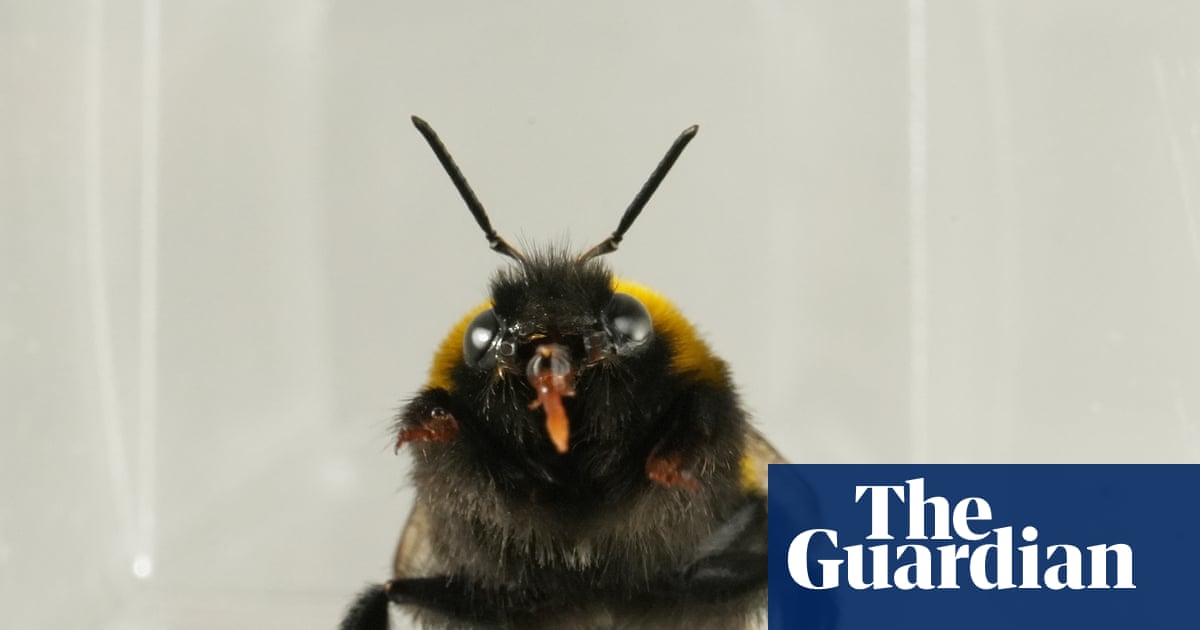

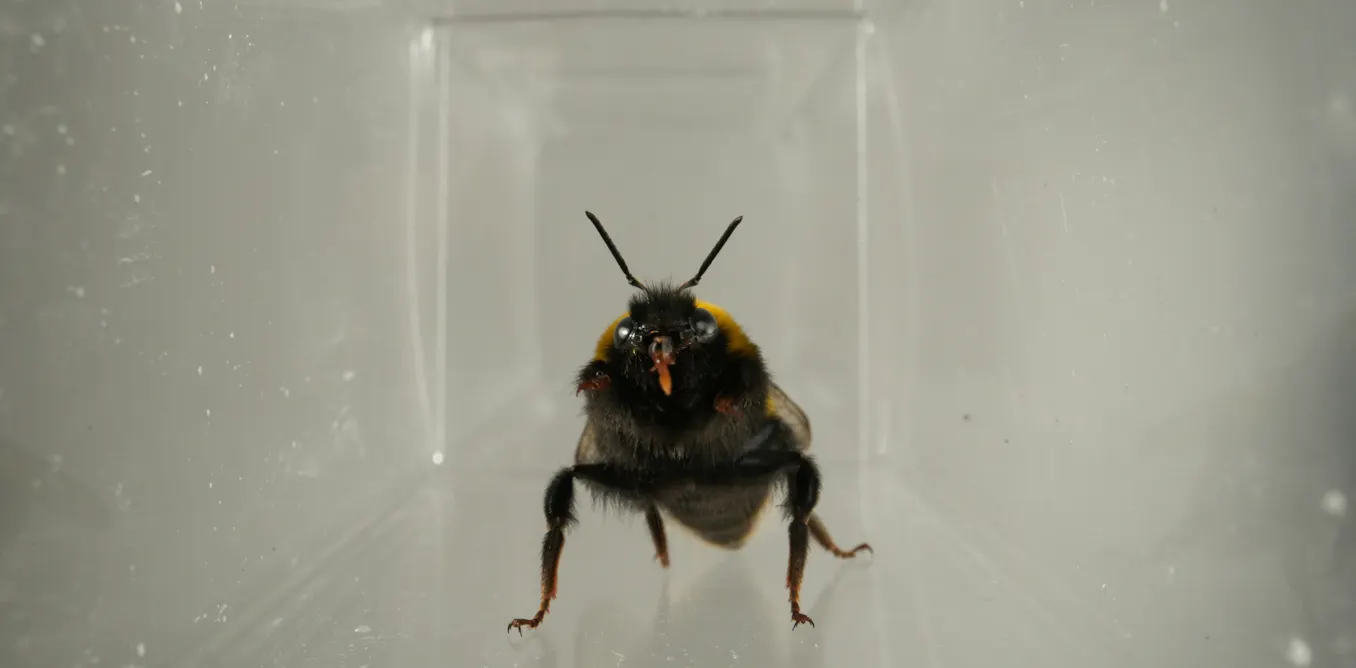
Moving beyond simple reflexes
For decades, scientific consensus often categorized insect behavior as largely instinctive or mechanical. Professor Andrew Barron of Macquarie University, a co-author of the study, noted that there has historically been a tension between viewing insects as animals or as "mini robots." The findings published today suggest a more nuanced reality.
To determine whether these facial movements were merely reflexive reactions to the chemistry of the liquids, the research team adjusted the bees' physiological states. By exposing the bees to heat-induced dehydration, the scientists found that the insects' responses shifted. A dehydrated bee, when offered previously avoided salty water, consumed the liquid thirstily and displayed the same glossa extensions typically reserved for sugar. According to the research, this indicates that the bee’s behavior is not a fixed, automatic reaction to a specific chemical, but rather a subjective evaluation based on the individual's current physiological needs.
The research also explored the underlying neurochemistry. When bees were treated with substances that manipulate mood and appetite, such as endocannabinoids, their glossa-protrusion frequency increased. This mirrors responses observed in mammals, suggesting that these behaviors are linked to affective states rather than simple, dopamine-driven feeding motivation.
Scientific perspectives
The implications of this work are attracting attention across the scientific community. While some experts caution against equating these states directly with human emotions, the study is being hailed as a significant advancement in the field of science. Jonathan Birch of the London School of Economics described the findings as the first clear instance of "wanting" and "liking" being disentangled in a bee. Ralph Adolphs at the California Institute of Technology characterized the study as innovative, noting that while it is difficult to determine if bees experience pleasure in a human sense, the evidence suggests they represent the value of taste stimuli in a highly flexible manner.
Associate Professor Thomas White, an entomologist from the University of Sydney who was not involved in the research, remarked that the study shifts the focus toward the "positive side of life," as much of previous insect research centered on pain or fear. He added that the findings support a growing trend in research suggesting that many insects have the capacity to "feel the world" rather than just detect and process information.
What to watch next
As the scientific community processes these findings, future inquiries are expected to focus on how bee brain activity correlates with these subjective experiences. Researchers intend to use more advanced neuroimaging and behavioral analysis to bridge the gap between physical neural mechanisms and mental states.
The current findings, while preliminary, have prompted questions about the ethical considerations of how humans interact with insects. As Professor Barron stated, the tiny bee brain, weighing less than a milligram, can seemingly support a form of inner life, leaving researchers to consider how this realization might alter our treatment of these creatures.
| Stimulus | Observed Reaction | Interpretation |
|---|---|---|
| Sugar Solution | Repeated glossa protrusion | "Liking" / Positive state |
| Salty/Bitter Solution | Head shaking and mouth wiping | "Disliking" / Aversive state |
| Salty Solution (Dehydrated) | Glossa protrusion | Subjective shift based on physiological need |
The research underscores a "golden age" of study regarding insect behavior. For the bumblebee, the road ahead involves further investigation into how their mental life arises from neural processes, potentially fundamentally changing our understanding of consciousness in the animal kingdom.
How significant is this development?
Contribute your assessment to the aggregated reader intelligence ledger.
Archypedia is dedicated to independent, evidence-backed reporting. This briefing was synthesized from primary source reporting, corroborated across independent newsrooms, and verified against our Editorial Standards.
Transparency record
Evidence behind this report
This report synthesizes 9 distinct sources. Open the source ledger below to compare the underlying coverage.
- theconversation.com
- yahoo.com
- theguardian.com
- newscientist.com
- dailymail.com
- brightsurf.com
- en.wikipedia.org
- psychologytoday.com
- lifetechnology.com
Prepared under the Archypedia Editorial Policy by the Niko Vale editorial desk profile. AI-assisted tools may support drafting and verification; public accountability remains with Archypedia. Report an error.