China’s Tianwen-2 Reaches Earth’s Quasi-Moon and Prepares to Grab a Sample
China's Tianwen-2 spacecraft has arrived at the near-Earth asteroid Kamoʻoalewa to begin mapping and scientific observations. The mission intends to collect samples to determine if the object is a fragment ejected from the Moon.
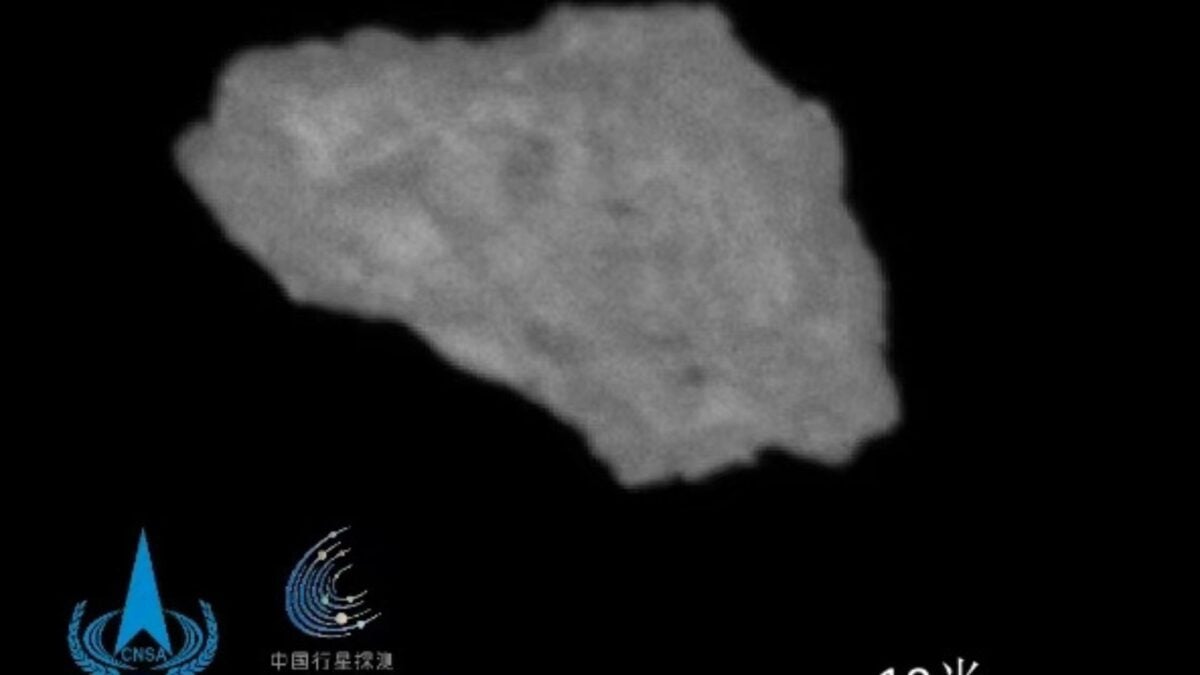
China’s Tianwen-2 spacecraft has successfully completed a transit covering approximately 1 billion kilometers, reaching its primary target: the near-Earth asteroid 469219 Kamoʻoalewa. The China National Space Administration (CNSA) announced on Monday, 6 July 2026, that the probe has established a position roughly 20 kilometers from the small rocky body, marking the commencement of an intensive phase of scientific observation and site mapping.
This arrival concludes a journey initiated on 29 May 2025, when the spacecraft lifted off from the Xichang Satellite Launch Center aboard a Long March 3B rocket. Over the course of the 400-day flight, the probe executed a series of deep-space maneuvers and trajectory corrections. By 7 June 2026, the spacecraft achieved a coplanar trajectory with the asteroid at a distance of 30,000 kilometers, followed by a close approach to within 2,000 kilometers on 19 June 2026.
Related media

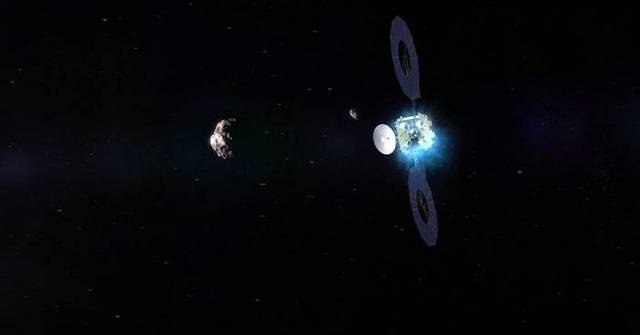
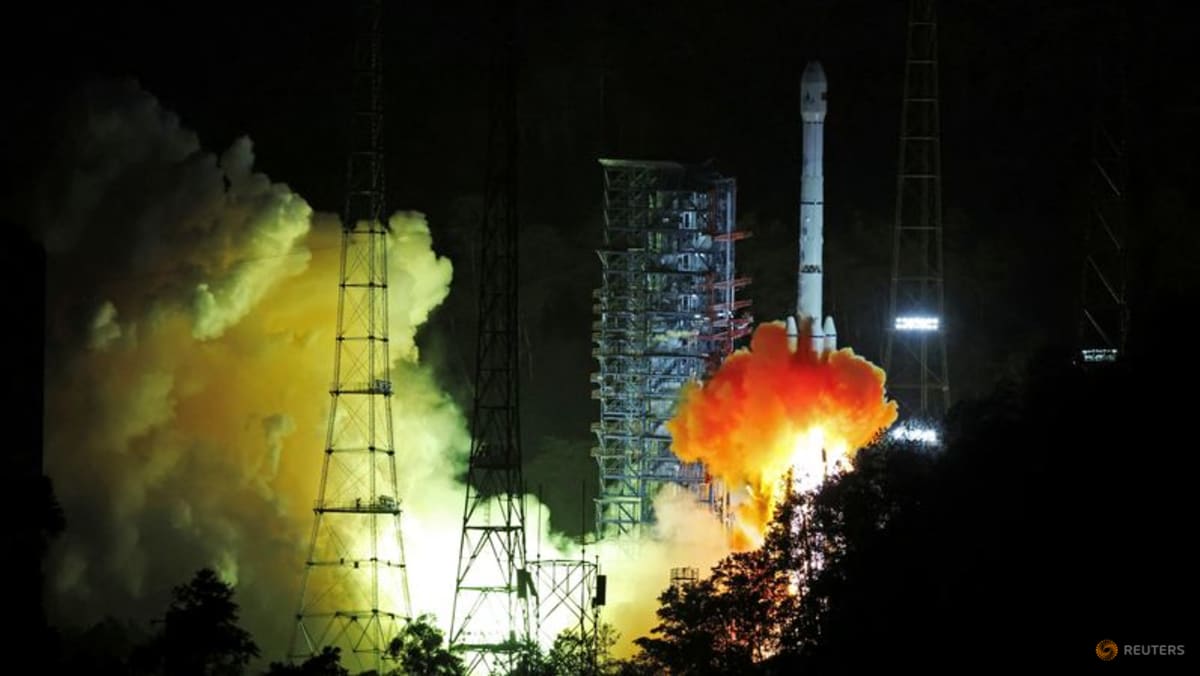
The mission represents a significant technical milestone for China’s space exploration program. Because the asteroid’s position was previously determined only through ground-based observations with a significant margin of error, the mission team utilized optical navigation data during the final approach to refine the asteroid's ephemeris, reducing positional uncertainty from hundreds of kilometers to the kilometer scale. The CNSA has since released the first close-up imagery of the object, which appears as a rugged, grey mass against the backdrop of space.
The Target: Kamoʻoalewa
Kamoʻoalewa, also designated as 2016 HO3, is a quasi-satellite of Earth. While it orbits the Sun, it maintains a orbit in near-synchronization with Earth, keeping it a constant companion. Discovered in 2016 via the Pan-STARRS 1 telescope in Hawaii, the asteroid is estimated to measure between 40 and 100 meters in diameter.
A primary scientific goal of the mission is to resolve the debate surrounding the origin of the asteroid. Spectroscopic analysis conducted in 2021 revealed that the asteroid's composition closely matches lunar rocks retrieved during historical Apollo missions. Some researchers hypothesize that the object was ejected from the Moon following a high-energy impact, potentially linked to the formation of the Giordano Bruno crater on the lunar far side. Confirmation of this theory would classify the asteroid as a fragment of Earth’s natural satellite.
Sampling and Methodology
Tianwen-2 is equipped with 11 scientific instruments, including multispectral cameras, spectrometers, a magnetometer, and sounding radar. According to the CNSA, the probe will conduct remote sensing observations at progressively lower altitudes to study the object's morphology, material composition, and internal structure. These surveys serve as the foundation for selecting a landing site.
The mission design incorporates high levels of redundancy to ensure success, given the uncertain surface characteristics of Kamoʻoalewa. Engineers have planned for three distinct sampling modes:
- Hovering sampling: Utilizing a robotic arm to collect regolith while remaining near the surface.
- Touch-and-go: A rapid contact maneuver similar to methods employed by prior international missions.
- Anchoring and attachment: A technique intended for a more solid, stable surface, allowing the probe to fix itself to the rock for drilling.
This mission marks the first time an anchoring and attachment method has been attempted on an asteroid. The goal is to return between 20 and 100 milligrams of material to Earth.
Mission Timeline and Future Objectives
Following the sampling operations, the probe is expected to depart the asteroid in April 2027. It will subsequently release a capsule to return the collected regolith to Earth, with arrival projected for late 2027. This return is viewed as a vital step in China’s expanding capabilities in deep-space exploration, a field where it is increasingly operating alongside established programs from the United States and Europe.
The mission will not conclude with the return of the samples. After passing Earth to facilitate the drop-off, the main spacecraft will use a gravity-assist maneuver to propel itself toward its second objective: the main-belt comet 311P/PanSTARRS. The probe is scheduled to arrive at this distant destination by 2035, where it will spend at least one year conducting further in-situ measurements.
What to watch next:
- Survey Phase: Continuous mapping of the asteroid at altitudes ranging from 20 kilometers down to 300 meters.
- Site Selection: Finalization of the specific collection method based on detected surface mechanical properties.
- Sample Return: The planned reentry of the sample capsule in late 2027, which will be analyzed to determine if the object is indeed a "missing piece" of the Moon.
How significant is this development?
Contribute your assessment to the aggregated reader intelligence ledger.
Archypedia is dedicated to independent, evidence-backed reporting. This briefing was synthesized from primary source reporting, corroborated across independent newsrooms, and verified against our Editorial Standards.
Transparency record
Evidence behind this report
This report synthesizes 12 distinct sources. Open the source ledger below to compare the underlying coverage.
- bastillepost.com
- gizmodo.com
- en.wikipedia.org
- dw.com
- channelnewsasia.com
- yahoo.com
- en.sasac.gov.cn
- fananews.com
- link.springer.com
- english.news.cn
- spacenews.com
- global.chinadaily.com.cn
Prepared under the Archypedia Editorial Policy by the Niko Vale editorial desk profile. AI-assisted tools may support drafting and verification; public accountability remains with Archypedia. Report an error.