NASA to conduct first controlled fire experiment on the lunar surface
NASA's Flammability of Materials on the Moon experiment will analyze combustion in partial gravity to inform safety standards for future lunar habitats.

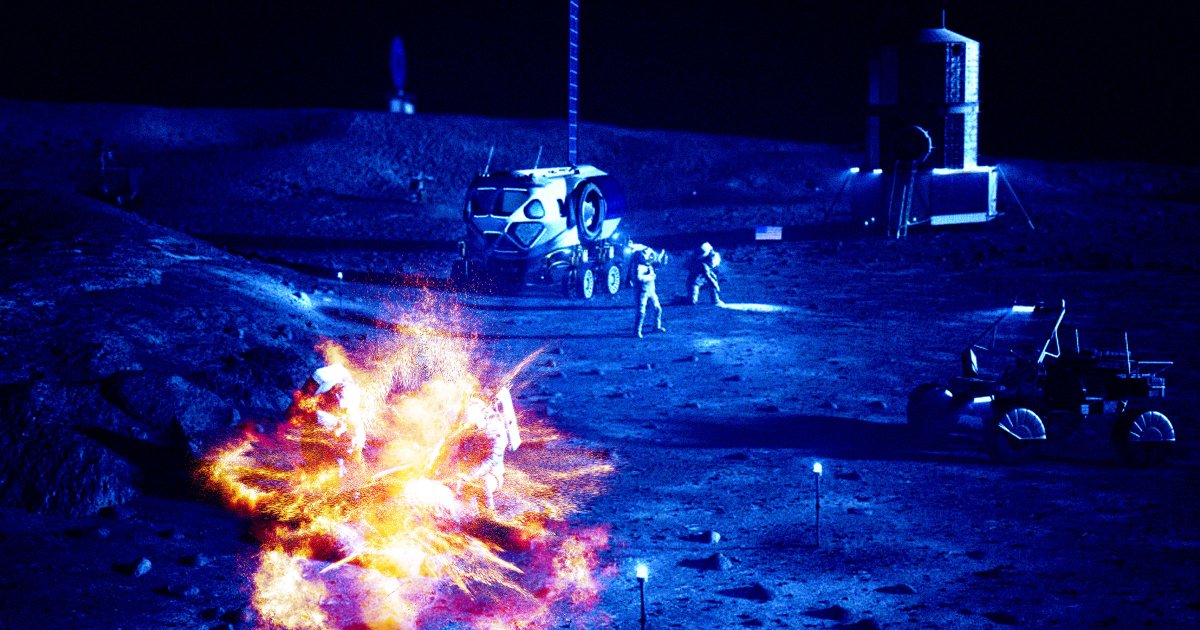
NASA is preparing to conduct the first controlled fire experiment on the lunar surface, a mission designed to address critical safety questions as the agency moves toward establishing a long-term human presence on the Moon. While combustion has been studied extensively in microgravity aboard spacecraft and through drop-tower tests on Earth, this initiative — known as the Flammability of Materials on the Moon (FM2) experiment — marks the first time such research will occur on another planetary body.
The mission is viewed as an essential step for the Artemis program, which aims to return humans to the lunar surface. Because future lunar habitats are expected to operate at lower atmospheric pressures and with higher oxygen concentrations than those found on Earth, the risk of fire is a primary safety concern. According to NASA, existing material certification standards, such as NASA-STD-6001B, are based on tests conducted under Earth gravity. These methods assume that a material deemed safe at 1G will remain safe in space, but researchers believe that partial gravity environments, about one-sixth that of Earth, may significantly alter combustion dynamics.
Related media


The Physics of Lunar Combustion
On Earth, the behavior of fire is dictated by the rapid rise of hot gases, which draws fresh oxygen into a flame. This airflow can sometimes destabilize a fire, a process called "blowoff," which helps extinguish flames by preventing them from receiving a steady supply of oxygen. In the partial gravity of the Moon, this airflow is significantly weaker. Scientists hypothesize that these conditions allow chemical reactions to proceed more efficiently, potentially making certain materials easier to ignite and causing flames to spread in ways not observed during terrestrial testing.
Experiment Methodology
The FM2 hardware is a self-contained, cylindrical metal combustion chamber measuring approximately 28.5 by 28.5 by 38.5 centimeters and weighing about 25 kilograms. Inside this sealed environment, researchers plan to ignite four distinct solid fuel samples, including cotton, fiberglass, and acrylic rods, one at a time. The apparatus is equipped with:
- Cameras to record the flame size, color, spread rate, and intensity.
- Oxygen sensors to track consumption during the burn.
- Radiometers and temperature sensors to measure heat radiation and flame intensity.
By comparing data from these samples to existing Earth-based benchmarks, the team expects to refine the certification process for materials used in future spacesuits, rovers, and long-duration habitats.
Context and Future Missions
The experiment is part of a broader acceleration of lunar activities. NASA has recently shifted its focus toward establishing a sustainable base on the lunar south pole, pivoting away from previous plans that prioritized a small space station in lunar orbit. This strategy involves a series of commercial missions.
While the FM2 experiment is targeted for launch in late 2026, the results are intended to guide safety protocols for the Artemis III mission, currently slated for mid-2027, which will focus on landing humans on the lunar surface and testing docking procedures with commercial landers. Ultimately, NASA officials emphasize that while Earth allows for evacuation in the event of an emergency, astronauts on the Moon will face limited options, making the prevention of fire a cornerstone of deep-space survival.
As NASA and its partners work toward sustained activity, this combustion data will serve as a foundational element in designing the infrastructure for future journeys to Mars and beyond. By identifying which materials are prone to dangerous ignition patterns in lunar gravity, the agency intends to update its safety standards to ensure the success of the growing "lunar neighborhood" planned for the coming decade.
How significant is this development?
Contribute your assessment to the aggregated reader intelligence ledger.
Archypedia is dedicated to independent, evidence-backed reporting. This briefing was synthesized from primary source reporting, corroborated across independent newsrooms, and verified against our Editorial Standards.
Transparency record
Evidence behind this report
This report synthesizes 8 distinct sources. Open the source ledger below to compare the underlying coverage.
- mashable.com
- yahoo.com
- fireandsafetyjournalamericas.com
- futurism.com
- gizmodo.com
- fox26houston.com
- independent.co.uk
- spaceeyenews.com
Prepared under the Archypedia Editorial Policy by the Niko Vale editorial desk profile. AI-assisted tools may support drafting and verification; public accountability remains with Archypedia. Report an error.