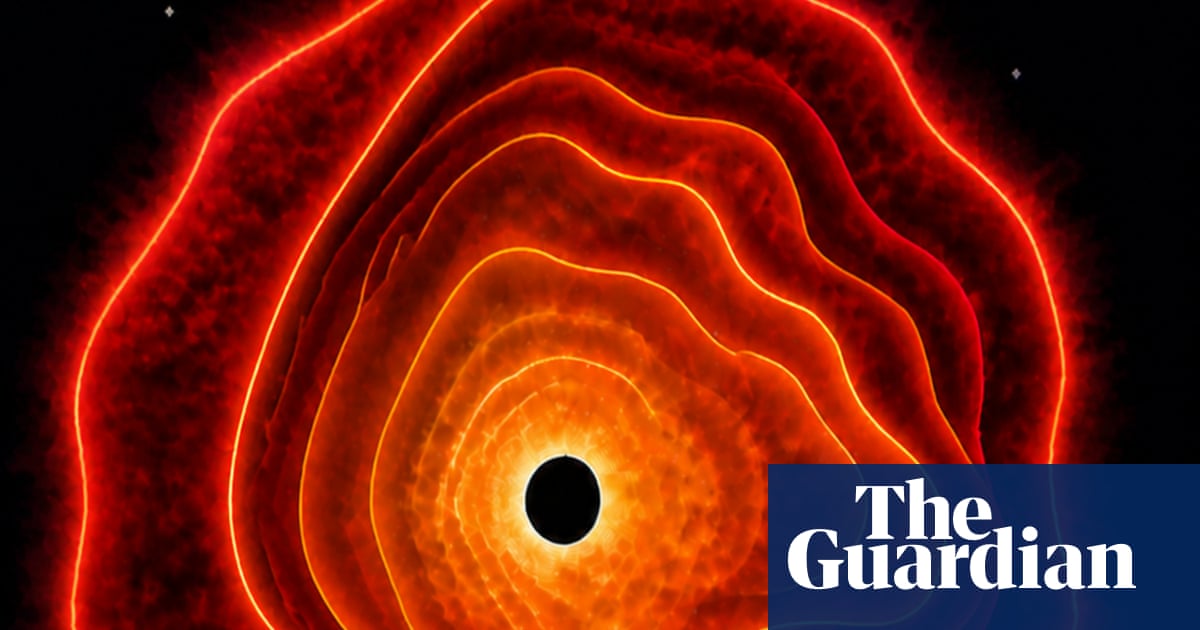
James Webb telescope reveals origin of infrared light near black hole
New observations from the James Webb Space Telescope are challenging established timelines of galactic evolution by revealing how supermassive black holes grow.
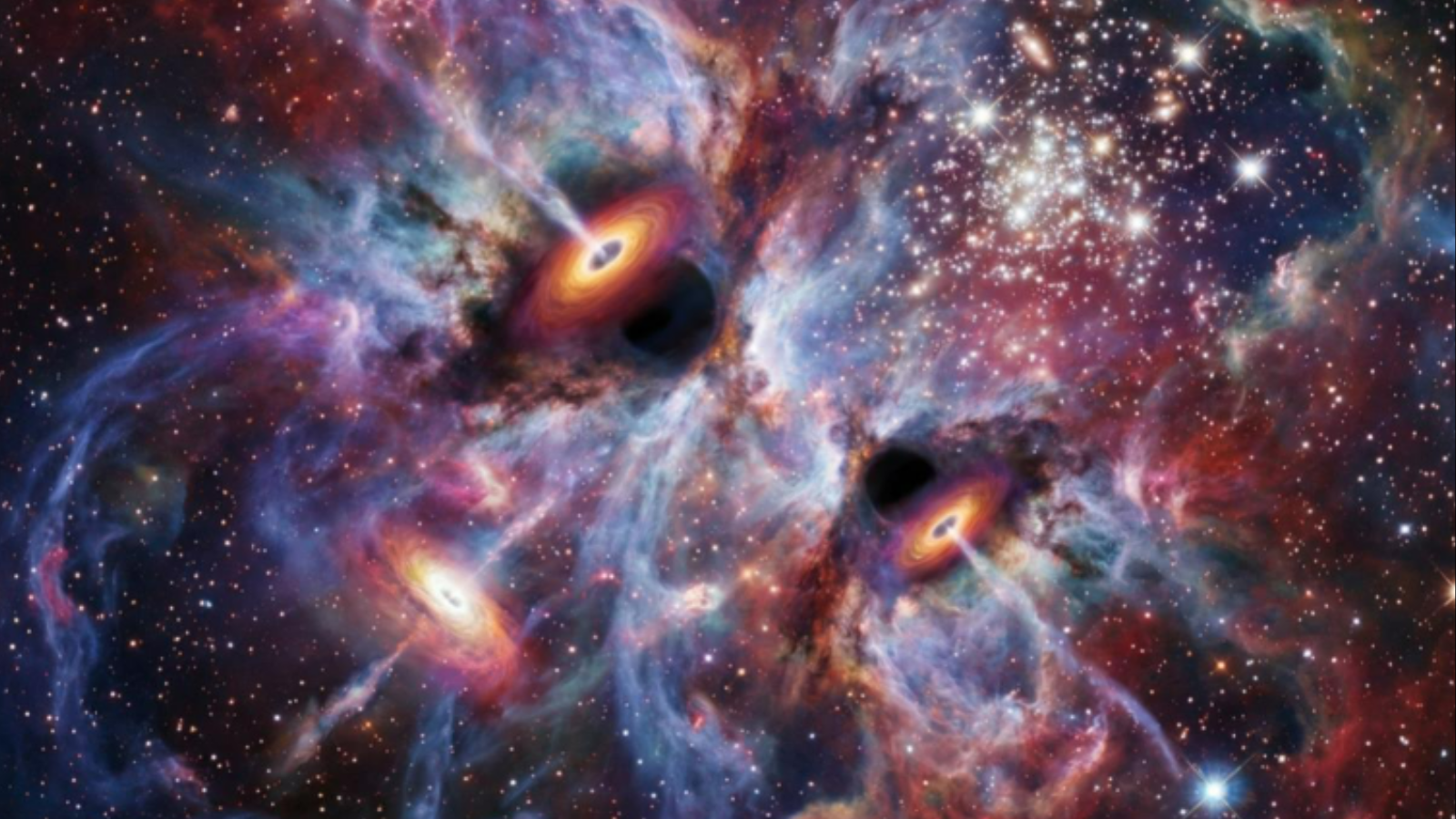
The James Webb Space Telescope (JWST) is fundamentally reshaping the scientific understanding of how supermassive black holes (SMBHs) grow and interact with their host environments. By peering through previously impenetrable cosmic dust and utilizing advanced infrared instrumentation, researchers are uncovering evidence that suggests black holes frequently precede their host galaxies or grow at significantly accelerated rates during the universe's infancy.
Challenging the Cosmic Queue
For decades, conventional wisdom held that galaxies formed first, with central black holes accumulating mass over hundreds of millions of years. However, new observations from NASA, ESA, and the CSA are reversing this timeline. Data indicate that some supermassive black holes achieved maturity before their host galaxies could establish significant star formation.
Related media
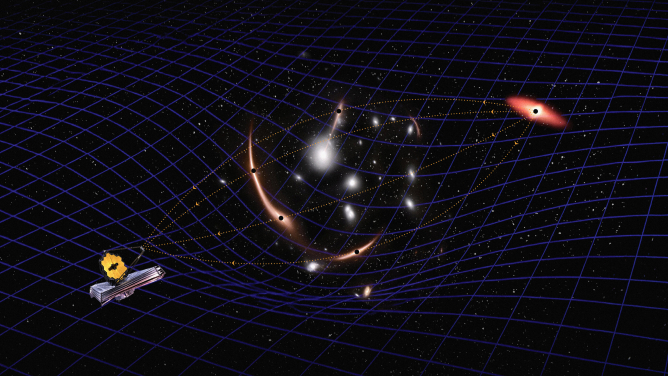
One such anomaly, Abell2744-QSO1, was observed existing when the universe was only 700 million years old. Researchers identified that this system contains almost no heavy elements, indicating that the black hole reached supermassive status while the surrounding environment remained in a pristine state, devoid of the stellar debris typically associated with galaxy evolution.
Mechanisms of Growth: From Feeding Frenzies to Direct Collapse
To explain how these cosmic monsters emerged so early, scientists are investigating two primary growth theories:
- Super-Eddington Accretion: Simulations published in Nature Astronomy suggest that chaotic, turbulent conditions in the early universe triggered feeding frenzies. These conditions allowed black holes to exceed the Eddington limit—a theoretical threshold for how much matter an object can ingest before outward radiation pressure cuts off its food supply.
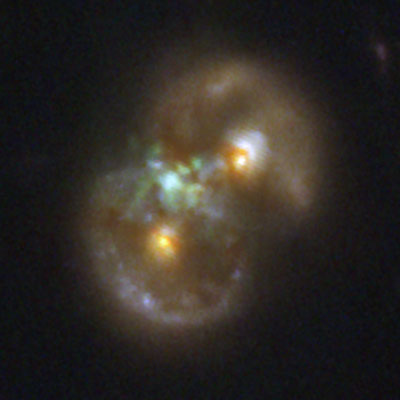
- Direct Collapse: Some researchers propose that massive gas clouds collapsed directly into black holes, skipping the light seed phase where small black holes form from dying stars and gradually merge over eons. The Infinity Galaxy, identified through the COSMOS-Web survey, provides a potential case study for this phenomenon. In this system, an active black hole sits within a vast expanse of ionized gas between two colliding disk galaxies, rather than residing within a stellar nucleus.
The Local Perspective: Recycling and Flux
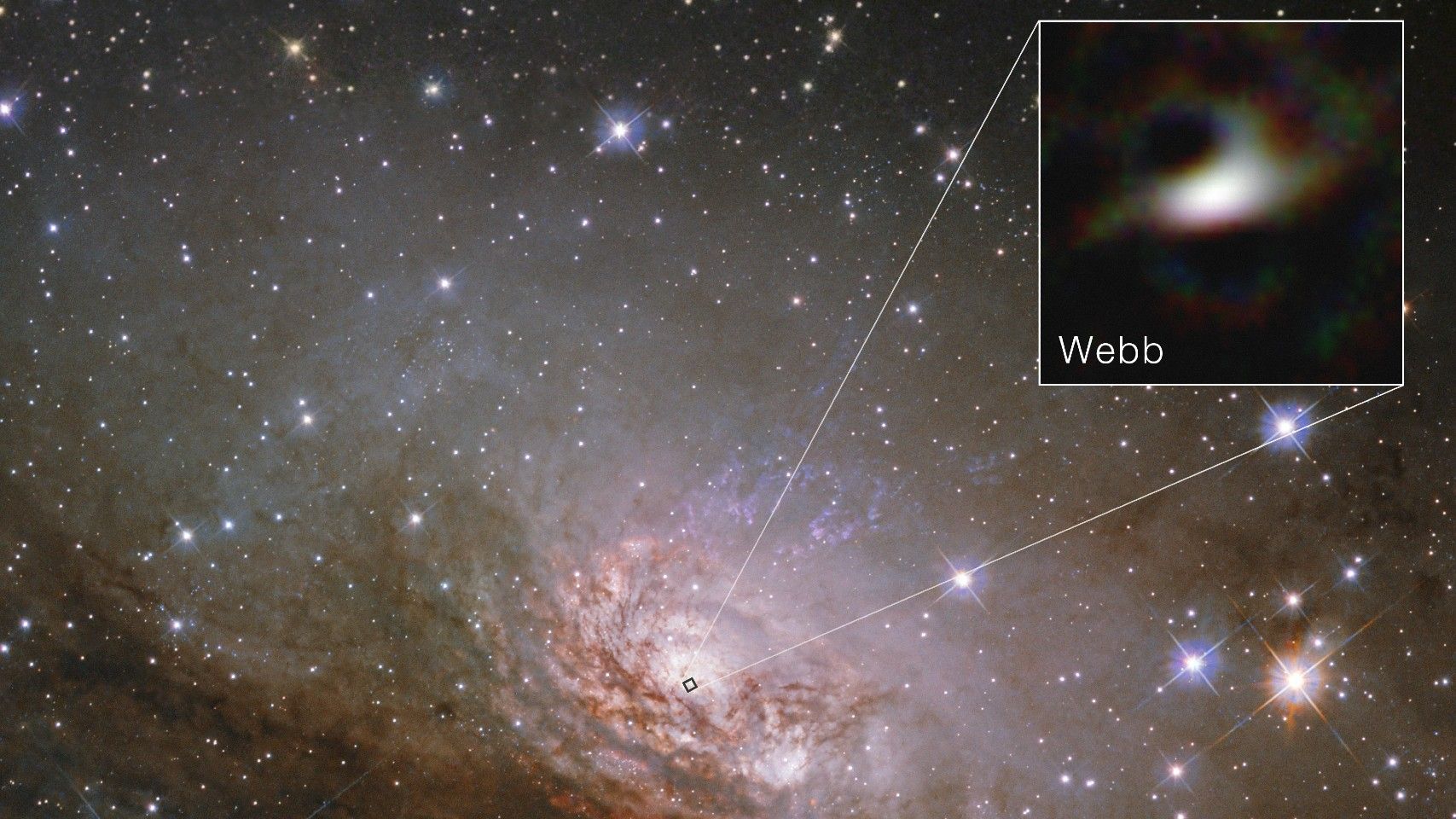
While early-universe discoveries focus on rapid growth, new JWST observations of more mature systems, such as the Circinus galaxy and the Milky Way’s Sagittarius A*, reveal that black holes act as active, self-regulating cosmic recyclers. In the Circinus galaxy, located 13 million light-years from Earth, the telescope's aperture masking interferometer doubled the effective resolution to reveal that 87% of excess infrared emissions originate from the dusty accretion disk feeding the black hole, rather than from outflows or stellar remnants as previously suspected.
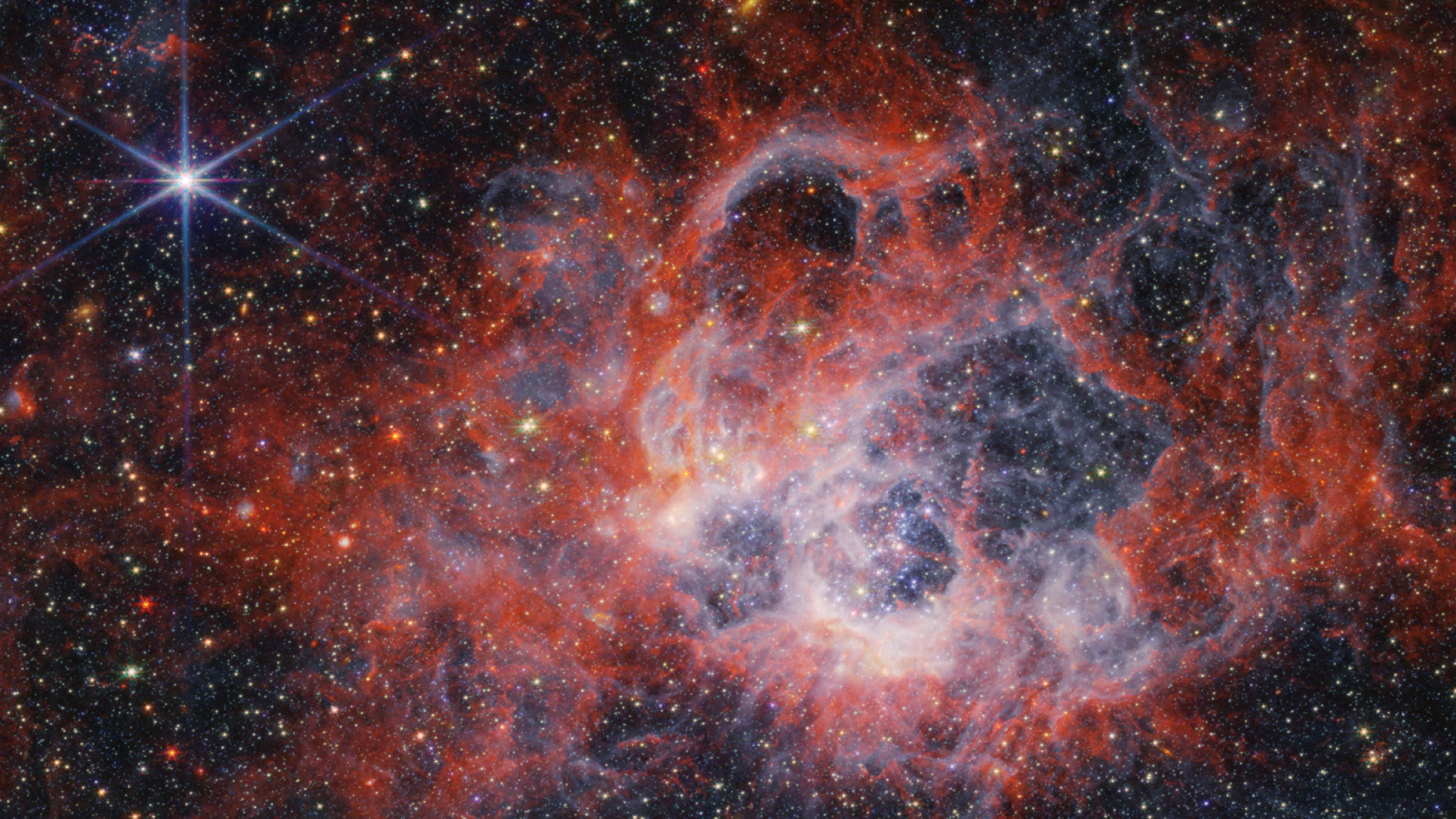
Meanwhile, long-term monitoring of Sagittarius A* by researchers at Northwestern University revealed that our galaxy's core is in a state of constant, unpredictable fluctuation. The telescope’s Near-Infrared Camera (NIRCam) tracked the black hole for a total of 48 hours over the course of a year.
Research Summary
| Object/System | Primary Finding |
|---|---|
| Circinus Galaxy | 87% of infrared excess originates from the dusty accretion disk. |
| Abell2744-QSO1 | Supermassive black hole exists in a low-metal, pre-galactic environment. |
What to Watch Next
The transition from discovery to verification remains the next phase of this Science. Upcoming efforts are focused on the following:
- Gravitational Wave Detection: The Laser Interferometer Space Antenna (LISA), expected to launch in 2035, is projected to detect ripples in space caused by the mergers of early-universe baby black holes, providing empirical evidence for the growth models currently simulated by computers.
- Expanded Surveys: Researchers are seeking to increase the sample size of observed active galactic nuclei to determine if the infrared emission patterns found in systems like Circinus are universal.
Archypedia is dedicated to independent, evidence-backed reporting. This briefing was synthesized from primary source reporting, corroborated across independent newsrooms, and verified against our Editorial Standards.
Transparency record
Evidence behind this report
This report synthesizes 9 distinct sources. Open the source ledger below to compare the underlying coverage.
- livescience.com
- yahoo.com
- universiteitleiden.nl
- space.com
- science.nasa.gov
- smithsonianmag.com
- mashable.com
- miragenews.com
- esawebb.org
Prepared under the Archypedia Editorial Policy by the Niko Vale editorial desk profile. AI-assisted tools may support drafting and verification; public accountability remains with Archypedia. Report an error.