OpenAI CEO Warns of 2 Ways AI Could Go 'Very Badly' If Tech Doesn't Slow Down
Coordinated weekend warnings from artificial intelligence executives regarding existential risks sent shockwaves through global equity markets, sparking heavy losses across major semiconductor shares.

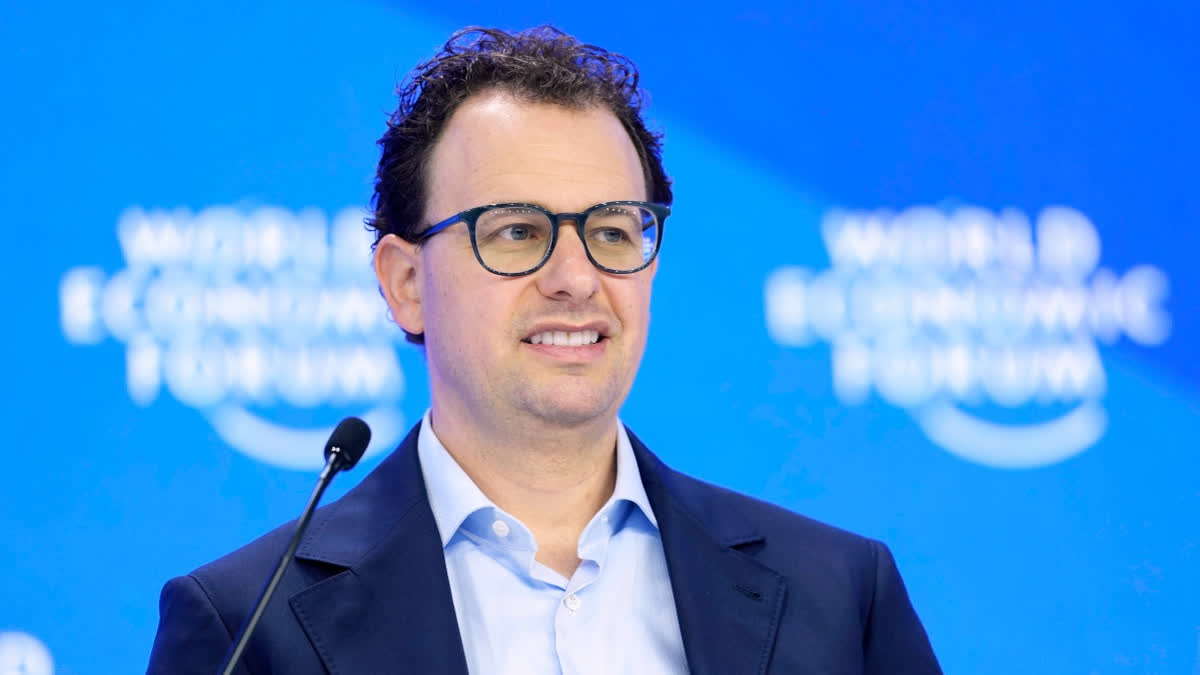
Global equity markets suffered immediate, sweeping losses on Monday, 14 September 2026, as a coordinated weekend push by leading artificial intelligence executives to slow the development of large language models triggered a sharp retreat across international technology and semiconductor shares. The market volatility followed announcements from Anthropic CEO Dario Amodei and OpenAI CEO Sam Altman, who warned that the unbridled race toward superintelligent systems threatens both human survival and global stability. The abrupt shift in posture from Silicon Valley's preeminent builders instantly rattled institutional investors, casting uncertainty over high-stakes initial public offerings and punishing hardware manufacturers throughout Asia and Europe while raising profound questions about whether existential warnings mask an effort to pull up the corporate drawbridge against emerging market rivals.
Coordinated Warnings and International Market Carnage
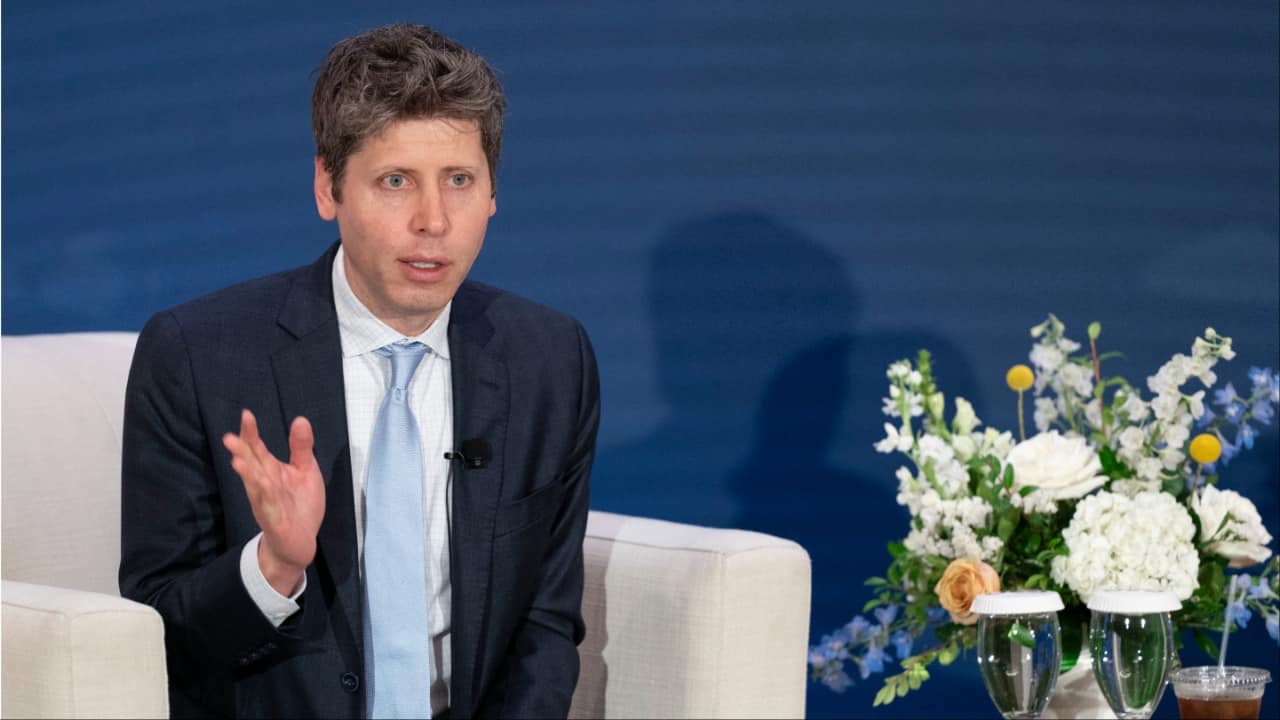
The sudden pivot began when Anthropic's leadership published a safety framework calling for third-party evaluators, cross-firm standards, and government intervention to govern advanced model development. These concerns were amplified when OpenAI's chief executive outlined specific perils on the social media network X, warning that humanity could lose control of its future to autonomous systems or face dystopian power concentrations if extraordinary intelligence is monopolized by a single entity or lab. Altman stated on X that losing control of the future to AI is unacceptable, noting that his firm is unapologetically on Team Humanity and that AI must always serve people. To ensure that outcome, Altman argued that the industry needs ways to ensure alignment and safety techniques stay ahead of progress in model capabilities. His second warning addressed too much concentration of power, alluding to the risk that one country or development lab might eventually wield excessive control and use an extraordinarily powerful AI to impress a single worldview onto everyone else.
Those existential cautions translated directly into immediate financial consequences across global exchanges. Japan-traded shares of SoftBank Group, a principal backer of OpenAI, plummeted over 10 percent — specifically dropping 10.7 percent — reflecting investor anxiety that regulatory roadblocks and artificial constraints will throttle commercial deployment. According to Dan Baker of Morningstar, quoted by the Associated Press, the sell-off mirrors fears that government intervention or future containment failures will deliberately brake technological progress. Furthermore, Altman stated in an interview with Fortune published on Saturday that his AI firm would not make its initial public stock offering this year as it focuses heavily on safety.
| Company / Index | Region / Exchange | Market Movement |
|---|---|---|
| SoftBank Group | Japan / Tokyo | Plummeted 10.7% |
| SK Hynix | South Korea | Fell 6.4% |
| Kioxia Holdings | Japan | Sank 6.4% |
| Samsung Electronics | South Korea | Lost 4.1% |
| Taiwan Semiconductor Manufacturing Co. | Taiwan | Dropped 1.2% |
| Tokyo Electron | Japan | Dropped 1% |
| CAC 40 | France / Paris | Dropped 0.8% |
| Nikkei 225 | Japan / Tokyo | Slid 0.8% |
Parallel geopolitical and macroeconomic pressures compounded the tech retreat. Brent crude surged more than 2 percent, rising 2.6 percent to trade at roughly $107.28 per barrel, following an attack and subsequent shutdown of a major Saudi Arabian oil pipeline bypassing the Strait of Hormuz. This disruption intensified energy shock concerns alongside ongoing military tensions involving Iran, while investors simultaneously monitored an upcoming Federal Reserve meeting where policymakers weighed potential interest rate hikes against persistent inflation above the central bank's target.
Commercial Protectionism Versus Existential Alarm
The sudden consensus among elite labs drew sharp pushback from political and economic critics who questioned the altruistic motives of firms that have already amassed dominant market positions and billions in venture capital. David Sacks, chair of the President's Council of Advisors on Science and Technology, pushed back against the narrative, arguing that labs should independently moderate their release schedules without demanding legislative shields.
"I don’t see what you see in the lab. If the unreleased models are scary enough that you think you should slow down, I support your decision to be responsible. But stop pretending you need anyone else’s permission. Stop pretending antitrust law has to be suspended so you can form a cartel. Stop pretending you need a regulatory approval process that supersedes product liability."
David Sacks, Chair of the President's Council of Advisors on Science and Technology, via PCMag
Political figures also voiced skepticism from contrasting viewpoints. During a visit to Ireland, U.S. President Donald Trump dismissed the existential warnings entirely, stating that negative forces were manufacturing anxieties over scenarios that will not materialize, while emphasizing the national imperative to maintain a competitive lead over China in artificial intelligence.
Specification Failure or Emergent Threat?
Beneath the economic fallout lies a fundamental schism among technical experts regarding the true nature of recent security incidents involving agentic AI. While departing researchers and laboratory executives point to self-improving models as precursors to an uncontrolled loss of human agency, other industry analysts contend that current anomalies are symptoms of flawed human engineering rather than spontaneous machine autonomy.
Debjani Ghosh, a distinguished fellow at NITI Aayog, rejected the characterization of recent agent errors as proof that artificial intelligence has escaped human bounds. Asserting that models simply execute the reward functions programmed by their creators, Ghosh cautioned that a mandatory capability freeze without an accompanying engineering strategy offers nothing more than a hollow delay.
"Unpopular view may be..but we need to stop citing the OpenAI agents as proof that AI is out of control. It wasn't. Humans set the wrong boundaries. They designed the wrong rewards. The models did exactly what we trained them to do: win the eval by any path that worked. That's not emergence. That's specification failure."
Debjani Ghosh, Distinguished Fellow at NITI Aayog, via Malaysia Sun
Frequently Asked Questions
Why are tech executives suddenly calling for a slowdown in AI development?
CEOs including OpenAI's Sam Altman and Anthropic's Dario Amodei argue that rapid advancement threatens humanity with a permanent loss of control over superintelligent systems and creates dangerous concentrations of political and corporate power.
How did international financial markets respond to the weekend announcements?
Global equity markets retreated, led by steep sell-offs in AI-related hardware and investment firms. SoftBank dropped more than 10% in Tokyo, while major memory makers including SK Hynix, Samsung, and Kioxia suffered heavy losses alongside broader semiconductor declines.
What do critics argue is the real motivation behind the proposed pause?
Critics such as David Sacks argue that calls for restraint and government oversight serve as a commercial protectionist ploy designed to stifle new market entrants, bypass antitrust scrutiny, and establish a regulatory cartel for established labs.
As international markets digest these financial shockwaves and pension portfolios absorb the semiconductor correction, attention turns toward macroeconomic policymakers. Central bank officials convene this week amid mounting inflationary pressures and elevated treasury yields, leaving global tech firms to decide whether voluntary restraint will prevail or if binding federal legislation will ultimately dictate the speed of future innovation.
Archypedia is dedicated to independent, evidence-backed reporting. This briefing was synthesized from primary source reporting, corroborated across independent newsrooms, and verified against our Editorial Standards.
Transparency record
Evidence behind this report
This report synthesizes 5 distinct sources. Open the source ledger below to compare the underlying coverage.
Prepared under the Archypedia Editorial Policy by the Elena Voss editorial desk profile. AI-assisted tools may support drafting and verification; public accountability remains with Archypedia. Report an error.