Astronomers discover a new kind of cosmic object – a black hole ‘star’
Astronomers using the James Webb Space Telescope identified MoM-BH*-1, an unprecedented black hole star formed 660 million years after the big bang.
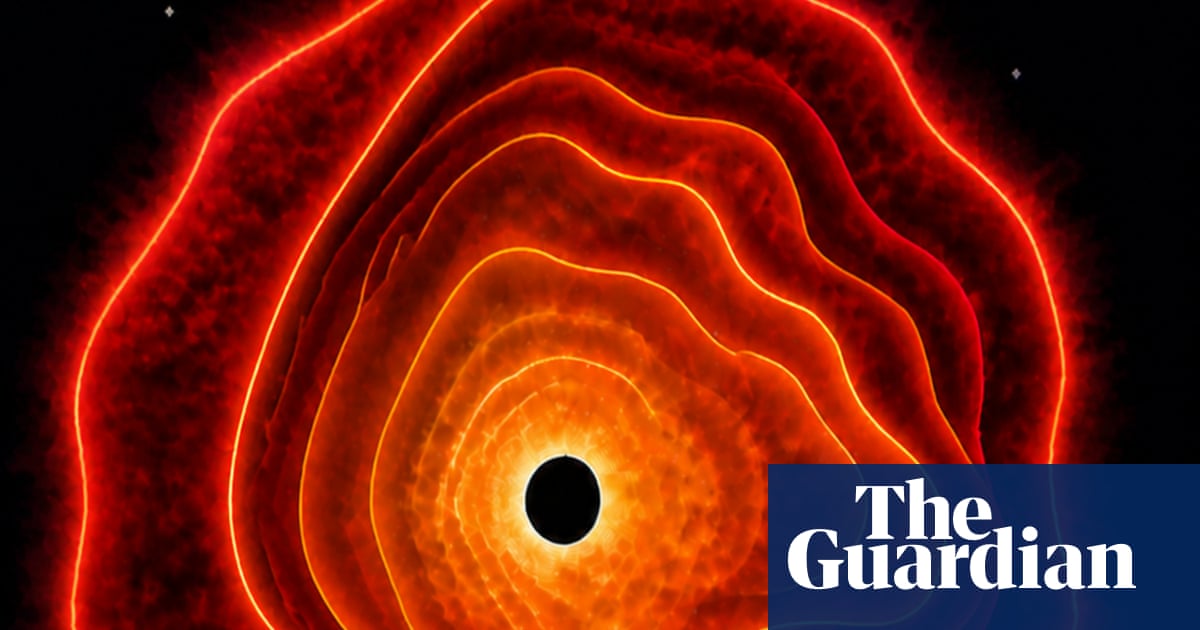
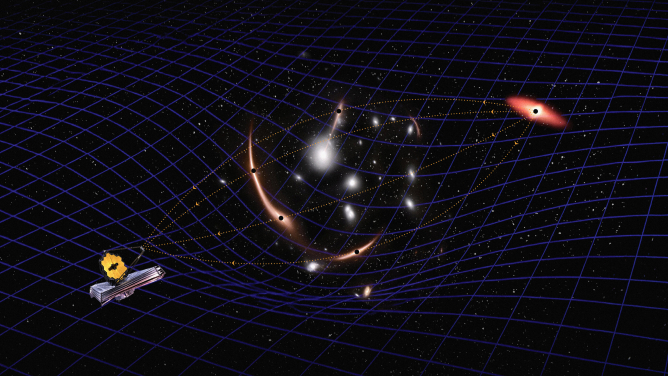
Astronomers using the James Webb Space Telescope have identified an unprecedented class of cosmic bodies dubbed black hole stars, beginning with a solar-system-sized object in the constellation of Cetus that emits 100 billion times the energy of a normal star. The discovery, detailed in Nature, centers on an exotic entity designated MoM-BH*-1 that formed roughly 660 million years after the big bang, challenging long-held assumptions about how supermassive black holes and galaxies first evolved in the early universe.
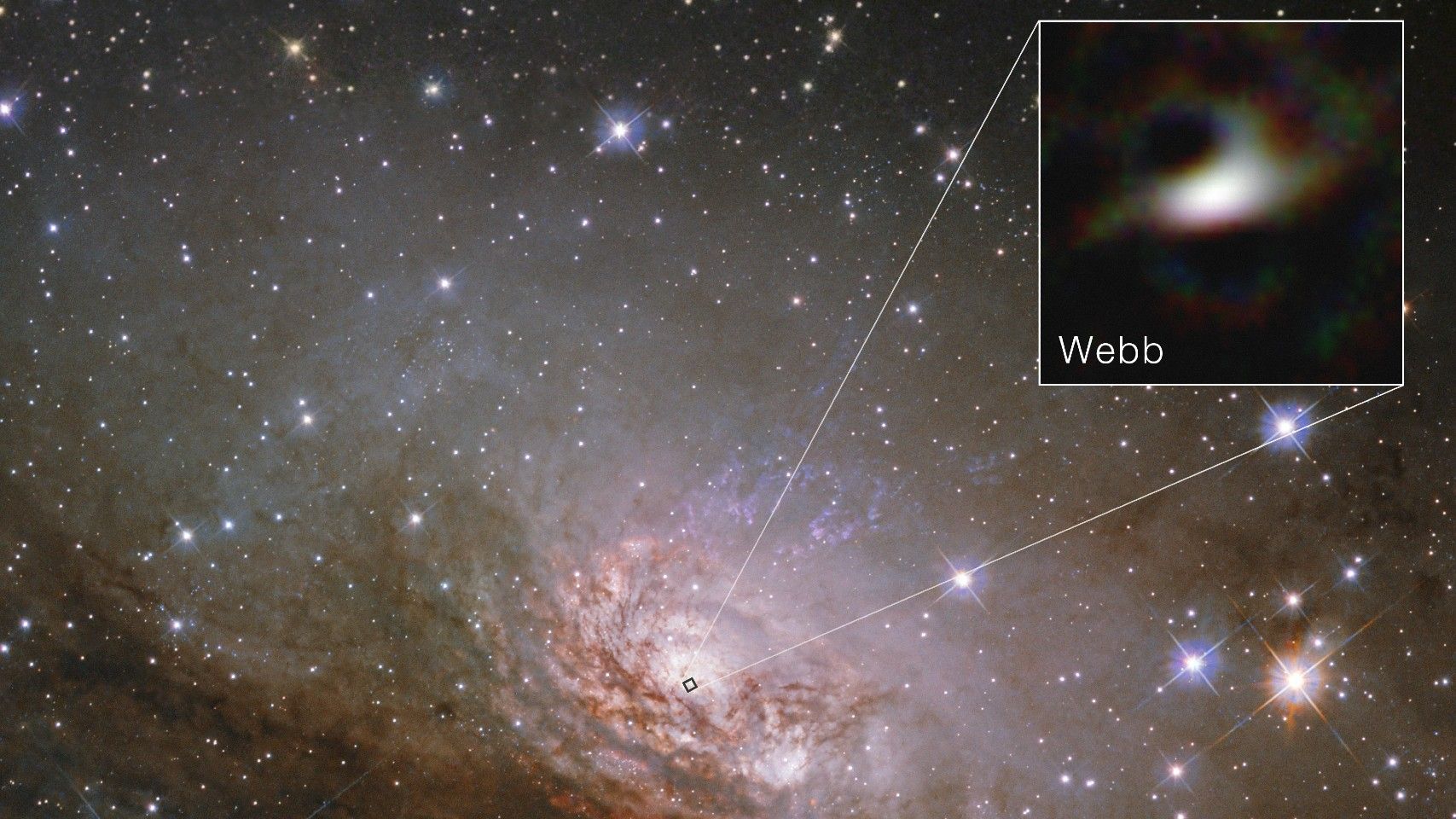
The finding emerged from the Mirage or Miracle survey, an international expedition led by researchers including Rohan Naidu of the Massachusetts Institute of Technology's Kavli Institute for Astrophysics and Space Research. While hunting for distant galaxies using the infrared sensitivity of the James Webb Space Telescope, the team flagged an inexplicably bright red dot that was the reddest object in the telescope's archive. Initial hypotheses pointed toward cosmic dust as the source of the crimson hue, with MIT Kavli Institute director and co-author Robert Simcoe comparing the obscuring mechanism to wildfire smoke reddening skies on Earth, according to reporting by Popular Science.
Related YouTube video
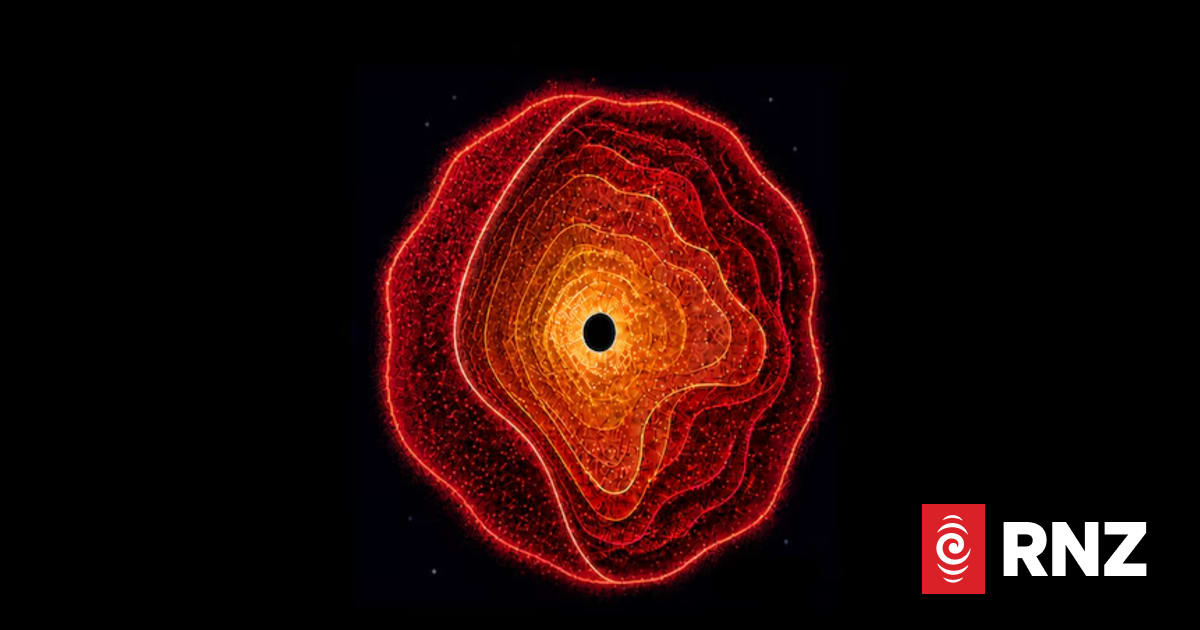

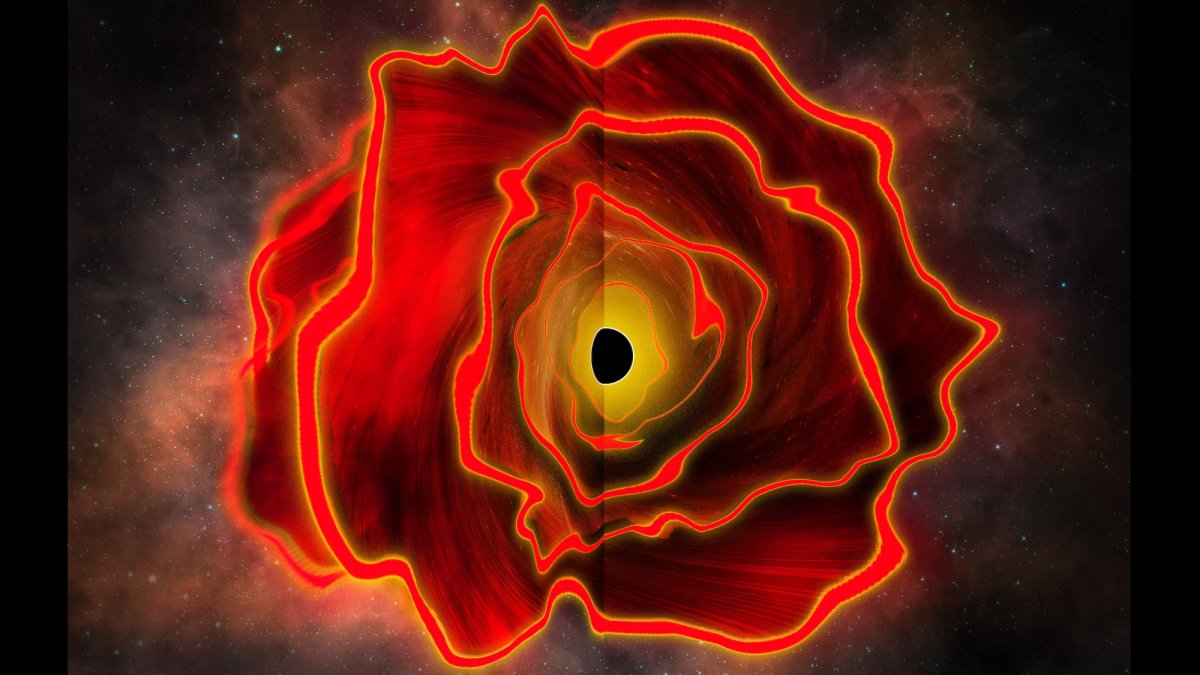
Further inspection, however, dismantled the dust hypothesis. The object's light displayed virtually no metal or elemental signatures aside from helium and hydrogen, alongside a dramatic Balmer break — a sharp disappearance of light below a specific wavelength. While such breaks typically indicate dense, photon-absorbing gas in the atmospheres of ancient stars such as Vega, The News reported that the break observed in MoM-BH*-1 was far deeper than any previously recorded in astronomy, immediately ruling out ordinary stellar sources.
Computer simulations ultimately revealed that the red hue stemmed from an extremely dense screen of pristine hydrogen rather than dust or nebulas. Yet hydrogen alone could not account for an energy output 100 billion times greater than stellar luminosity, as normal stars rely on nuclear fusion. Only after incorporating a central black hole into their models did the researchers find a mechanism capable of generating such titanic energy.
According to physical models detailed by Rnz, the central black hole possesses roughly a million times the mass of the Sun — or about 100,000 solar masses in initial comparative estimates, while its surrounding gas envelope stretches across a volume comparable to the entire solar system. Because the object completely outshines its host galaxy, astronomers are observing pure black hole star light.
"We have found a new type of astrophysical object, a black hole star. It shines with the energy typically associated with black holes, but at the same time bears signatures classically associated with stars."
Rohan Naidu, Kavli Institute for Astrophysics and Space Research at MIT, via The Guardian
Independent experts emphasize that the discovery forces a major reappraisal of cosmic chronology. Christian Wolf of the Australian National University, who was not involved in the study, described the body as the first supermassive black hole teenager ever observed, noting in coverage by RNZ that it challenges the consensus that black holes were initially seeded by the collapse of short-lived massive stars. Instead, the findings support the theory that naked black holes formed first, acting as gravitational seeds around which galaxies later coalesced.
Nicholas Seymour, an astronomer at Curtin University also uninvolved with the research, noted that identifying these systems helps explain how early supermassive black holes grew so massive so quickly. Researchers are now actively examining roughly 100 other little red dots spotted in deep-space archives to determine whether gas-enshrouded black hole hearts are a universal feature of these mysterious objects, with Seymour utilizing radio observatories including the Murchison Widefield Array and the Australian SKA Pathfinder to catch similar black holes at even earlier stages of growth.
Probing the Early Universe Through Radio and Infrared Telescopes
According to research detailed by Rnz, the discovery stems from the Mirage or Miracle survey, which initially sought out the most distant and ancient galaxies in the known universe. While the James Webb Space Telescope previously identified a galaxy named Mom-z14 that formed a mere 280m years after the big bang, investigators soon turned their focus toward anomalous point sources across deep-space archives. As reported by Popular Science, the team spent time running computer simulations to understand the physical mechanisms behind the unusual celestial bodies before establishing the black hole star classification published in Nature.
Complementary observational efforts are now underway to locate similar formations across the cosmos. Curtin University astronomer Nicholas Seymour uses the Murchison Widefield Array and the Australian SKA Pathfinder telescopes in Western Australia to scan for early-epoch black holes. By combining radio observatory data with infrared observations from the James Webb Space Telescope, researchers hope to determine whether gas-enshrouded seeds are a universal characteristic of little red dots, with the next step focusing on examining approximately 100 additional candidates already identified in deep-space archives.
How significant is this development?
Contribute your assessment to the aggregated reader intelligence ledger.
Archypedia is dedicated to independent, evidence-backed reporting. This briefing was synthesized from primary source reporting, corroborated across independent newsrooms, and verified against our Editorial Standards.
Transparency record
Evidence behind this report
This report synthesizes 5 distinct sources. Open the source ledger below to compare the underlying coverage.
Prepared under the Archypedia Editorial Policy by the Niko Vale editorial desk profile. AI-assisted tools may support drafting and verification; public accountability remains with Archypedia. Report an error.