NASA's Hubble Discovers First of Star Cluster's Missing Black Holes
Researchers confirmed a stellar-mass black hole in Omega Centauri by tracking the 94-year orbital path of a companion star using two decades of data.
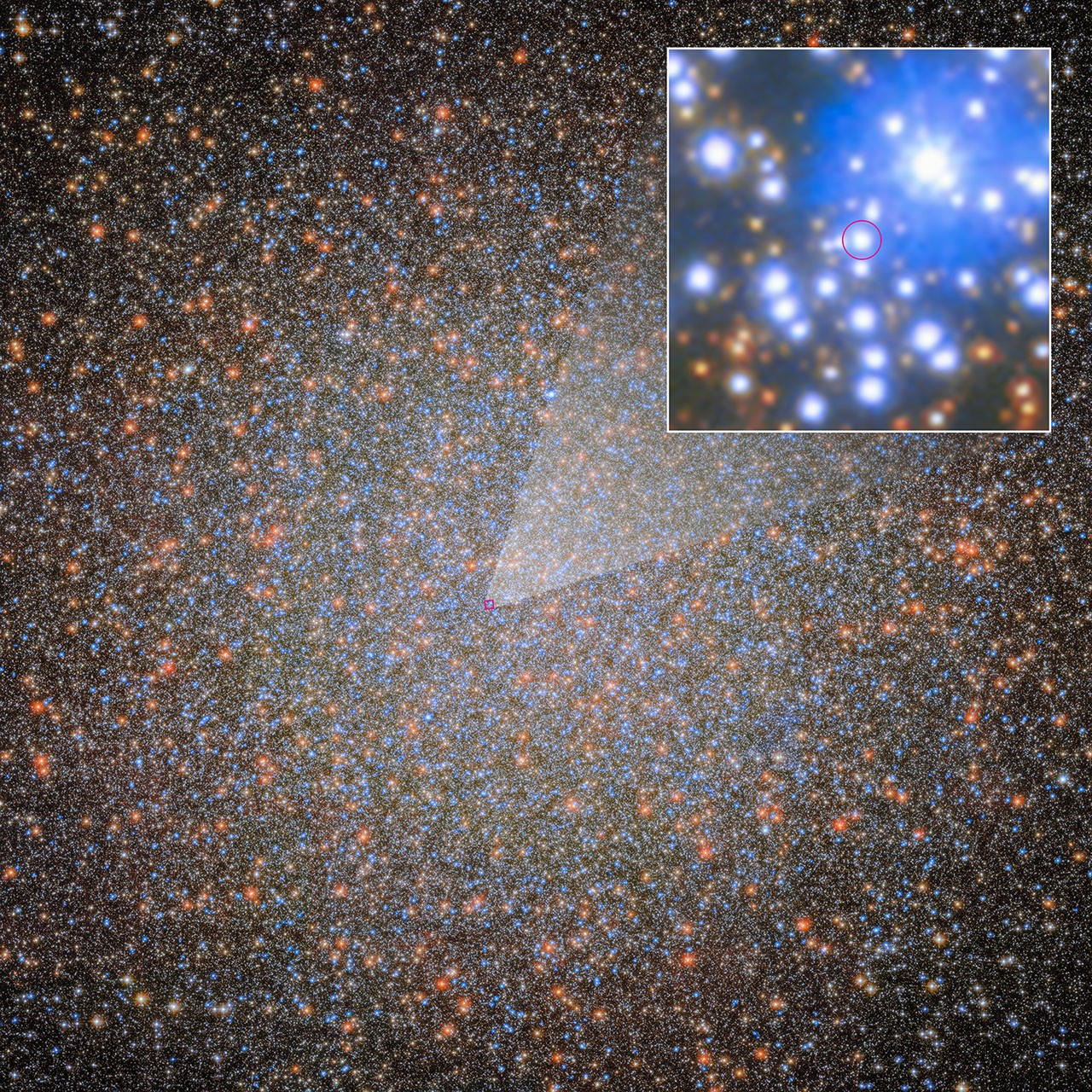
Astronomers have confirmed the existence of a stellar-mass black hole within the globular star cluster Omega Centauri, a discovery that marks a milestone in resolving a long-standing astrophysical mystery. The findings, published on Monday, July 13, 2026, in The Astrophysical Journal Letters, result from a multi-year effort to locate a population of black holes long predicted by theoretical models but previously unseen.
Omega Centauri, a massive cluster home to approximately 10 million gravitationally bound stars, has been a focal point for researchers for decades. While prior observations from the NASA Hubble Space Telescope provided evidence of an intermediate-mass black hole at the cluster's core, astrophysical models suggest the region should also host about 10,000 smaller, stellar-mass black holes. Past efforts to find these objects — relying on radial velocity methods or scans for X-ray and radio emissions from infalling matter — had yielded no evidence. The recent study bypassed these limitations by employing astrometry, a technique that tracks the minute, precise positional movements of stars over time to reveal the gravitational pull of invisible companions.
Related media

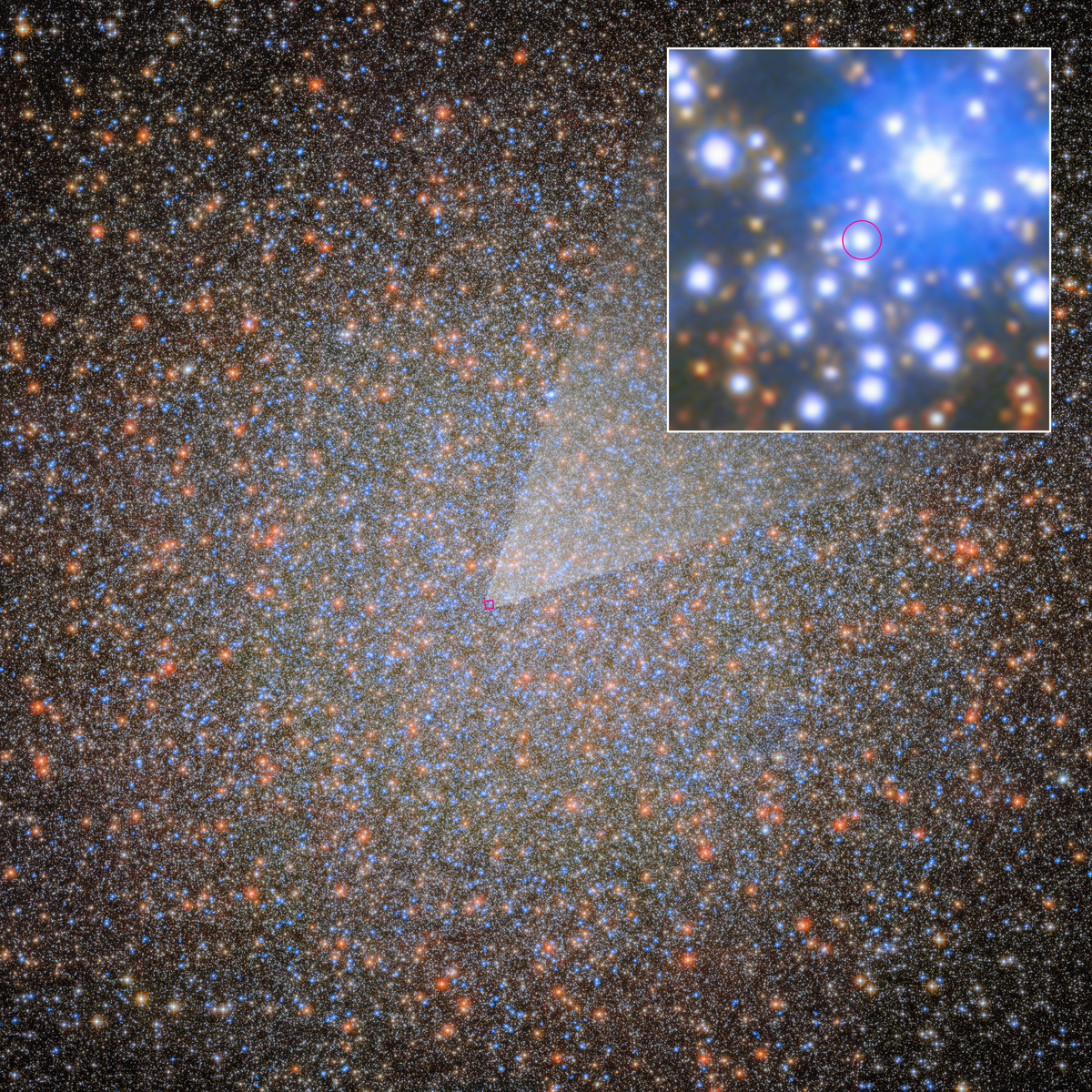
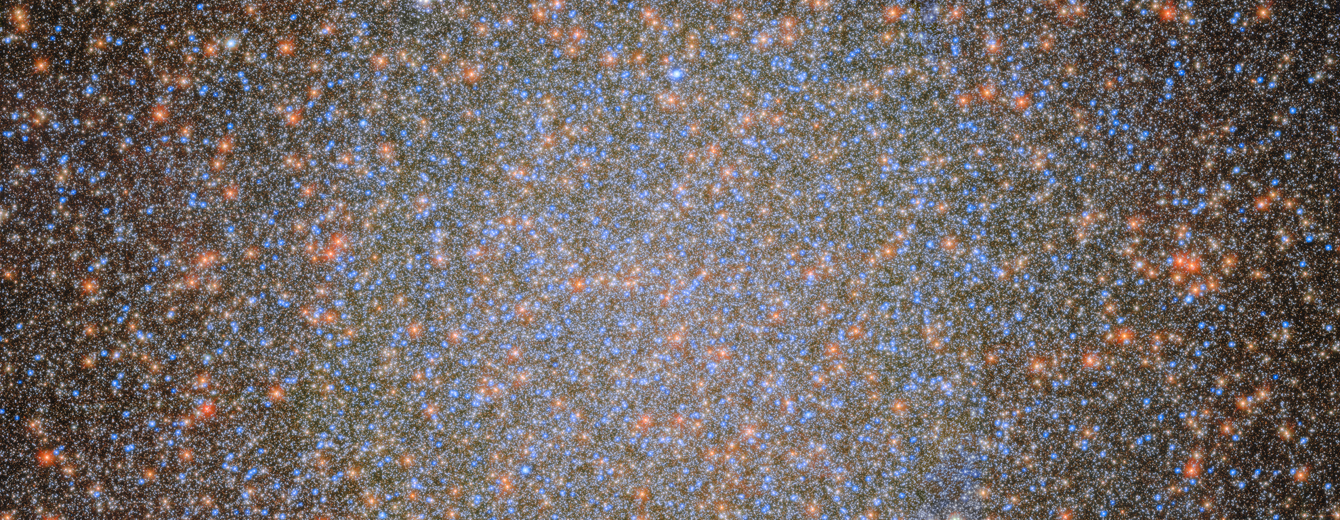
The newly identified object, designated oMEGACat BH-2, was detected by analyzing a dataset spanning more than 20 years. Researchers utilized archival imaging from the Hubble Space Telescope and recent near-infrared observations from the James Webb Space Telescope. By examining the trajectory of a visible main-sequence star, the team charted the orbital path of the binary system. The star orbits the black hole every 94 years, representing the longest orbital period ever recorded for a known black hole binary system.
"With Hubble and Webb data, we were able to see the motion of the visible main sequence star that is part of this binary, which is about 18,000 light-years away in the dense environment of Omega Centauri. The precision of these measurements is incredible, down to a fraction of a pixel on Hubble and Webb’s detectors. It would not have been possible to find this black hole without these two space telescopes."
Matthew Whitaker, University of Utah, lead author of the paper, via NASA
The analytical team, led by researchers at the University of Utah, utilized the combined Hubble and Webb data to constrain the mass of the black hole at 4.46 solar masses. This measurement refutes an earlier study by a different research group that had suggested the system contained a neutron star, as the calculated mass exceeds the limit for such an object. The companion star is measured at 0.78 solar masses.
Anil Seth, a co-author of the study and professor at the University of Utah, noted that the black hole's mass is lower than what is typically anticipated for a metal-poor environment like Omega Centauri. We now know that a metal-poor star is able to form a black hole like this, and we need to figure out how that happens. This detection is providing some data to those who do that kind of modeling,
Seth stated.
Current projections suggest that oMEGACat BH-2 was formed dynamically, meaning the star and the black hole did not evolve as a pair but became a binary system through gravitational interactions within the cluster. Because Omega Centauri is approximately 12 billion years old, the relatively short estimated lifespan of this binary system, less than a billion years before stellar interactions disrupt it, highlights the rarity of these observations.
This discovery is viewed by the research team as the first step toward cataloging the missing black hole population in globular clusters. Scientists intend to apply these astrometric methods to other clusters in search of similar binary systems. Looking forward, the astronomical community anticipates the deployment of NASA’s Nancy Grace Roman Space Telescope. With its wide field of view and high-resolution imaging, the Roman telescope is expected to perform frequent, systematic observations of the galactic bulge, potentially facilitating the discovery of additional black hole binaries due to its high observation cadence.
Archypedia is dedicated to independent, evidence-backed reporting. This briefing was synthesized from primary source reporting, corroborated across independent newsrooms, and verified against our Editorial Standards.
Transparency record
Evidence behind this report
This report synthesizes 9 distinct sources. Open the source ledger below to compare the underlying coverage.
- science.nasa.gov
- attheu.utah.edu
- stsci.edu
- miragenews.com
- cosmosweek.com
- sciencesprings.wordpress.com
- yahoo.com
- friendsofnasa.org
- esa.int
Prepared under the Archypedia Editorial Policy by the Niko Vale editorial desk profile. AI-assisted tools may support drafting and verification; public accountability remains with Archypedia. Report an error.