Human activities compromise coral health and resilience
A new study reveals that agricultural, industrial, and pharmaceutical pollutants are accumulating in coral tissues, reducing their energy and nutrient reserves.

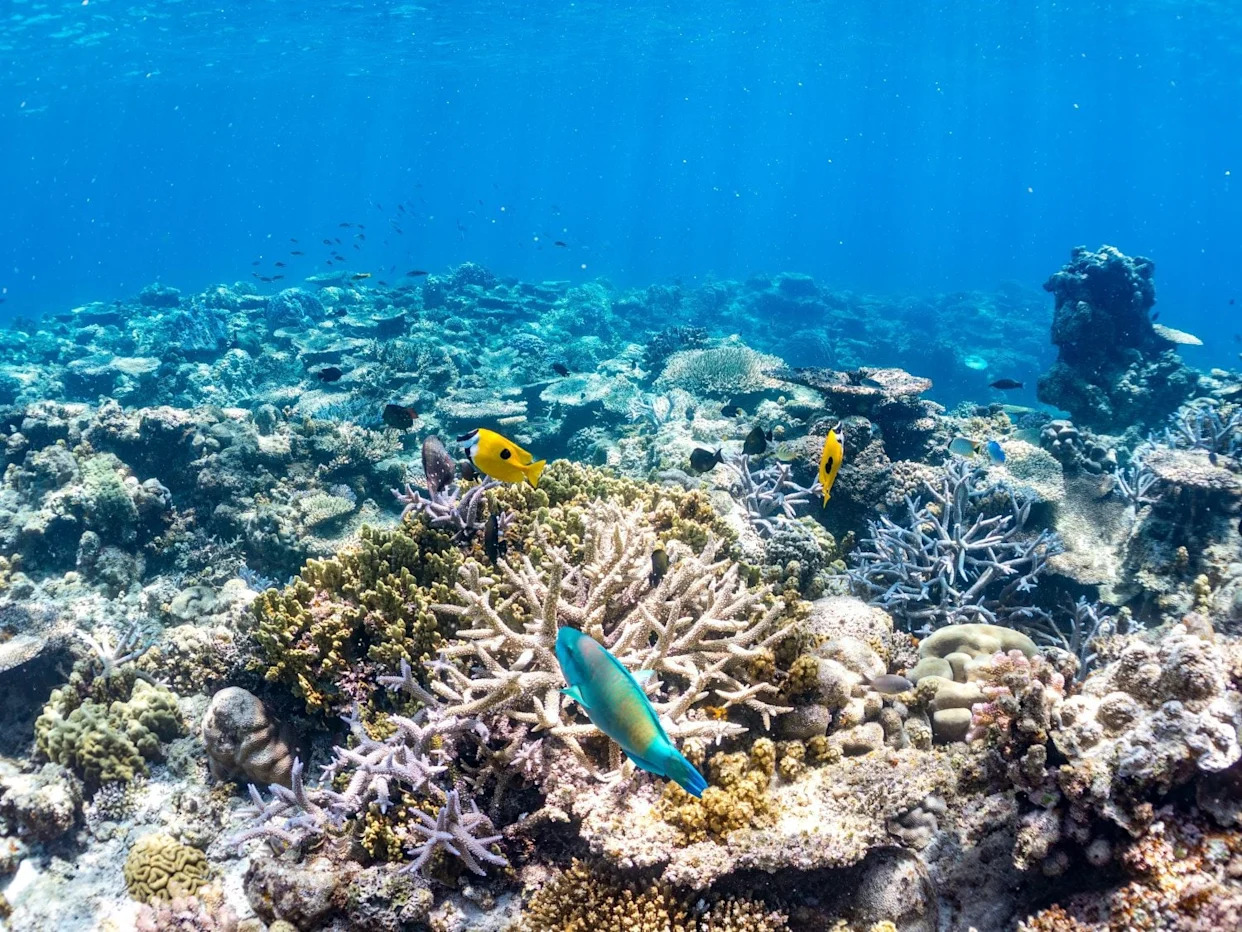
Human activities are fundamentally altering the chemical makeup of local coral reefs, according to a study led by the University of Hawai‘i at Mānoa and published in Nature Communications. The research team discovered that 25 contaminants from agricultural, industrial, and pharmaceutical sources accumulated in the soft tissues of coral around Maui, Hawai‘i. Additionally, in areas impacted by human activities, the energy and nutrient availability within the coral’s tissue decreases, making them significantly less resilient to environmental stressors such as warmer or acidic waters.
Chemical Accumulation and Metabolic Decline
The research team tested the metabolomes of 380 lobe corals (Porites lobata) and rice corals (Montipora capitata) from 16 sites off west and south Maui. They found that human activities both within the adjacent watershed and in the marine ecosystem altered the composition of the corals’ metabolomes. In areas with more ecosystem disturbance, there was increased accumulation of contaminants and a decrease of nutrient and energy reserves in the coral tissues.
Related media


"Our findings suggest that monitoring the pool of chemicals within the coral tissues, called metabolomes, can serve as a powerful tool for tracking the hidden impacts of anthropogenic disturbance on marine life," said Zach Quinlan, lead author and research biologist at the Hawai‘i Institute of Marine Biology in the UH Mānoa School of Ocean and Earth Science and Technology.
Cross-Species Resilience and Historical Trends
"It was extremely surprising that the metabolomes of both coral species had almost identical trends," said Quinlan. "These corals have very different life strategies, and we wouldnʻt normally expect them to accumulate contaminants the same or even necessarily respond the same to disturbances. This demonstrates how strong of a forcing these anthropogenic activities really are." Using historical trends in coral cover from five of the sites they sampled, the team found that sites that had the most severe declines in coral cover after the 2016 bleaching event are the sites with the most impacted metabolomes. At more impacted sites, nitrogen and energy reserves were reduced, while stress chemicals were enriched.
Megan Donahue, senior author on the paper and HIMB director, emphasizes the wider implications of this discovery:
"Beyond the implications for coral health and resilience, this study demonstrates how many anthropogenic contaminants are escaping into marine ecosystems. We see increasing evidence that anthropogenic contaminants have broad cumulative impacts, undermining the resilience of coastal ecosystems."
Broadening the Scope of Anthropogenic Threats
While the study specifically highlights chemical and metabolic impacts, other research underscores that these are part of a wider spectrum of human-induced hazards. According to the National Oceanic and Atmospheric Administration’s Corals Tutorial, threats to these ecosystems are complex and include:
- Physical damage: Destructive fishing techniques such as blast fishing and cyanide use, along with the grounding of ships and the dropping of anchors, can physically break or destroy reef colonies.
- Runoff and Sedimentation: Coastal development, dredging, and deforestation contribute sediments and debris that smother corals, often while increasing nutrient levels that promote harmful algae growth.
- Oil Pollution: While surface oil may evaporate, spills during spawning seasons can damage floating eggs and sperm, disrupting reproductive cycles.
- Greenhouse Gases: The burning of fossil fuels and deforestation contribute to rising ocean temperatures and altered storm patterns, leading to frequent bleaching events and structural damage.
What to Watch Next
Looking ahead, Quinlan and team are searching for ways to enrich coral tissue nitrogen and energy reserves in controlled experiments to determine whether those increases lead to more resilient corals.
Archypedia is dedicated to independent, evidence-backed reporting. This briefing was synthesized from primary source reporting, corroborated across independent newsrooms, and verified against our Editorial Standards.
Transparency record
Evidence behind this report
This report synthesizes 5 distinct sources. Open the source ledger below to compare the underlying coverage.
Prepared under the Archypedia Editorial Policy by the Niko Vale editorial desk profile. AI-assisted tools may support drafting and verification; public accountability remains with Archypedia. Report an error.