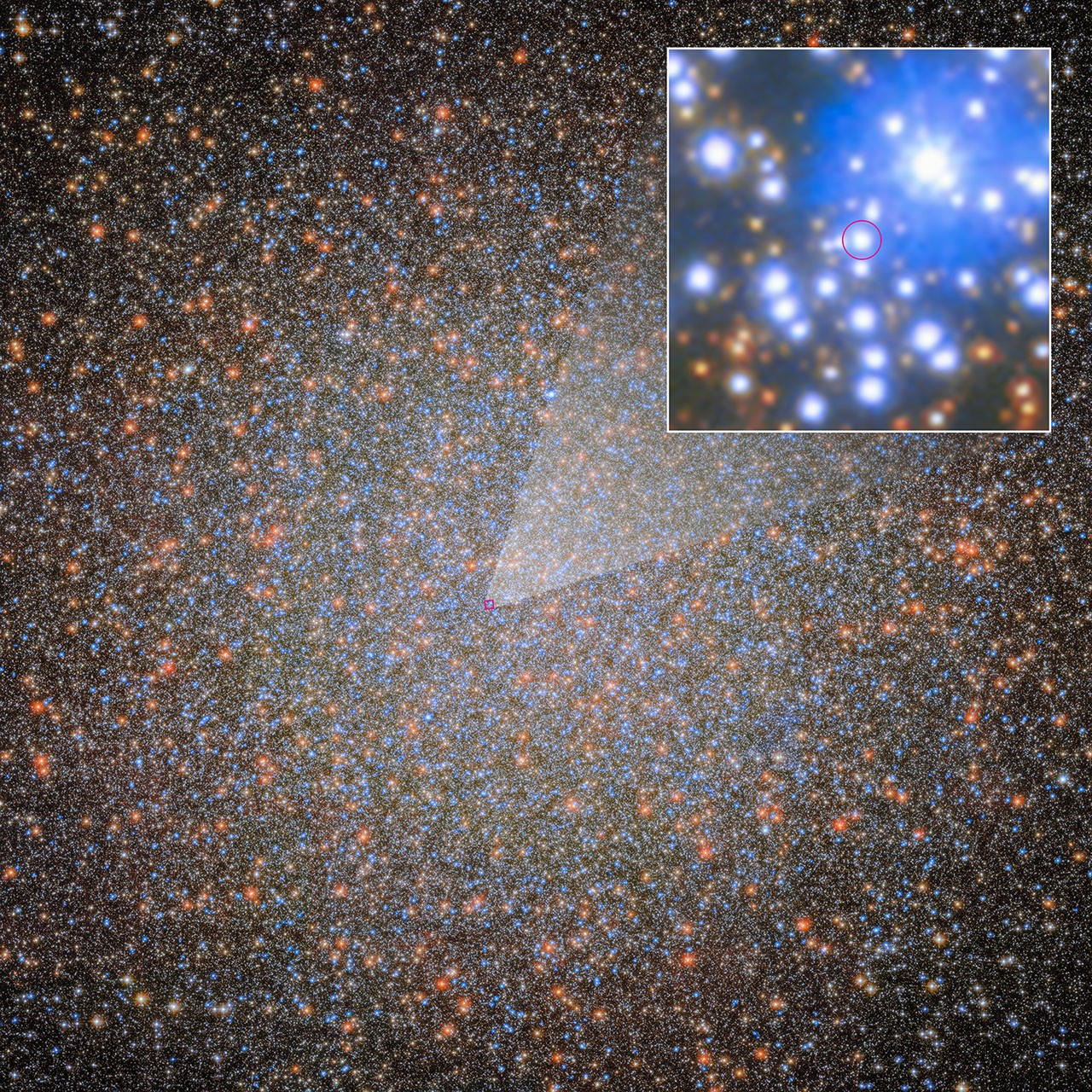
CUNY researchers simulate black hole energy extraction with synthetic rotation
CUNY researchers have simulated the Penrose-Zel’dovich process using a stationary, time-modulated metamaterial ring. This experiment provides a controllable platform to study wave amplification and energy extraction through synthetic rotation.
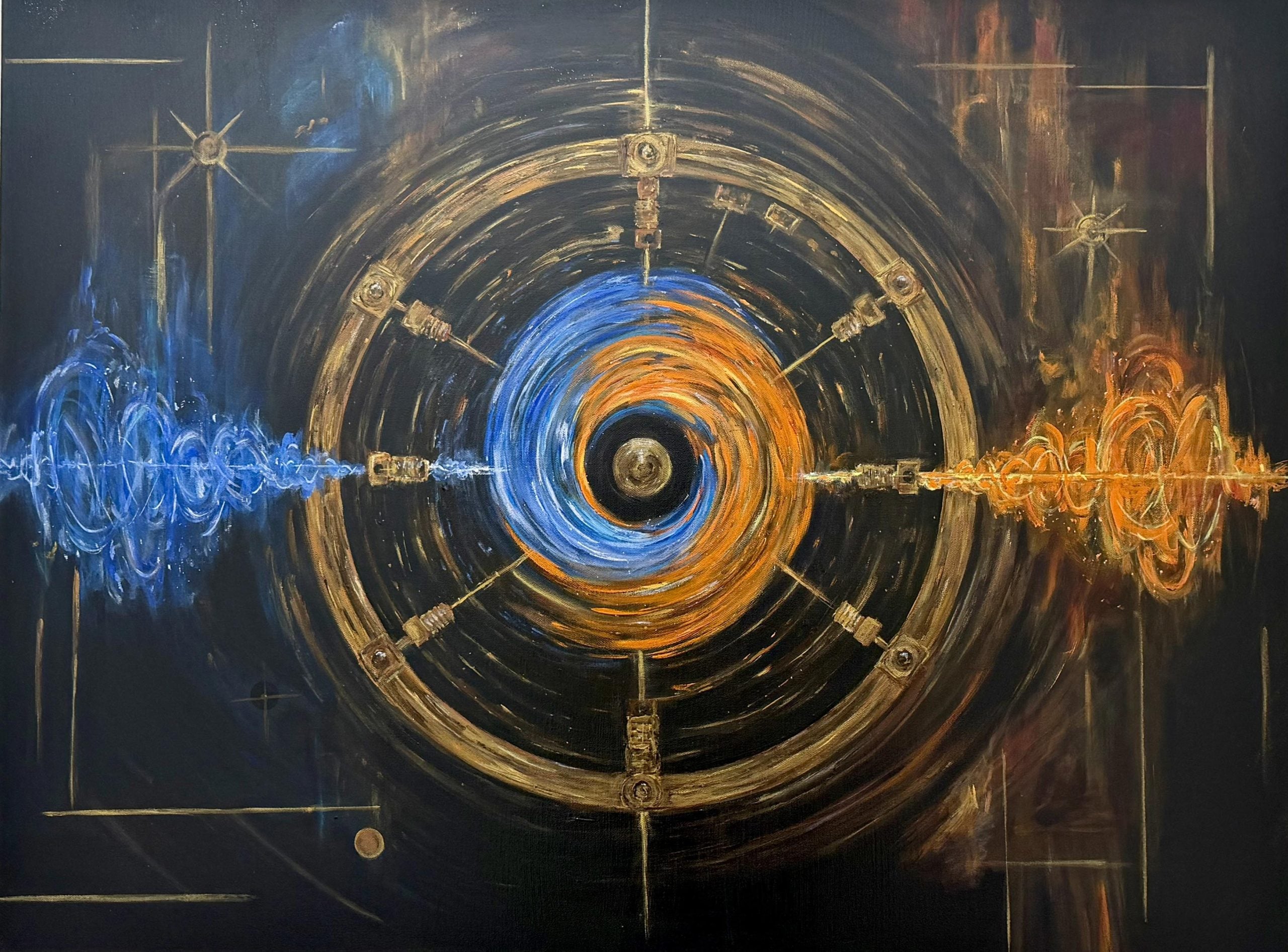
Researchers at the Advanced Science Research Center at the CUNY Graduate Center have successfully simulated a half-century-old theoretical model for extracting energy from black holes. By utilizing a stationary device that mimics the effects of extreme rotation, the team has transformed complex astrophysical predictions into a controlled laboratory platform. These findings, published in the journal Nature on 8 July 2026, provide a new experimental window into the physics of super-radiance and wave amplification.
Theoretical Foundations
The experiment centers on concepts first proposed in the late 1960s and early 1970s. In 1969, physicist Sir Roger Penrose theorized that a rapidly spinning black hole could transfer rotational energy to surrounding matter. Specifically, he identified the ergosphere—a region of space-time dragged by the black hole’s rotation—as a site where particles could theoretically gain energy. Physicist Yakov Zel’dovich subsequently extended this concept to wave phenomena, predicting that electromagnetic waves interacting with a sufficiently fast-rotating object would extract energy from the system, resulting in amplification.
Related media
The Synthetic Approach
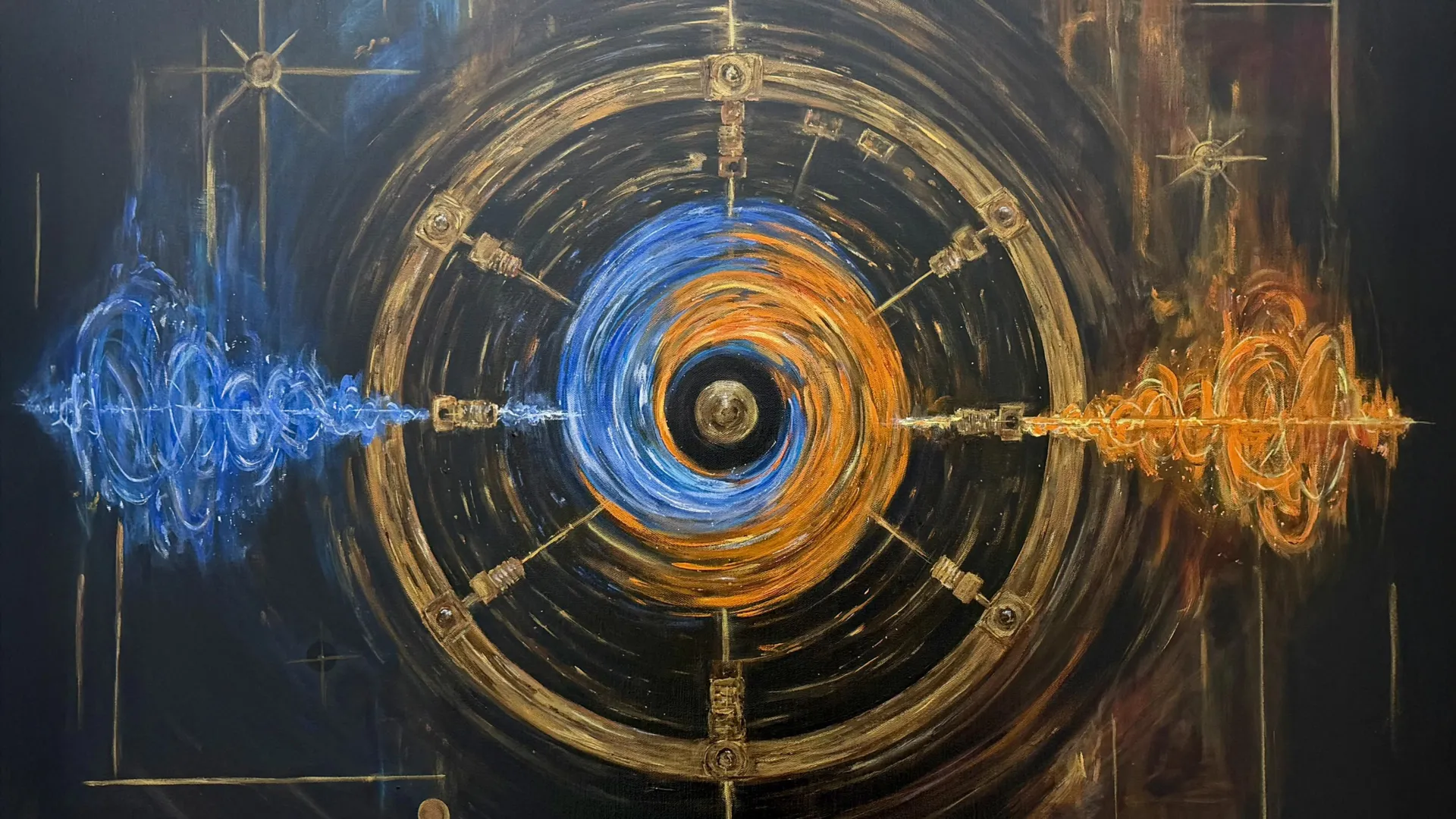
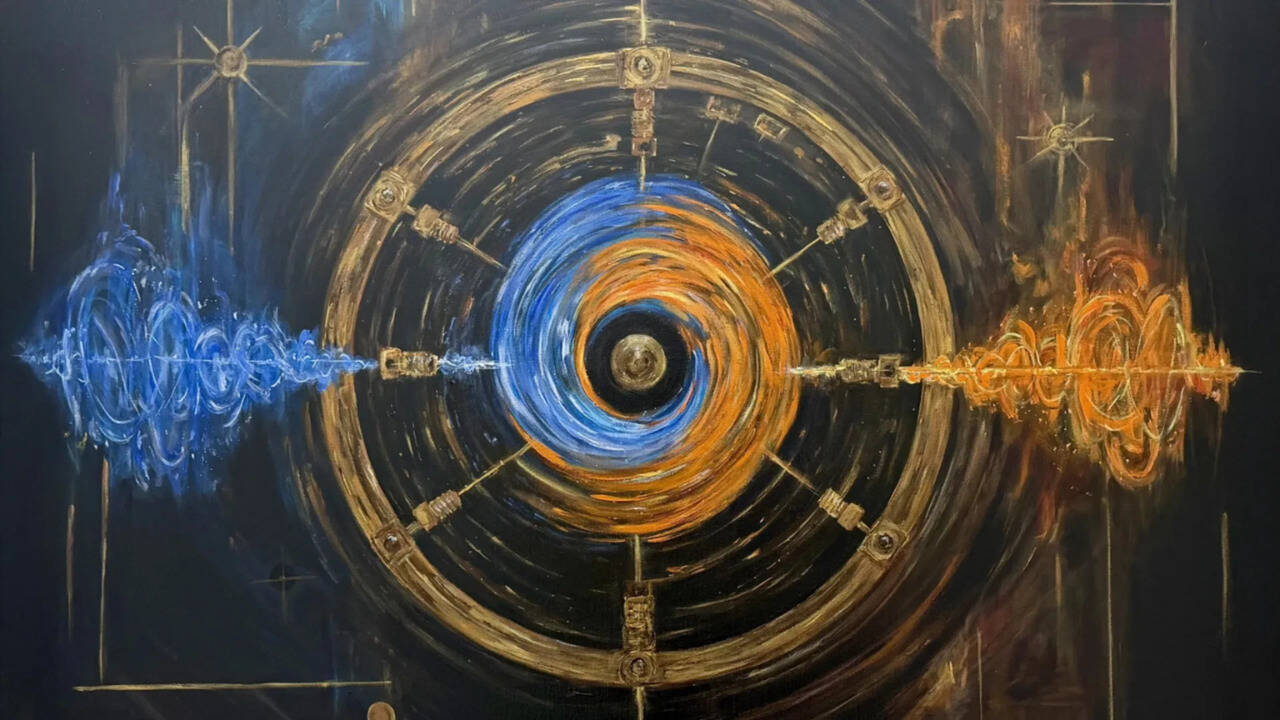
To overcome these obstacles, the CUNY researchers developed a radio-frequency system using engineered metamaterials. Instead of relying on mechanical motion, the team constructed a ring-shaped network of electronic resonators. By rapidly modulating the properties of these resonators in a precisely timed sequence, they created a traveling pattern that circulates around the ring. Although the device itself remains stationary, the pattern induces a state of "synthetic rotation" that electromagnetic waves experience as an ultrafast spinning object.
This method allows scientists to simulate rotational speeds that would otherwise be impossible to achieve in a laboratory environment, effectively reaching regimes of apparent superluminal motion. Because no physical mass is moving at these speeds, the experiment remains within the bounds of standard physical laws while allowing for the observation of extreme rotational Doppler shifts.
According to the project's principal investigator, Andrea Alù, the approach facilitates a new method of wave-matter interaction. "Waves with selected rotational properties extract energy from synthetic time-engineered rotation, producing a form of broadband selective amplification," said Alù, who serves as a Distinguished Professor and Einstein Professor of Physics at the CUNY Graduate Center and founding director of the CUNY ASRC’s Photonics Initiative.
Experimental Observations
The research team, led by postdoctoral researcher Hadiseh Nasari, utilized a ring of three resonators configured in a delta topology. By driving the system with a 100 megahertz input signal and adjusting the modulation frequency, the researchers observed a clear transition in wave behavior. As the modulation speed increased, the signal entered a negative Doppler-shift regime, characterized by a reversal in the wave's orbital angular momentum. This reversal served as a marker for time-reversed dynamics and coincided with a measured net gain of approximately 7.8 decibels, confirming the extraction of energy from the synthetic rotation.
A notable conclusion from the study suggests that parasitic losses within the system, often viewed as a hindrance, actually contributed to the amplification process. The analysis indicates that modulation strength and system losses work in tandem to enable energy transfer in the synthetic superluminal regime.
Broader Implications
This development creates a versatile platform for exploring the intersection of astrophysics, wave physics, and quantum science. While the experiment does not reproduce every mechanical detail of a Kerr black hole, it demonstrates the underlying thermodynamic logic of the Penrose–Zel’dovich process in a controllable setting.
The team anticipates that these principles could eventually inform technological advances beyond theoretical research, specifically in the areas of wireless communications, classical optics, and quantum information processing. Future investigations may seek to extend these modulation schemes to higher frequencies, including all-optical systems, and to utilize larger ring networks to access a broader range of rotational wave states.
What to Watch Next
- Scaling and Integration: Future research will focus on how these principles can be integrated into practical technologies for data encoding and signal amplification.
- Advanced Frequency Testing: Scientists intend to determine if the same effects can be reproduced using photonic and quantum systems, potentially pushing the boundaries of light manipulation.
- Broader Applications: The team is evaluating the use of larger, more complex resonator networks to expand the range of accessible orbital angular momentum states.
Archypedia is dedicated to independent, evidence-backed reporting. This briefing was synthesized from primary source reporting, corroborated across independent newsrooms, and verified against our Editorial Standards.
Transparency record
Evidence behind this report
This report synthesizes 12 distinct sources. Open the source ledger below to compare the underlying coverage.
- scitechdaily.com
- sciencedaily.com
- thebrighterside.news
- timesofindia.indiatimes.com
- scienceillustrated.com
- yahoo.com
- livescience.com
- knowridge.com
- sciencealert.com
- universetoday.com
- refractor.io
- newsbytesapp.com
Prepared under the Archypedia Editorial Policy by the Niko Vale editorial desk profile. AI-assisted tools may support drafting and verification; public accountability remains with Archypedia. Report an error.