How to create the blackest black ever known – from nature to nanotechnology
From prehistoric charcoal to advanced carbon nanotubes, researchers are developing record-breaking materials that capture nearly all incoming light. These innovations are being applied across fields such as astronomy, thermal management, and defense.
Humanity’s quest for the ultimate black has evolved from simple charcoal used in the prehistoric cave art of Lascaux to high-tech laboratories utilizing nanotechnology. While black was once a status symbol for Renaissance monarchs and judges due to the high cost of producing deep, uniform dyes, contemporary science now aims for the theoretical limit of perfect light absorption.
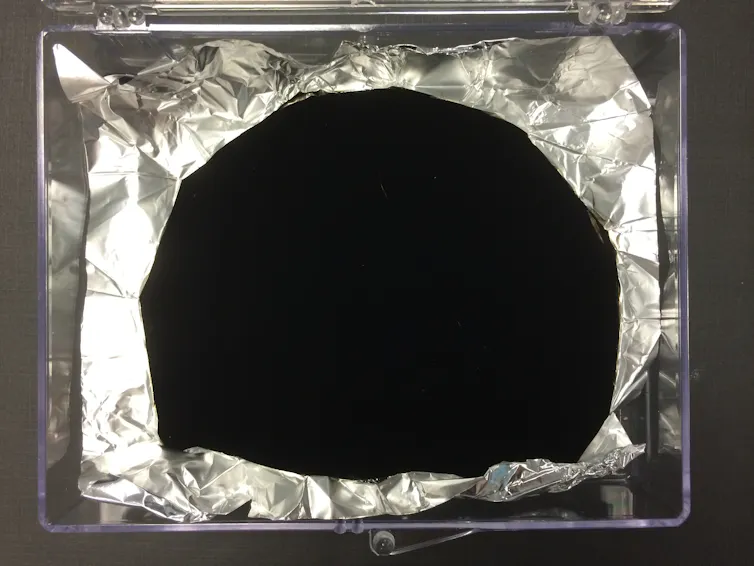
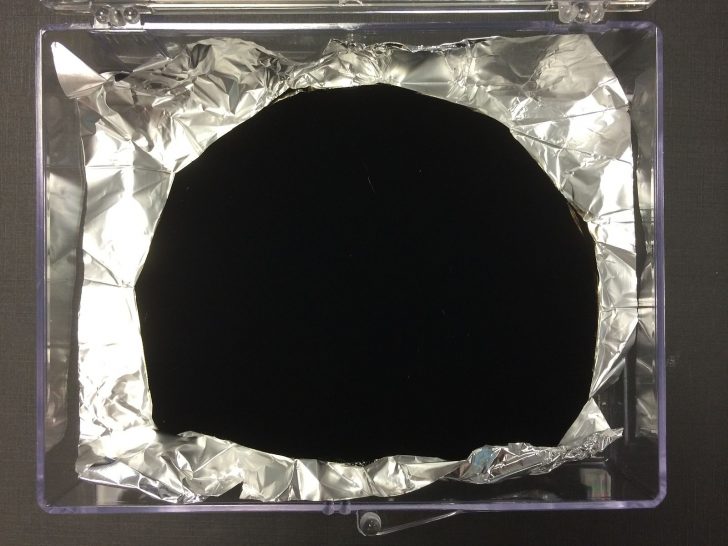
Modern ultra-black materials rely on carbon nanotubes (CNTs). These structures form dense, forest-like arrays. When light strikes these "fuzzy forests," it enters the labyrinthine gaps between the tubes and becomes trapped, converting into heat rather than reflecting back to the viewer. The resulting surface appears as a two-dimensional void.
Related media
Nature as the Blueprint
Engineering these materials often involves biomimicry. Long before human technology, deep-sea fish evolved skin capable of absorbing nearly all light to remain invisible to predators. Similarly, some butterflies and birds of paradise utilize surface patterns, such as ridges and tilted barbules, to scatter light repeatedly. These natural architectures achieve reflection values as low as 0.05-0.31%, a benchmark that modern metamaterials aim to reach or exceed.
The Controversy of Exclusivity
The pursuit of these materials led to public tension when the artist Anish Kapoor obtained an exclusive license to use Vantablack, a proprietary carbon nanotube material, for artistic purposes. The arrangement prompted backlash from artists who argued that such a privilege should not be reserved for a single practitioner. This controversy helped drive the development of alternative ultra-black materials which continues today.
Breaking Records at MIT
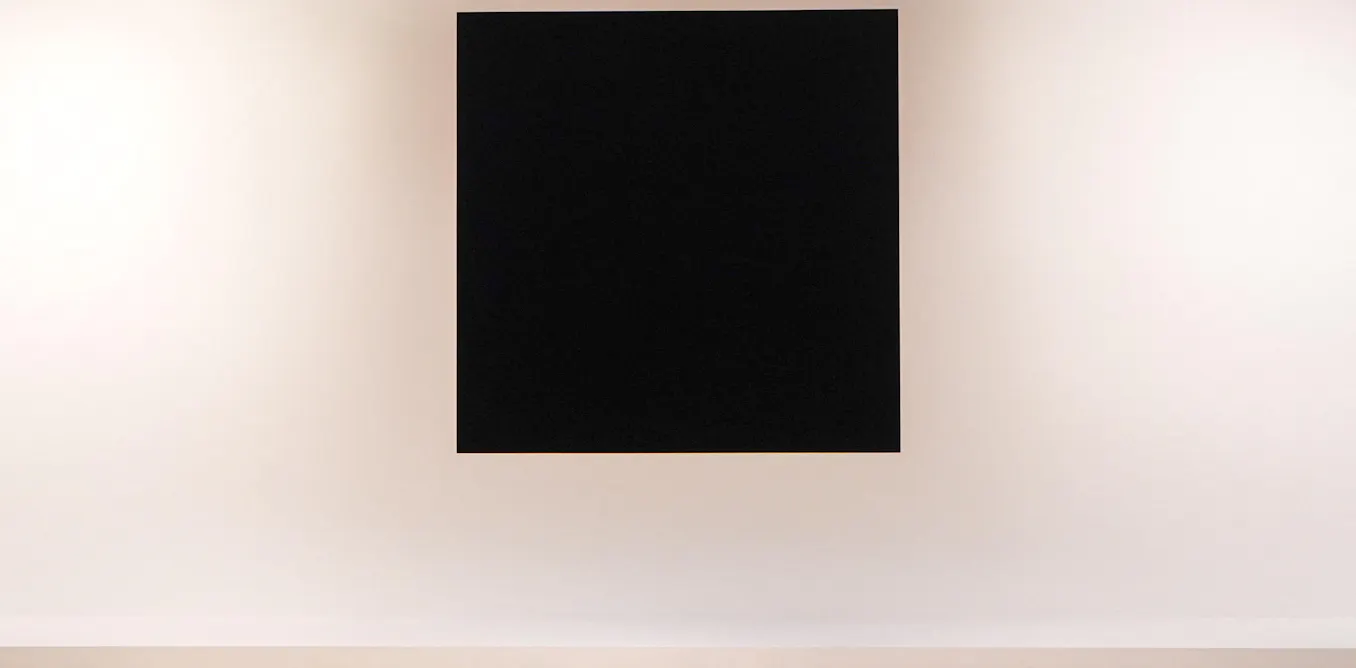
An art-science collaboration at MIT produced a material surpassing all previous iterations. Working with artist-in-residence Diemut Strebe, researchers Brian Wardle and Kehang Cui developed a coating on chlorine-etched aluminum foil that absorbs at least 99.995% of incoming light. The discovery occurred while attempting to improve the electrical and thermal properties of aluminum; the team discovered that chloride ions from salt could remove the aluminum's insulating oxide layer. This allowed CNTs to grow at lower temperatures. The team showcased the material by coating a 16.78-carat yellow diamond, which appeared as a flat, black void.
"Our material is 10 times blacker than anything that’s ever been reported, but I think the blackest black is a constantly moving target. Someone will find a blacker material, and eventually we’ll understand all the underlying mechanisms, and will be able to properly engineer the ultimate black."
Brian Wardle, professor of aeronautics and astronautics at MIT, via MIT AeroAstro
Scientific and Industrial Utility
Beyond the art world, these materials serve essential functions:
- Astronomy: Ultra-black coatings line the inside of telescopes to absorb stray light. Without them, the glare from nearby stars would mask the faint reflection from distant galaxies and exoplanets, leaving many of these worlds invisible.
- Thermal Management: Ultra-black coatings also improve thermal management by absorbing and controlling heat, making them ideal in spacecraft, satellites and high-performance electronics where even minor temperature changes can affect performance.
- Defense: Carbon nanotube coatings also help aircraft, drones and satellites lower both visible and infrared signatures, making them more difficult to detect by cameras, thermal imaging systems and radar.
- Imaging: In high-resolution microscopes and scientific cameras, ultra-black surfaces eliminate reflections that blur images, revealing details that would otherwise remain hidden.
As the study highlights, waterborne carbon nanotube composite materials exemplify this progress, achieving light absorption above 99.9% while maintaining the durability required for highly demanding applications in the automotive industry.
How significant is this development?
Contribute your assessment to the aggregated reader intelligence ledger.
Archypedia is dedicated to independent, evidence-backed reporting. This briefing was synthesized from primary source reporting, corroborated across independent newsrooms, and verified against our Editorial Standards.
Transparency record
Evidence behind this report
This report synthesizes 8 distinct sources. Open the source ledger below to compare the underlying coverage.
- theconversation.com
- uk.news.yahoo.com
- inkl.com
- aeroastro.mit.edu
- miragenews.com
- 99percentinvisible.org
- scitechdaily.com
- lifetechnology.com
Prepared under the Archypedia Editorial Policy by the Niko Vale editorial desk profile. AI-assisted tools may support drafting and verification; public accountability remains with Archypedia. Report an error.