Solar storms could be forecast by monitoring cosmic rays
A new method using radiation monitors on spacecraft like BepiColombo can track CME movement by measuring changes in cosmic ray intensity. This approach helps researchers map solar outbursts to better understand and predict their impact on Earth's infrastructure.
Monitoring cosmic rays could soon provide a critical early-warning system for solar storms, offering researchers a new method to track coronal mass ejections (CMEs) as they travel through interplanetary space. An international team led by researchers at the University of Tokyo has developed a technique to measure the "Forbush decrease effect," a localized drop in cosmic ray intensity caused when a passing CME pushes aside energetic charged particles of extrasolar origin.
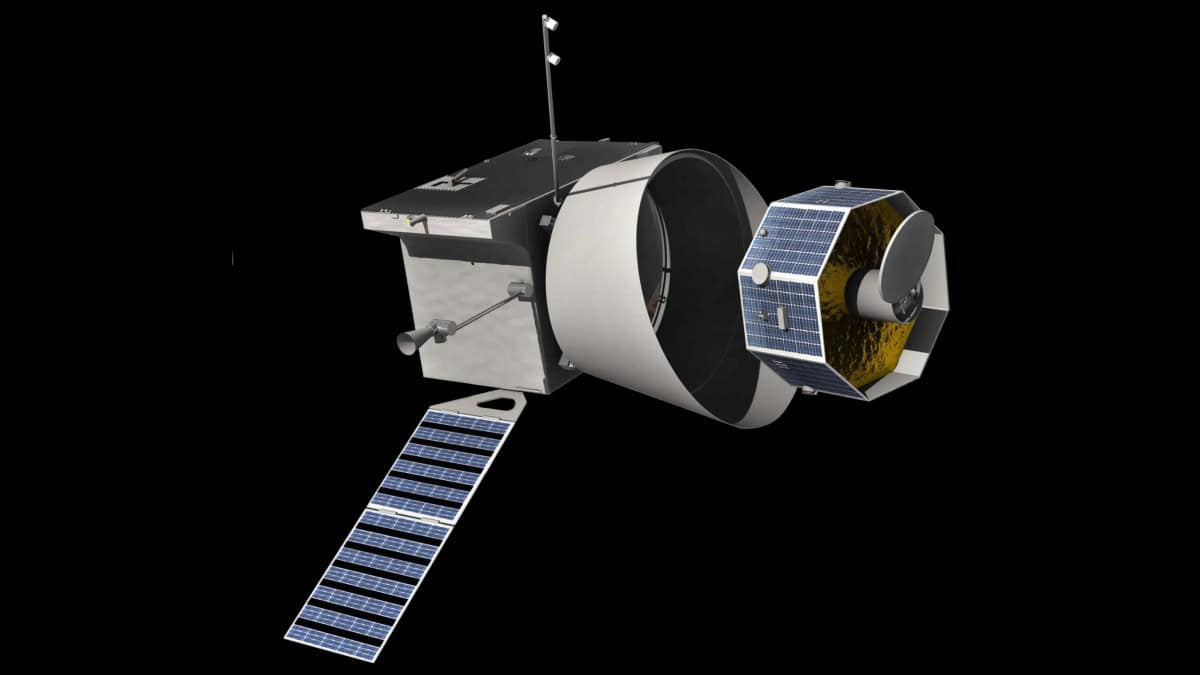
By utilizing non-scientific radiation monitors already present on spacecraft like BepiColombo, scientists can now map the physical structure of these solar outbursts at varying distances from the Sun. This approach addresses a long-standing gap in heliophysics, where previous observations lacked simultaneous data from multiple locations, leaving the relationship between propagation distance and CME severity unclear.
Related media
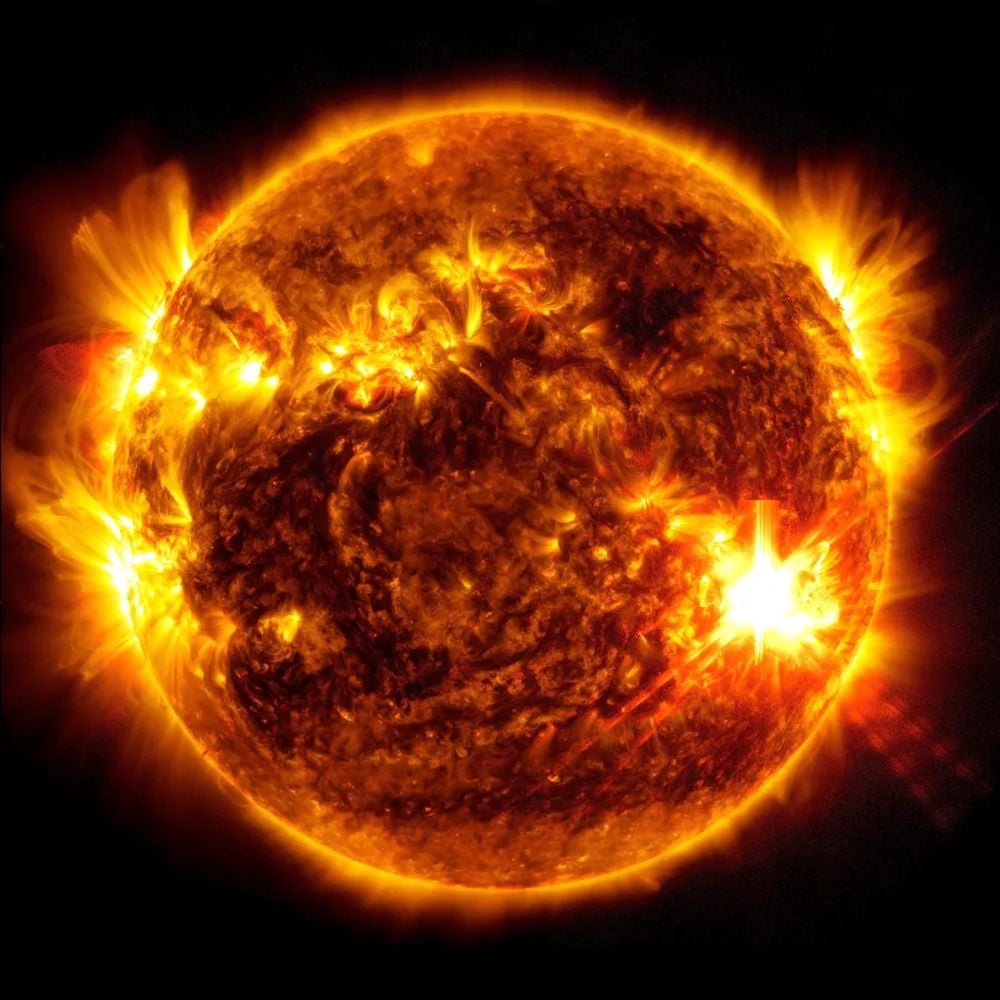

Understanding Solar Impact
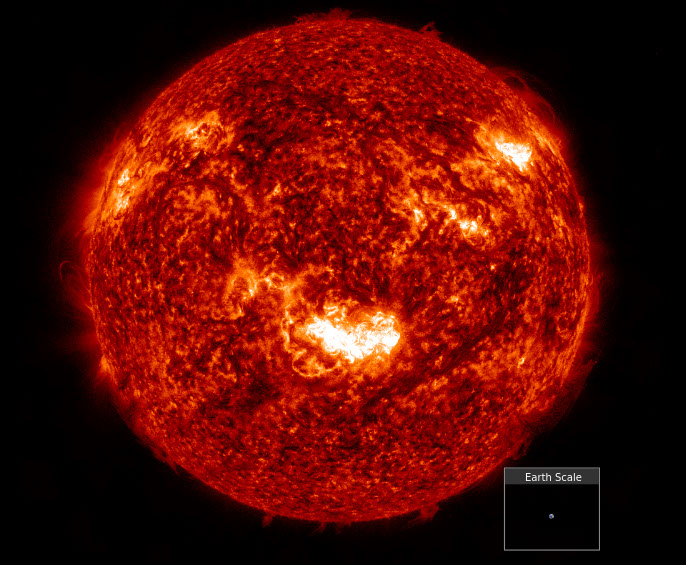
The urgency to refine these forecasting methods stems from the increasing vulnerability of Earth's technological infrastructure. The Gannon storm of May 10, 2024, serves as the primary benchmark for modern space weather researchers. As the most severe geomagnetic event in two decades, it caused GPS-guided agricultural equipment in the United States to malfunction, tripped high-voltage power lines, and forced trans-Atlantic flights to alter their routes due to radiation concerns. In orbit, the event heated the thermosphere to over 2,100 degrees Fahrenheit, causing atmospheric expansion that increased drag on satellites and led to the premature deorbiting of the CIRBE CubeSat.
Short-Term Weather Correlations
Beyond the immediate hazards to electronics and aviation, new research suggests that solar activity may influence terrestrial weather patterns more rapidly than previously assumed. A study led by Joachim Raeder, professor emeritus of physics at the University of New Hampshire, analyzed 67 years of data to identify a correlation between solar storms and localized decreases in precipitation across North America. According to the findings, these impacts occur within a single day of a storm, with the most pronounced effects appearing in the Rocky Mountains and the Hudson Bay region during the summer and winter months.
While the exact physical mechanism remains unproven, Raeder suggests that solar electromagnetic energy may penetrate the atmosphere via the polar vortex. This hypothesis challenges the long-debated theory that cosmic rays influence weather by generating clouds, as the patterns observed in the study did not align with expected cosmic ray interactions.
Current and Future Surveillance
Following the November 2025 solar storm, experts from the European Space Agency (ESA) emphasized that while operational monitoring from Lagrange Point 1 (L1) currently provides roughly 20 minutes of warning, future missions aim to extend this window.
| Mission/Event | Capability/Outcome |
|---|---|
| BepiColombo | Proved feasibility of using non-scientific radiation monitors to track CMEs. |
| Vigil (2031 launch) | Designed to monitor the Sun from Lagrange Point 5 to detect hazards before they rotate into Earth's view. |
For now, space weather professionals operate under the ALARA (as low as reasonably achievable) principle. During peak solar activity, this involves active mitigation steps such as delaying satellite launches, shielding astronauts, or placing sensitive hardware into safe mode. As scientists like Thomas Do continue to improve acceleration models for charged particles, the integration of cosmic ray monitoring and refined atmospheric modeling will likely become standard practice for protecting space-based assets.
What to Watch Next
- Refinement of Models: Future research will focus on whether atmospheric models can be updated to include the specific, short-term precipitation changes linked to geomagnetic storms.
- Mission Data: Analysis of science data from the November 2025 storm remains ongoing, with results expected to inform design specifications for shielding on future lunar and deep-space missions.
- Launch Schedule: Preparations continue for next-generation solar observatories, such as ESA’s Vigil, which is intended to provide a critical "side view" of the Sun to improve early-warning capabilities.
How significant is this development?
Contribute your assessment to the aggregated reader intelligence ledger.
Archypedia is dedicated to independent, evidence-backed reporting. This briefing was synthesized from primary source reporting, corroborated across independent newsrooms, and verified against our Editorial Standards.
Transparency record
Evidence behind this report
This report synthesizes 7 distinct sources. Open the source ledger below to compare the underlying coverage.
- universetoday.com
- physicsworld.com
- science.nasa.gov
- msutoday.msu.edu
- esa.int
- astronomy.com
- knowridge.com
Prepared under the Archypedia Editorial Policy by the Niko Vale editorial desk profile. AI-assisted tools may support drafting and verification; public accountability remains with Archypedia. Report an error.