CU Medicine Ranked World No. 2 in Gastroenterology & Hepatology
The Faculty of Medicine at The Chinese University of Hong Kong has been ranked second globally in Gastroenterology and Hepatology. This achievement reflects the institution's ongoing success in clinical innovation and medical research.
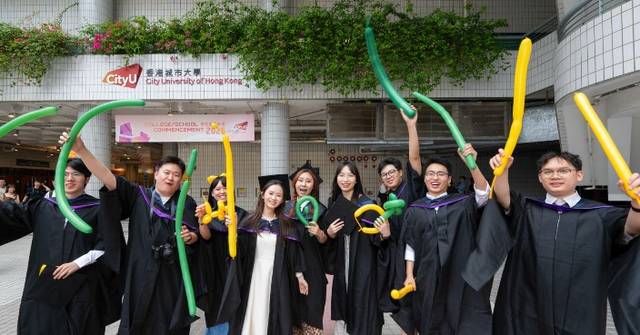
The Faculty of Medicine at The Chinese University of Hong Kong, known as CU Medicine, has secured the world’s second position in Gastroenterology and Hepatology, according to the Best Global Universities Subject Rankings 2026-27 released by U.S. News & World Report. Announced on 30 June 2026, the rankings reflect the faculty’s sustained performance, marking the fourth consecutive edition in which the institution has placed within the global top three for these subjects.
The faculty also maintains a strong regional presence. For five consecutive years, it has held the top position in Asia for Gastroenterology and Hepatology and for Endocrinology and Metabolism. Clinical Medicine has been named Asia’s top discipline for the second consecutive year. Beyond these specific disciplines, five CU Medicine areas are ranked among the top three in Asia, including Surgery and Radiology, Nuclear Medicine and Medical Imaging.
Related media

Within Hong Kong, the faculty holds the number one rank in seven distinct categories: Gastroenterology and Hepatology, Endocrinology and Metabolism, Clinical Medicine, Surgery, Radiology, Nuclear Medicine and Medical Imaging, Neuroscience and Behaviour, and Oncology.
Research and Clinical Innovation
The institution’s international standing is supported by a focus on translating laboratory findings into clinical applications. Its research initiatives span several critical areas:
- Gut Microbiome: Operating the first Microbiota Transplantation and Research Centre in Asia, the faculty has pioneered fecal microbiota transplantation and early-life microbiome research. Recent findings include the identification of microbiome biomarkers associated with autism spectrum disorders and evidence that modulating gut microbiota may alleviate anxiety symptoms. Researchers also identified Streptococcus anginosus as a factor contributing to gastric cancer.
- Endoscopy and Robotics: CU Medicine was the first institution globally to implement endoluminal robotics for the treatment of gastrointestinal cancers. It currently serves as a testing site for an AI-powered upper gastrointestinal endoscopy system designed to improve precision in cancer detection.
- Liver Cancer: Faculty scholars led The Lancet Commission on liver cancer, a collaboration involving 51 experts from the United States, Europe, and Asia. In laboratory research, the faculty identified the function of the "TREM2+ LAM" macrophage subtype, which provides nutrients to cancer cells during the process of clearing apoptotic cells (efferocytosis). This finding is viewed as a potential target for liver cancer immunotherapy.
- Diagnostic Breakthroughs: The faculty was the first globally to define bacterial biomarkers and stool microRNA for the non-invasive diagnosis of colorectal cancer.
Regarding these achievements, Professor Philip Chiu, Dean of Medicine at CUHK, stated, "Sustaining a top-three position globally for four consecutive editions underscores the broad and enduring excellence of CU Medicine. True medical advancement requires the courage to pioneer what has never been done before, and our teams have proven that Hong Kong scholars can lead the world in clinical and scientific breakthroughs."
Institutional Context
Established in 1981, CU Medicine manages an academic structure consisting of 14 clinical departments and five schools. The faculty reports that it has produced more than 6,000 medical graduates to date. Its commitment to research translation is reflected in a portfolio that includes 3,000 patent filings and the development of over 20 start-ups. In broader university metrics, The Chinese University of Hong Kong rose 9 places to rank 28th globally in the latest U.S. News & World Report annual rankings.
How significant is this development?
Contribute your assessment to the aggregated reader intelligence ledger.
Archypedia is dedicated to independent, evidence-backed reporting. This briefing was synthesized from primary source reporting, corroborated across independent newsrooms, and verified against our Editorial Standards.
Transparency record
Evidence behind this report
This report synthesizes 7 distinct sources. Open the source ledger below to compare the underlying coverage.
- bastillepost.com
- finance.yahoo.com
- linkedin.com
- smb.salisburypost.com
- aijourn.com
- idd.cuhk.edu.hk
- sg.finance.yahoo.com
Prepared under the Archypedia Editorial Policy by the Lina Park editorial desk profile. AI-assisted tools may support drafting and verification; public accountability remains with Archypedia. Report an error.