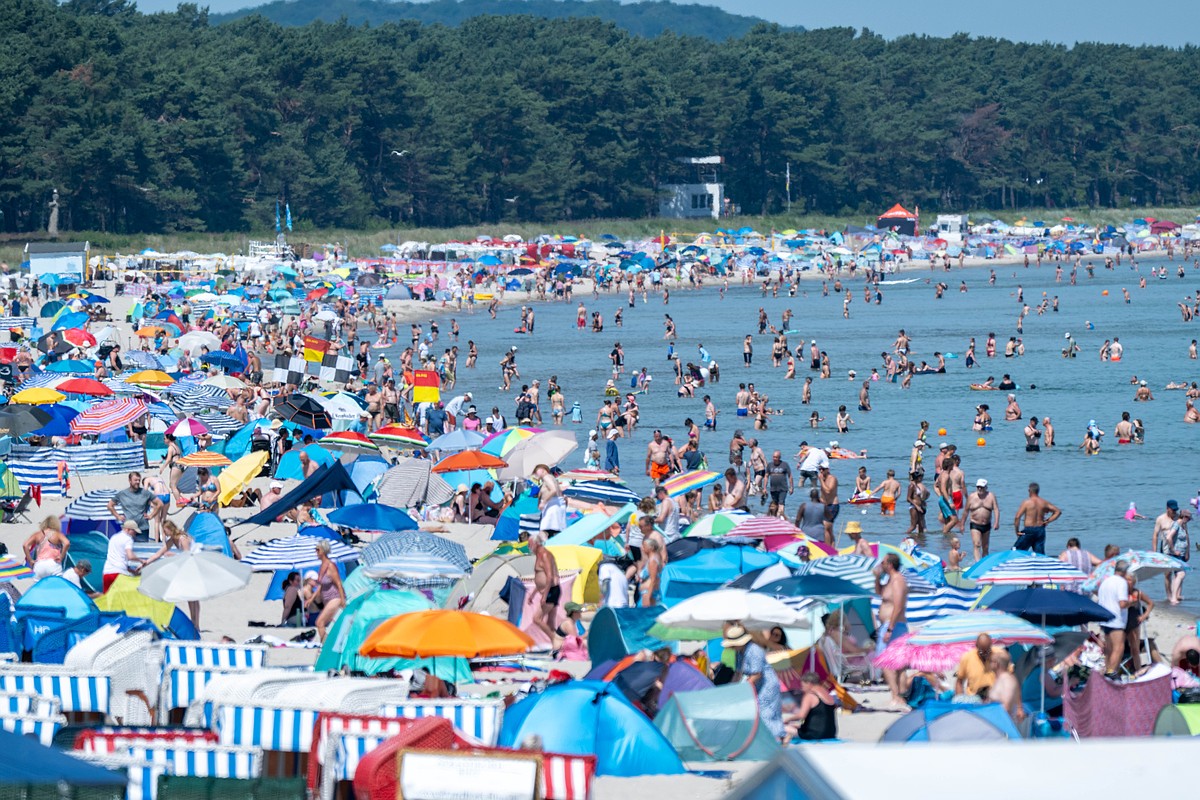
European heatwave causes infrastructure damage and record fatalities
Record-breaking temperatures across Europe are triggering a public health crisis and widespread infrastructure damage, from buckling autobahns to nuclear power limitations.

An intense, record-breaking heatwave is testing the limits of infrastructure across Europe, causing widespread transport disruption and surging pressure on healthcare systems. As temperatures climbed past 40 degrees Celsius across the continent, the extreme weather has transitioned from a localized weather event into a broad crisis affecting road safety, railway reliability, and public health.
The heatwave, which scorched western Europe earlier this week, spread into central and eastern Europe by the weekend, shattering temperature records across the continent. In Denmark, the village of Ødum reached 37 degrees Celsius, the highest reading since record-keeping began in 1874. Switzerland saw temperatures hit 38.8 degrees Celsius in Basel, while the Czech Republic registered 40.8 degrees Celsius in Doksany. In the UK, Friday became the hottest June day on record at 37.3 degrees Celsius, breaking a record that had stood since 1976.
Related media


Infrastructure under strain
Physical infrastructure has struggled to withstand these unprecedented thermal loads. In Germany, the A2 Autobahn outside Berlin suffered damage when concrete slabs expanded and burst, necessitating emergency road closures. Transport networks in France and the United Kingdom reported instances of asphalt softening and buckling, leading to viral social media documentation of road surfaces deforming under sustained heat.
Rail operators have faced significant operational hurdles. Deutsche Bahn advised passengers to avoid non-essential travel through the weekend, noting that high temperatures were affecting signaling systems and tracks. Across the region, operators implemented speed restrictions to prevent tracks from warping, further compounding delays. Energy infrastructure has also been affected; state-owned provider EDF in France confirmed a reduction in output at certain nuclear power plants, citing limitations in cooling operations due to the temperature of river water used in the process.
Public health and emergency response
The human toll of the event has been severe. According to reports cited by International Business Times, more than 1,300 deaths have been recorded across the continent, with France reporting approximately 1,000 excess fatalities. Vulnerable populations, particularly the elderly, have been most affected. In Germany, a nursing home in Dormagen required evacuation after indoor temperatures reached 35 degrees Celsius, an incident during which one resident died, though officials have not definitively linked the death to the heat.
Healthcare facilities are grappling with a surge in demand. Paris hospitals activated emergency plans across their 38 facilities after experiencing an 80% increase in calls to medical dispatch centers. Public hospitals in the capital saw nearly 3,000 emergency admissions for two consecutive days, a volume significantly higher than typical seasonal levels.
Beyond the hospital environment, public safety has been a focus for authorities. In the United Kingdom, police recovered the bodies of two individuals—a 22-year-old man and a 15-year-old boy—from local bodies of water, bringing the total number of heat-related deaths reported in the country to four. Authorities continue to warn against swimming in unsupervised waters and have established cooling centers across multiple nations.
Regional heat status
| Country | Status/Action |
|---|---|
| France | High heat alerts in 37 regions; major events including Pride march postponed. |
| Italy | Red heat alerts active in 18 cities, including Rome, Venice, and Milan. |
| Germany | Police in Berlin deployed water cannons to provide relief to residents in public spaces. |
| United Kingdom | Amber heat warnings remain in force following record-breaking temperatures. |
What to watch next
- Forecaster outlook: Meteorologists expect temperatures to persist at high levels across central and eastern Europe, continuing the stress on critical infrastructure.
- Climate analysis: Scientists from the World Weather Attribution group have suggested that this early-summer event would have been virtually impossible without the influence of human-induced climate change.
- Public mitigation: Governments continue to monitor grid capacity and hospital occupancy as the heatwave transitions from its initial peak in the west to the remainder of the continent.
As the World Health Organisation has noted, more than 150 million people have been exposed to the extreme heat since 20 June. Experts continue to highlight that, as the fastest-warming continent on Earth, Europe is experiencing these events with increasing frequency and intensity, forcing a broader discussion on the long-term adaptability of urban transport and health systems to extreme, sustained heat.
How significant is this development?
Contribute your assessment to the aggregated reader intelligence ledger.
Archypedia is dedicated to independent, evidence-backed reporting. This briefing was synthesized from primary source reporting, corroborated across independent newsrooms, and verified against our Editorial Standards.
Transparency record
Evidence behind this report
This report synthesizes 5 distinct sources. Open the source ledger below to compare the underlying coverage.
Prepared under the Archypedia Editorial Policy by the Samir Haddad editorial desk profile. AI-assisted tools may support drafting and verification; public accountability remains with Archypedia. Report an error.