Antarctica dinosaur fossil rediscovered after decades in storage drawer
Paleontologists have identified a fossil discovered in 1985 as a tail vertebra from a titanosaur, marking the first dinosaur bone recovered from Antarctica. The specimen had been stored in a collection for nearly four decades before its true significance was realized.
A fossil that remained tucked away in a storage drawer for four decades has been confirmed as the first dinosaur bone ever recovered from Antarctica. The discovery, detailed in a study published on 29 June 2026 in the journal Acta Palaeontologica Polonica, transforms a long-overlooked item into a vital piece of evidence for understanding prehistoric life on the southern continent.
The specimen, a vertebra, was originally unearthed in December 1985 by geologist Mike Thomson. During an expedition to James Ross Island, part of the British Antarctic Survey (BAS), Thomson was tasked with mapping rock layers. He recorded the find in his field diary as a "vertebra of large reptile," alongside a neat sketch, assuming it belonged to a marine creature. The bone was subsequently placed into the BAS geological collections in the United Kingdom, where it sat unexamined for nearly 40 years.
Related YouTube video
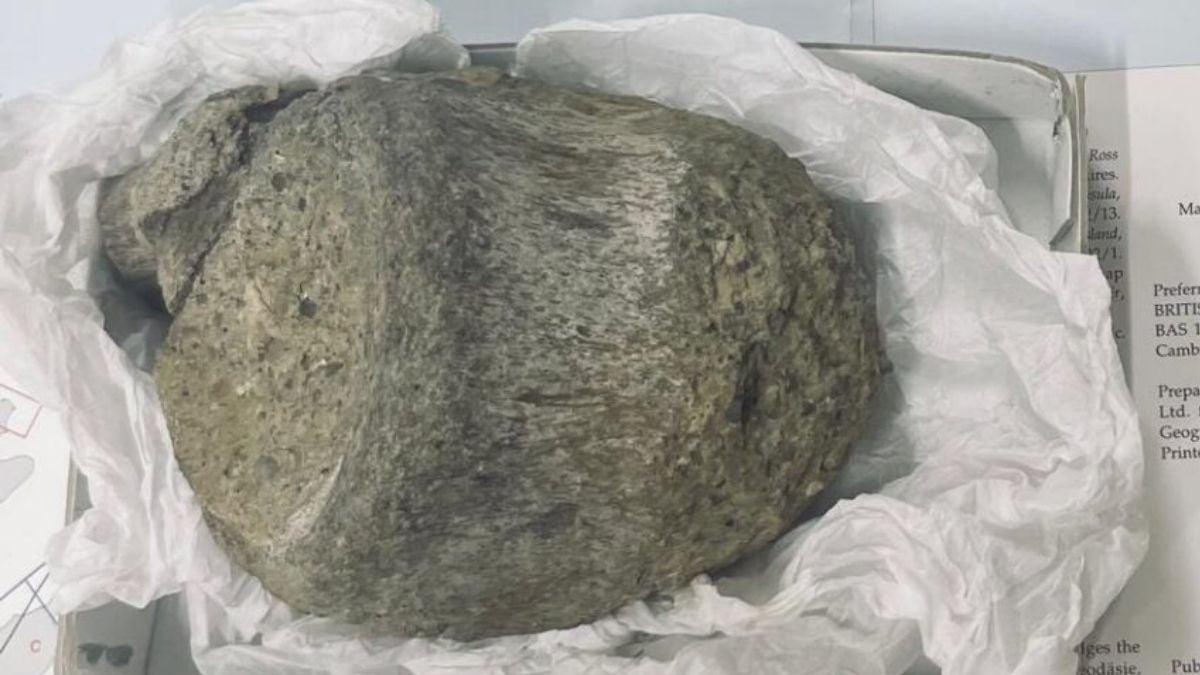
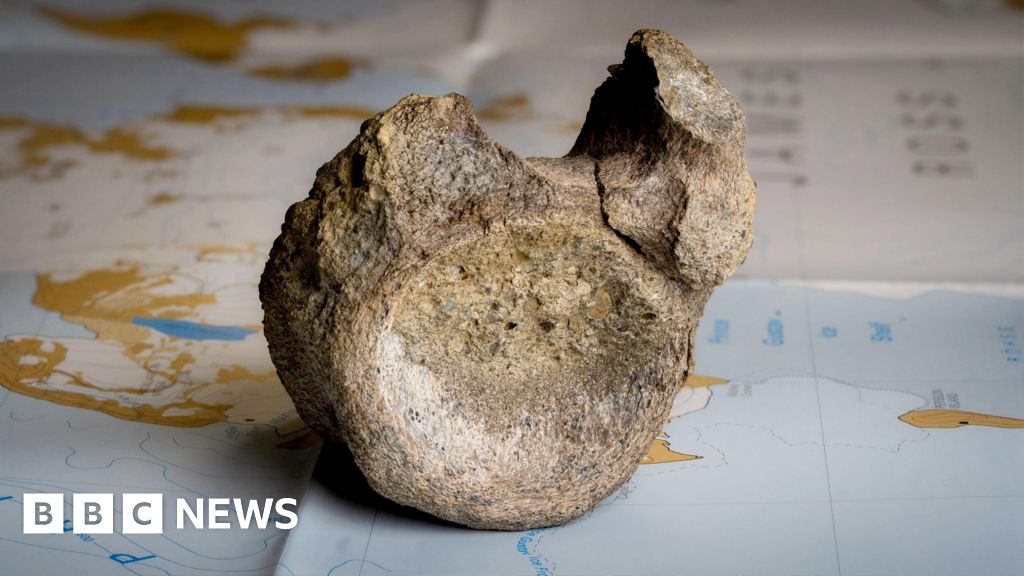
The realization of the fossil's true significance occurred when Mark Evans, a paleontologist and manager of the BAS geological collections, began reviewing archived specimens. It's only when you start thinking 'what's in this drawer', that sometimes you come across something and you think, 'Ah, this looks interesting,'
Evans told the BBC. Suspecting the bone belonged to a dinosaur, Evans contacted Paul Barrett, a paleobiologist at the Natural History Museum in London, to analyze the specimen.
Unlocking the Titanosaur
Upon inspection, researchers identified the fossil as a tail vertebra from a titanosaur, a group of long-necked, four-legged herbivorous sauropods.
"As soon as I saw it, I knew what we were dealing with… it was a dead cert we were dealing with a Titanosaur. This is a combination of features that's completely unique to these types of dinosaurs."
Paul Barrett, Natural History Museum, via BBC
While some titanosaurs reached lengths exceeding 35 meters and weights of over 60 tonnes, this specific individual is estimated to have been roughly 6 to 7 meters (20 to 23 feet) long. Scientists suggest the animal may have been a juvenile or a smaller species. The bone was preserved in marine rock from the Late Cretaceous period, approximately 82 million years ago. Researchers hypothesize that the creature likely died near the coast, and its body floated out to sea before sinking to the ocean floor to become fossilized.
A Link in the Gondwana Chain
The discovery is particularly significant for paleontologists reconstructing the migration patterns of dinosaurs across the ancient supercontinent of Gondwana. During the Cretaceous period, this landmass connected what is now South America, Antarctica, Australia, and New Zealand.
According to researchers, the presence of a titanosaur in Antarctica suggests that the continent served as a land bridge. Confirmation of the presence of these animals in Antarctica makes it seem likely that they travelled on to these areas, which were connected,
noted Paul Barrett. This helps fill a geographical gap, as evidence of titanosaurs is plentiful in South America but remains sparse or absent in Australia and New Zealand.
The Value of Museum Archives
The identification highlights the enduring importance of museum and research collections in modern science. Many experts emphasized that the discovery was only possible due to the careful curation of the original specimen by the British Antarctic Survey. Mike Thomson, who initially collected the fossil, passed away in 2020; his colleagues expressed that he would have been honored by the identification.
Antarctica remains one of the most challenging regions for paleontological field work due to extensive ice cover that obscures the fossil record. To date, only about 12 named species of dinosaurs have been identified on the continent. Scientists, including Barrett and Evans, believe that as climate change causes ice to retreat, further exploration of exposed rock may yield additional evidence of this past biodiversity.
Key Details of the Find
- Collection Date: December 1985
- Location: James Ross Island, Antarctic Peninsula
- Classification: Titanosaur
- Estimated Size: 6–7 meters (20–23 feet)
- Era: Late Cretaceous (~82 million years ago)
- Current Status: Part of the British Antarctic Survey collection
For now, the fossil remains a rare witness to a period when Antarctica was a lush, temperate forest—a stark contrast to the icy, barren environment observed today. As paleontologists continue to refine their understanding of the continent's prehistoric ecosystem, the once-forgotten bone from a desk drawer now serves as a central reference point in the history of polar exploration and the study of global dinosaur distribution.
How significant is this development?
Contribute your assessment to the aggregated reader intelligence ledger.
Archypedia is dedicated to independent, evidence-backed reporting. This briefing was synthesized from primary source reporting, corroborated across independent newsrooms, and verified against our Editorial Standards.
Transparency record
Evidence behind this report
This report synthesizes 10 distinct sources. Open the source ledger below to compare the underlying coverage.
- bbc.com
- turnto23.com
- yahoo.com
- cbsnews.com
- sciencealert.com
- smithsonianmag.com
- abc.net.au
- dailymail.com
- abcnews.com
- nypost.com
Prepared under the Archypedia Editorial Policy by the Niko Vale editorial desk profile. AI-assisted tools may support drafting and verification; public accountability remains with Archypedia. Report an error.

