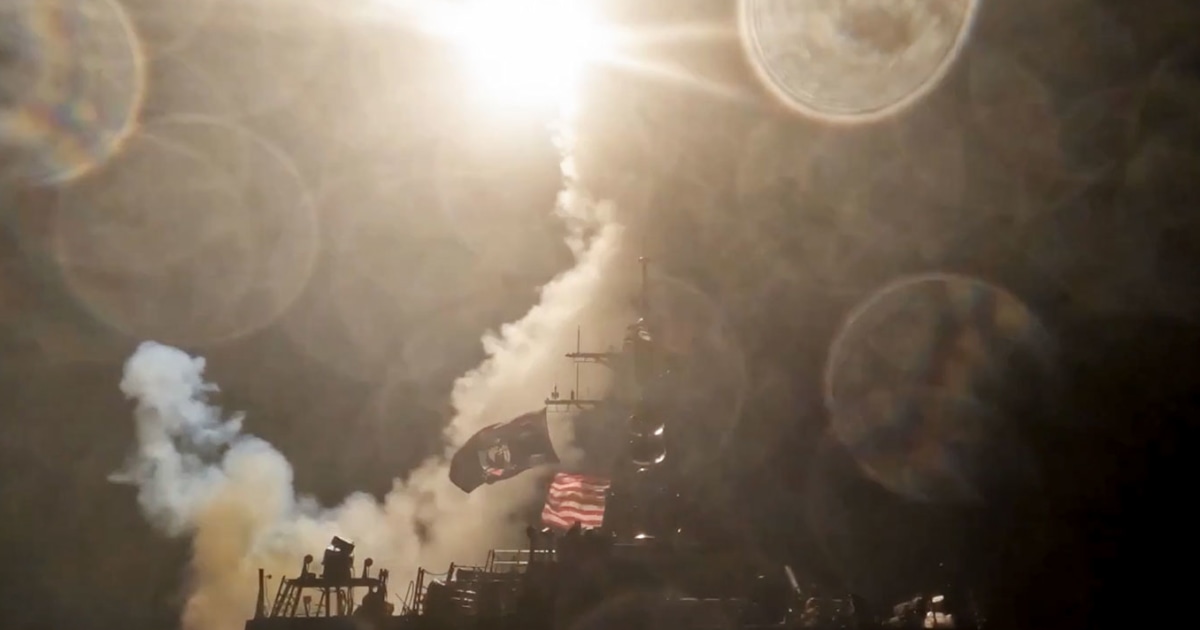
US and Iran trade airstrikes and drone attacks as regional tensions escalate
A fragile ceasefire between the U.S. and Iran has collapsed following a series of reciprocal military strikes, raising fears of a broader conflict.

The Strait of Hormuz has returned to a state of heightened volatility as a fragile ceasefire between the United States and Iran has collapsed. Following a series of reciprocal military strikes that began on June 25, 2026, the region is facing renewed fears of a broader conflict.
The current cycle of violence was triggered on June 25, when Iran deployed at least four
one-way attack drones toward the M/V Ever Lovely, a Singapore-flagged cargo vessel transiting the strait. While U.S. Forces reported successfully intercepting three of the drones, one struck the ship’s upper deck. Though the vessel remained operational, the incident marked what U.S. Leadership described as an unwarranted aggression
against commercial shipping, according to U.S. Central Command.
Related media


In response, the United States conducted airstrikes on June 26, targeting missile and drone storage facilities along with coastal radar sites on Iran's Qeshm Island and near the port city of Sirik. President Donald Trump, addressing the incident, described the Iranian drone strike as a foolish violation
of the ceasefire agreement. Vice President JD Vance reinforced the U.S. Stance, stating,
"Iran signed a ceasefire agreement. We have honored it. If they have disagreements about how the MOU is being applied, they can pick up the phone. But violence will be met with violence."
JD Vance, Vice President, via Social Media
The conflict intensified further on June 27 when Iran reported defensive strikes against targets linked to U.S. Forces in the region. Simultaneously, authorities in Bahrain—which hosts the U.S. Navy’s 5th Fleet—reported that multiple Iranian drones had targeted its territory. The Iranian Revolutionary Guard Corps (IRGC) claimed these actions were a decisive response
to the barbaric air strikes
carried out by the United States. Additionally, the United Kingdom Maritime Trade Operations (UKMTO) confirmed on June 27 that a Panama-flagged tanker, identified by security firm Vanguard Tech as the KIKU, sustained bridge damage after being struck by an unidentified projectile in the strait.
Competing Claims on Navigation
At the center of the dispute are conflicting interpretations of the memorandum of understanding regarding the management of the Strait of Hormuz. Iran has consistently argued that the waterway’s administration is its responsibility as a coastal state and has warned that it cannot guarantee safe passage for vessels using routes that bypass its oversight. In contrast, the U.S. And its Gulf allies maintain that the strait is an international waterway requiring free, unrestricted navigation.
The situation has led to significant logistical disruptions. The United Nations' International Maritime Organization (IMO) has paused evacuation efforts for commercial vessels, and tracking data indicates that numerous tankers have turned back or diverted from the alternative shipping lanes near the Omani coast. Analysts at DNB Carnegie noted that while transit continues, the fragile confidence of shipowners and crews
has been severely rattled.
Market and Regional Fallout
The renewed hostilities have had immediate economic impacts. Equity markets, including the Nasdaq and major indices in Frankfurt and Seoul, have opened lower. energy prices have remained sensitive, with benchmark Brent crude trading near $72 a barrel despite a brief drop following the initial report of the cargo ship attack.
Diplomatic efforts to maintain the peace face further hurdles. While U.S. Secretary of State Marco Rubio announced a new framework agreement between Israel and Lebanon on June 26, the absence of Hezbollah from these negotiations and the group's ongoing rejection of the terms have left the border situation precarious. Meanwhile, Pakistan continues to serve as a mediator for logistical concerns, recently facilitating the repatriation of Iranian crew members from a previously seized vessel.
What to Watch Next
- Navigation Enforcement: Whether Iran attempts to physically block or demand transit fees from vessels using routes not designated by Tehran.
- Retaliation Thresholds: The IRGC has warned that
repeated aggression
would invite a broader response, raising questions about potential future strikes on infrastructure. - Ceasefire Status: While both sides continue to refer to the memorandum of understanding, the effectiveness of the direct communication line established between the two nations remains to be seen.
- Gulf Cooperation Council (GCC) Stance: How member states like Bahrain, Kuwait, and the UAE manage their security concerns in the face of escalating drone activity.
As of June 27, U.S. Officials maintain that their military presence remains vigilant to ensure the adherence to established agreements, while Iranian state media continues to categorize the U.S. Presence as a violation of sovereignty.
How significant is this development?
Contribute your assessment to the aggregated reader intelligence ledger.
Archypedia is dedicated to independent, evidence-backed reporting. This briefing was synthesized from primary source reporting, corroborated across independent newsrooms, and verified against our Editorial Standards.
Transparency record
Evidence behind this report
This report synthesizes 12 distinct sources. Open the source ledger below to compare the underlying coverage.
- nbcnews.com
- cryptobriefing.com
- yahoo.com
- devdiscourse.com
- abc.net.au
- usatoday.com
- foxnews.com
- news.webindia123.com
- cbsnews.com
- forbes.com
- jang.com.pk
- timesnownews.com
Prepared under the Archypedia Editorial Policy by the Mara Ionescu editorial desk profile. AI-assisted tools may support drafting and verification; public accountability remains with Archypedia. Report an error.