Trump threatens 100 percent tariff on nations taxing US tech firms
President Trump announced that any nation imposing a digital services tax on American corporations will face a 100 percent tariff on all goods exported to the U.S. The directive targets European nations and impacts companies including Alphabet, Meta, Amazon, and Apple.

President Donald Trump issued a sweeping ultimatum on Friday, 26 June 2026, declaring that any nation implementing a digital services tax on American corporations will face an immediate 100 percent tariff on all goods exported to the United States. The warning, delivered via the Truth Social platform, asserts that such trade penalties would supersede all existing or future trade agreements, regardless of their status or implementation.
This directive signals a sharp escalation in the administration’s long-standing conflict with foreign governments over how to tax multinational technology firms. The President specifically identified European nations as the primary targets of his threat, citing discussions regarding the "imminent implementation" of digital levies that he claims are designed to discriminate against American companies such as Alphabet, Meta, Amazon, and Apple.
Related media

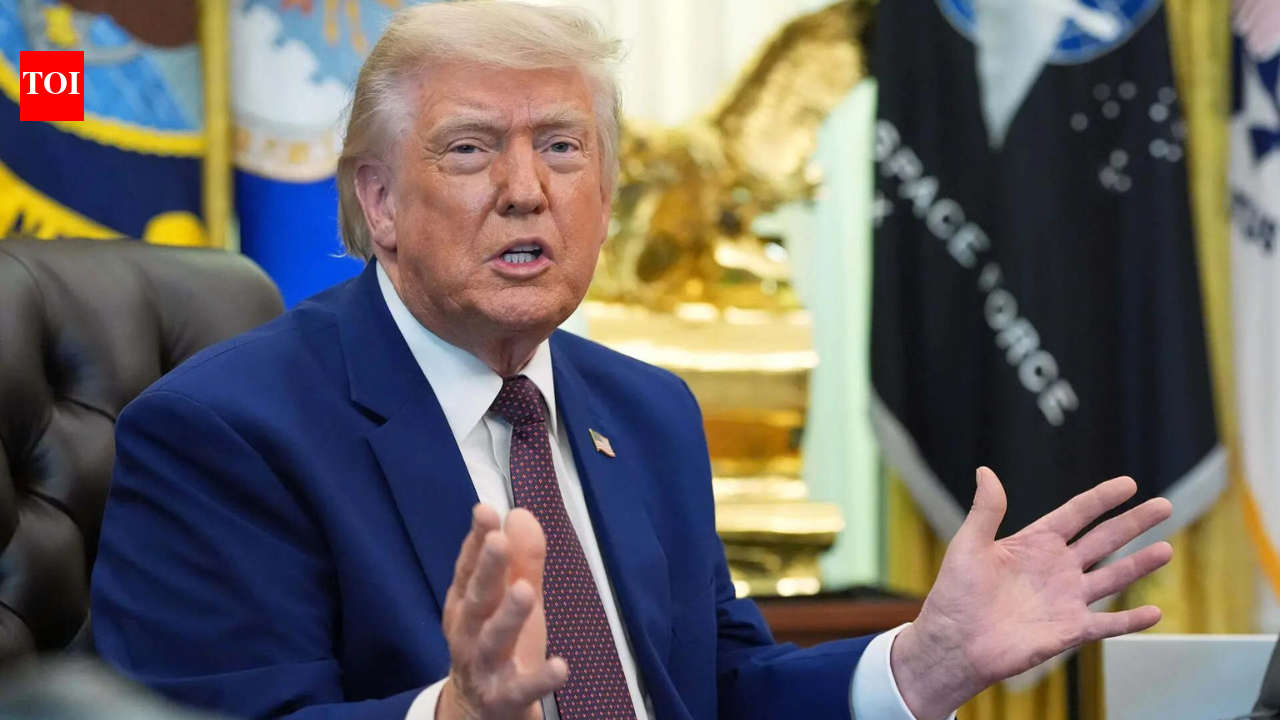

Trade Agreements and Diplomatic Tensions
The timing of the announcement complicates the relationship between Washington and the European Union, which finalized a broad trade agreement just last month. That deal, reached in May 2026 after extensive negotiations, capped tariffs on most European exports at 15 percent. However, digital services taxes were deliberately excluded from those terms, leaving the issue as a point of significant friction. The European Commission responded to the President’s statement by affirming its intent to protect its regulatory autonomy, stating that the bloc would act swiftly to defend its interests.
For several years, the Office of the United States Trade Representative has signaled that digital taxes—which often target the revenue generated by search engines, social media platforms, and online marketplaces—could trigger retaliatory trade actions. Proponents of these taxes, including various European governments, maintain that such measures are necessary to ensure large technology firms contribute to the public services of the countries where they generate revenue, addressing concerns that existing tax frameworks fail to capture digital value creation.
Global Scope and Regional Impacts
The threat arrives as multiple nations continue to evaluate or maintain taxes on digital services. France, which introduced a 3 percent levy on revenue earned by tech giants within its borders in 2019, has faced repeated pressure from the White House, including a specific threat earlier this month to impose 100 percent tariffs on French wine and champagne. Similarly, the United Kingdom has maintained a 2 percent digital services tax since 2020 on revenues derived from UK users.
Other nations have moved to dismantle such measures to avoid trade disputes. Canada rescinded a planned digital services tax last year, a move made hours before the tax was scheduled to take effect, in an effort to preserve trade negotiations with the United States.
In India, the status of such levies has shifted significantly in recent years. The Indian government previously enforced an Equalisation Levy, colloquially referred to as the "Google Tax," which applied to payments made to non-resident digital companies for advertising and e-commerce services. The 2 percent levy on non-resident e-commerce operators was abolished in 2024, and the 6 percent levy on digital advertising services was withdrawn through the Finance Bill, 2025, with effect from 1 April 2025. Government officials stated at the time that the removal of these taxes was intended, in part, to ease trade tensions with the United States.
Legal and Practical Uncertainty
Despite the administration's aggressive posture, the mechanics of how these tariffs would be implemented remain unclear. In response to past limitations, the administration has utilized Section 122 of the Trade Act of 1974, though measures under that provision are subject to time-based expiration unless extended by Congress.
What to Watch Next
- 4 July 2026: The deadline for the United States and the European Union to begin implementing their finalized trade agreement.
- European Response: How individual EU member states, particularly those actively considering digital taxes, adjust their legislative agendas in response to the 100 percent tariff warning.
- Trade Negotiations: Potential updates on ongoing talks between Washington and international partners, specifically regarding how trade deals will be adjusted to account for the administration’s firm stance on digital taxation.
How significant is this development?
Contribute your assessment to the aggregated reader intelligence ledger.
Archypedia is dedicated to independent, evidence-backed reporting. This briefing was synthesized from primary source reporting, corroborated across independent newsrooms, and verified against our Editorial Standards.
Transparency record
Evidence behind this report
This report synthesizes 8 distinct sources. Open the source ledger below to compare the underlying coverage.
- timesnownews.com
- hindustantimes.com
- timesofindia.indiatimes.com
- indiatoday.in
- moneycontrol.com
- upi.com
- news.abplive.com
- yahoo.com
Prepared under the Archypedia Editorial Policy by the Samir Haddad editorial desk profile. AI-assisted tools may support drafting and verification; public accountability remains with Archypedia. Report an error.