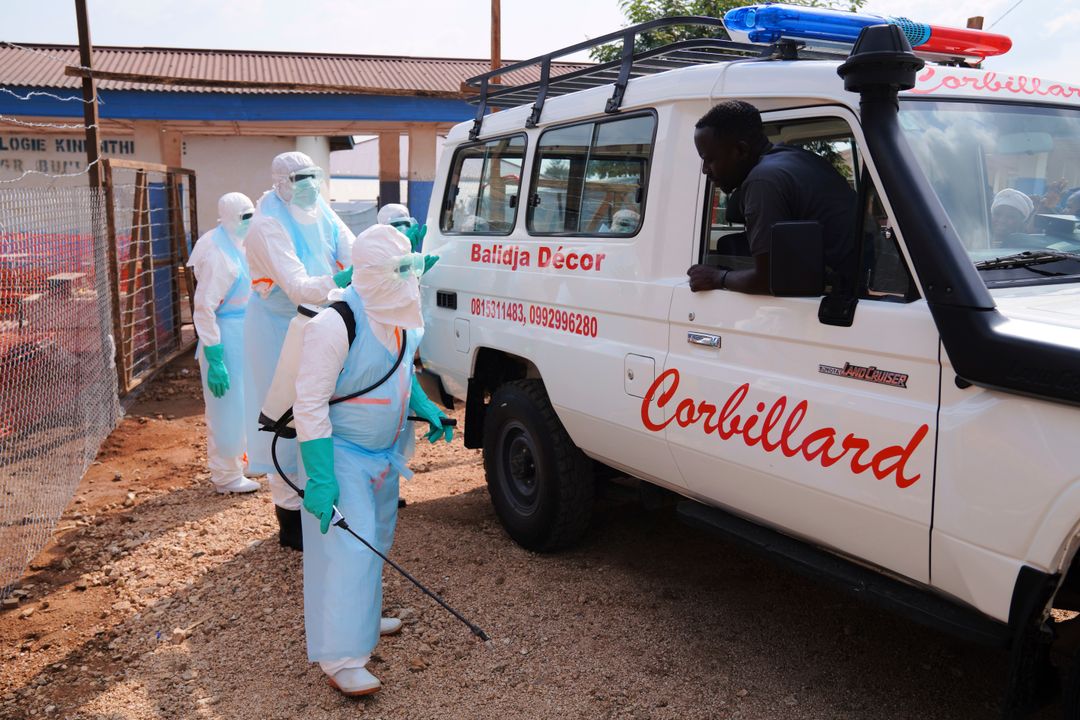
The next pandemic is not a matter of if, but when,' Oxford professor says
Global health experts warn that climate change and urbanization make future outbreaks inevitable, while funding cuts and public fatigue hinder preparedness.
Global health experts warn that a future pandemic is an inevitability, driven by a combination of climate change, urbanization and the increasing encroachment of humans into wildlife habitats. While the scientific community has made leaps in vaccine technology, leaders caution that political complacency and funding fatigue
may leave the world dangerously exposed to the next major outbreak.
The Certainty of Future Outbreaks
Adrian Hill, a professor at Oxford University and co-founder of the Jenner Institute, states that epidemics are not a thing of the past. He argues that while many outbreaks are contained quickly by public health measures, a more serious event emerges roughly once every decade. This sentiment is shared by researchers at the Harvard T.H. Chan School of Public Health, who describe the next pandemic as a matter of not if, but when
.
Related media

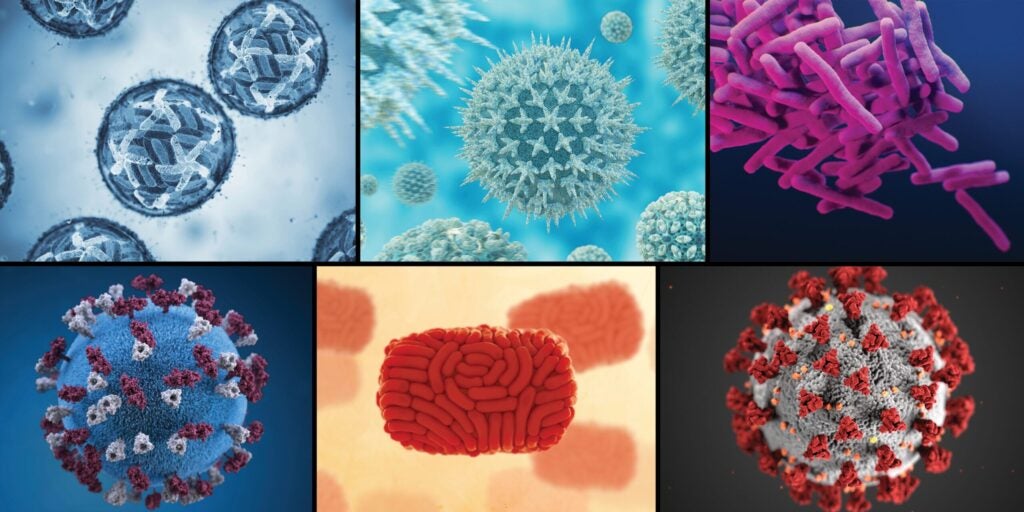

The risk is quantified in a report from the Tony Blair Institute for Global Change (TBI), which estimates the cumulative probability of another pandemic in the next 25 years to be between 47% and 57%. This is based on an annual risk of approximately 2.5-3.3%. While a flu pandemic is considered the most likely scenario, experts also highlight the threat of Disease X
—an unknown pathogen—or other bat-borne viruses.
Current alarms are centering on the H5N1 avian influenza, or bird flu. The virus has spread among poultry and dairy cows in the U.S. And has infected a small number of farmworkers.
Technological Gains vs. Systemic Failures
Professor Hill notes that the greatest achievement of the recent pandemic was proving the scientific community could develop a vaccine within a year, a timeframe previously considered unthinkable. Hill, who won the 2026 European Inventor Award for developing the R21/Matrix-M malaria vaccine, believes existing infrastructure now allows for quicker detection of pathogens and the rapid organization of clinical trials.
In the UK, the Moderna Innovation and Technology Centre in Harwell became fully operational last year, capable of producing up to 250 million mRNA vaccine doses annually. However, Professor Sir Jonathan Van-Tam warns that relying on a single technology is a mistake. He likens vaccine modalities to a football squad; while mRNA is an agile central defender
, other threats may require viral vectors, protein subunits, or virus-like particles.
Despite these gains, several critical vulnerabilities persist:
- Infrastructure Loss: The UK government sold the Vaccine Manufacturing and Innovation Centre to a private pharmaceutical company in 2022.
- Funding Cuts: The government has faced criticism for cutting funds to the Global Polio Eradication Initiative and the Pandemic Fund.
The "Cycle of Neglect"
Public sentiment and political will pose significant barriers to readiness. Sir Peter Horby, director of Oxford University’s Pandemic Sciences Institute, expressed significant doubts
that lockdowns could ever be implemented again due to public skepticism and the trauma of those adversely affected. Sir Jonathan Van-Tam added that public sentiment was further damaged by reports of parties at No.10 Downing Street while citizens were asked to make sacrifices.
This COVID fatigue
is echoed by Harvard researchers, who suggest that the emotional toll of recent years may lead people to minimize future threats.
To combat this, Professor Hill emphasizes that the remedy for disinformation is education
. He suggests that investing in the health of poorer countries is an investment in global security, as diseases quickly spill over national borders in a globalized world.
Immediate and Emerging Threats
| Pathogen/Threat | Current Status/Risk | Primary Driver |
|---|---|---|
| Measles | Global outbreaks increasing | Drop in vaccination rates/anti-vax movement |
| Dengue | Locally acquired cases in L.A. And Arizona | Climate change expanding vector range |
| Antimicrobial Resistance | Gonorrhea resistant to all approved antibiotics in some U.S. Cases | Overuse of treatments; global spread |
| Tuberculosis (TB) | 1.5 million annual deaths | Poverty and lack of governance |
How significant is this development?
Contribute your assessment to the aggregated reader intelligence ledger.
Archypedia is dedicated to independent, evidence-backed reporting. This briefing was synthesized from primary source reporting, corroborated across independent newsrooms, and verified against our Editorial Standards.
Transparency record
Evidence behind this report
This report synthesizes 7 distinct sources. Open the source ledger below to compare the underlying coverage.
- express.co.uk
- yahoo.com
- hsph.harvard.edu
- respiratorytherapyzone.com
- theguardian.com
- crick.ac.uk
- hub.jhu.edu
Prepared under the Archypedia Editorial Policy by the Lina Park editorial desk profile. AI-assisted tools may support drafting and verification; public accountability remains with Archypedia. Report an error.