Bumblebees Collect Up to 7 Times More Toxic Metals Than Honeybees
Bumblebees Collect Up to 7 Times More Toxic Metals Than Honeybees
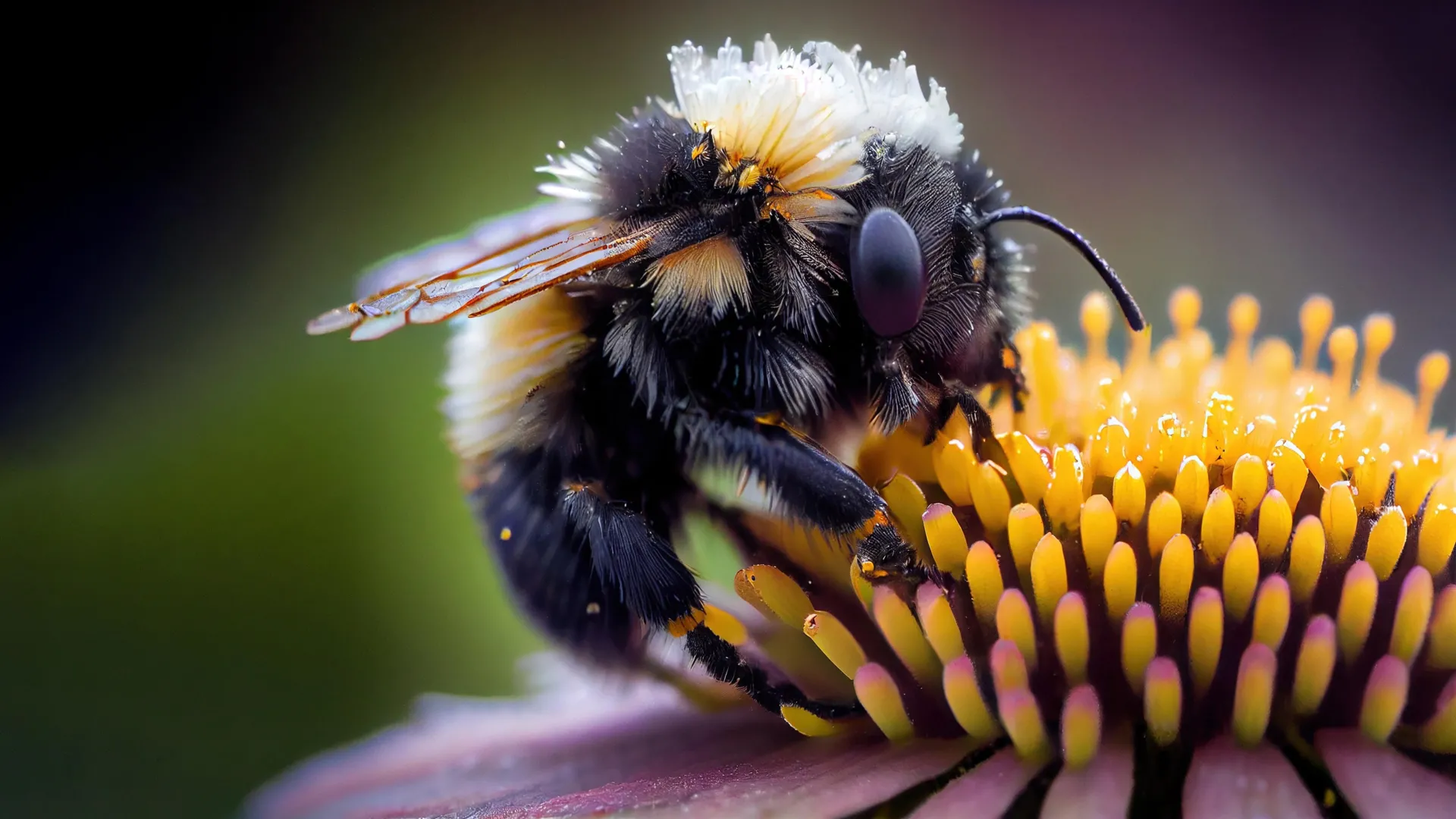
New research indicates that bumblebees accumulate significantly higher levels of toxic heavy metals compared to honeybees, even when both species forage within the identical environment. The study, conducted by researchers at the University of Cambridge, reveals that bumblebees collect up to 7 times more heavy metals in their pollen and accumulate roughly 3 times higher concentrations of these contaminants within their own bodies.
The findings, published in Ecological Entomology, highlight a critical vulnerability in bumblebee populations. While honeybees have traditionally been utilized as a biological proxy for monitoring environmental contamination, this study demonstrates that different bee species accumulate heavy metals in very different ways.
Related media


Factors Driving Differential Exposure
The research team identified several physiological and behavioral factors that explain why bumblebees are at a significantly higher risk of metal exposure:
- Foraging Range: Honeybees are capable of traveling up to 10 km from their colonies to gather food, allowing them to distribute their foraging efforts across a wider, more diverse landscape that can dilute the concentration of collected contaminants. Bumblebees typically stay within 1.5 km of their nests, restricting them to a smaller area and increasing their reliance on local flora.
- Nesting Habits: Honeybees generally nest above ground in managed hives or hollow trees. In contrast, bumblebees build nests underground in soil or leaf litter.
- Physical Appearance: Bumblebees are notably hairier than honeybees. This physical trait allows them to trap larger quantities of contaminated dust and airborne particles, which are then brought back to the nest along with pollen.
- Flower Selection: Dietary preferences play a significant role. Honeybees collect pollen from a vast array of flower species, which facilitates the dilution of any potential pollutants. Bumblebees forage from a narrower selection of plants; if those specific plants occupy contaminated soil, the bees’ exposure becomes concentrated.
Impact on Pollinator Health
Although the metal levels observed in the study were generally not high enough to cause immediate mortality, researchers caution that even low-level exposure carries significant risks. Contaminants such as arsenic, cadmium, chromium, cobalt, lead, and tin can interfere with a bee’s ability to learn and navigate, effectively reducing their foraging efficiency. Furthermore, exposure to these heavy metals has been linked to disrupted brood development and reduced reproductive success.
"Most metal levels we found were not high enough to kill bees, but even low levels can still harm bee health and colony success in subtle but important ways, such as affecting their ability to forage and reproduce."
Dr. Sarah Scott, Newcastle University, via University of Cambridge
Professor Lynn Dicks of the University of Cambridge, the study’s senior author, noted that because bumblebee colonies are much smaller than those of honeybees—typically numbering between 50 and 500 individuals compared to 30,000 to 60,000—the loss of even a small number of workers can have a profound impact on the overall function and survival of the colony.
Broader Environmental Context
Heavy metal pollution is not limited to industrial or mining regions; it frequently spreads into rural areas through airborne particles, sewage sludge, and the use of fertilizers and agrochemicals. While the study results are concerning, researchers emphasize that this does not diminish the value of local conservation efforts. According to Dr. Scott, the critical need for food continues to outweigh the risks associated with trace contamination. Planting flowers remains a vital act of support for biodiversity and food security.
The research was funded by the Royal Society. Professor Dicks is also a Fellow at Selwyn College, University of Cambridge.
How significant is this development?
Contribute your assessment to the aggregated reader intelligence ledger.
Archypedia is dedicated to independent, evidence-backed reporting. This briefing was synthesized from primary source reporting, corroborated across independent newsrooms, and verified against our Editorial Standards.
Transparency record
Evidence behind this report
This report synthesizes 8 distinct sources. Open the source ledger below to compare the underlying coverage.
- sciencedaily.com
- myscience.org
- sel.cam.ac.uk
- miragenews.com
- sflorg.com
- theoceaniatimes.com
- lifetechnology.com
- pmc.ncbi.nlm.nih.gov
Prepared under the Archypedia Editorial Policy by the Lina Park editorial desk profile. AI-assisted tools may support drafting and verification; public accountability remains with Archypedia. Report an error.