Indonesian fishers discover first neonatal whale shark in Saleh Bay
Local fishers in Indonesia's Saleh Bay discovered a rare neonatal whale shark, offering scientists a vital clue into the endangered species' reproductive cycle.
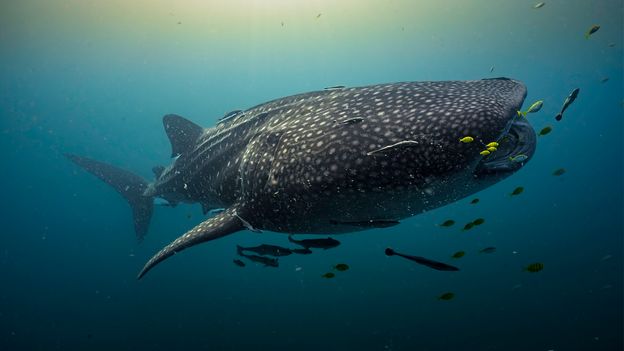
Just after 04:30 on September 6, 2024, local bagan fishers working in Saleh Bay on the Indonesian island of Sumbawa noticed they were not alone. According to reporting by BBC, the fishers shone spotlights into the water to attract mackerel and squid into baited nets beneath their floating platforms when they spotted a small, charcoal-colored whale shark lolling in the mesh. Marine scientists were immediately alerted, marking the start of a rare documentation process for the endangered animal.
Estimated to be roughly four months old and measuring about 5ft in length, the young animal represents the first neonatal whale shark ever discovered in Indonesia. As reported by bbc.com, the finding offers a critical clue into the elusive reproductive cycle of the world's largest fish species, with only 33 neonates ever scientifically recorded globally.
Related YouTube video



The discovery brings sharp focus to longstanding scientific blind spots surrounding whale shark reproduction. Despite their massive presence in warm waters worldwide, no human has ever witnessed a whale shark mating or giving birth. Historically little studied until the late 20th Century, the species became a primary focus for marine researchers once seasonal coastal aggregations were identified, allowing experts to attach tracking tags that documented globe-spanning migrations.
Much of what science understands about the reproductive biology of the species stems from a single specimen captured in 1995 off the coast of Taiwan. Harpooned by local fishers before the species was protected, the 10m female dubbed 'Megamamma' revealed through her two uteri that whale sharks are ovoviviparous, meaning they hatch eggs inside their bodies and give birth to live, free-swimming pups. Subsequent genetic analysis confirmed that her 304 fertilized eggs and embryos shared a single father, indicating that females can store sperm over extended periods.
To understand where newborns appear, researchers have examined broader oceanographic patterns. Freya Womersley, a research scientist at the Marine Biological Association, noted that neonate sightings cluster near permanent oxygen minimum zones more frequently than random chance would dictate. These oxygen-deprived deep-water layers are avoided by open-ocean predators like blue sharks and marlin, potentially providing newborns with an effective refuge while utilizing adjacent edge waters rich in trapped plankton as an early-life buffet.
At Saleh Bay, the local ecosystem naturally attracts both juvenile sharks and the bagan fishers. Surrounded by a mangrove ecosystem that feeds the bay with krill and nutrients, the nearly enclosed cove draws whale sharks that find both abundant sustenance and protection from predators. While marine wildlife expert Mochamad Iqbal Herwata Putra of the Jakarta-based nonprofit Konservasi Indonesia suspects the sheltered bay functions as a birthing ground and nursery area, research scientist Ben D'Antonio of the Shark Research Foundation notes it remains an open question whether the pup was born locally or migrated into the bay after beginning life elsewhere, according to bbc.com.
This localized site fidelity contrasts sharply with the species' epic open-ocean wanderings. Of the 25 whale sharks tagged within Saleh Bay, most spend the vast majority of their time inside or immediately around the cove, returning regularly to feed. Recognizing this reliance, Konservasi Indonesia has proposed establishing a marine protected area in the northern sector of the bay, which would mark the first reserve in Indonesia dedicated specifically to safeguarding whale sharks.
The conservation push represents a dramatic cultural turnaround for the region. In previous decades, fishers in Saleh Bay feared the massive animals and persecuted them as direct competitors for local catch, mirroring an era in the 1980s and '90s when hundreds of whale sharks were slaughtered annually for meat and fins. Today, younger generations are building a multimillion-dollar ecotourism industry focused on snorkeling and sightseeing around the bagans.
Global whale shark populations have dropped by more than a half since the 1980s, placing the species on the endangered list amid ongoing pressures from climate change, industrial fishing, and shipping traffic. A newborn whale shark entering the oceans today possesses a lifespan that could theoretically stretch until the year 2150, provided its critical habitats survive anthropogenic threats.
Whale Shark Neonate Discovery: Key Facts
- Date and Location: Discovered on September 6, 2024, at 04:30 in Saleh Bay on Sumbawa island, Indonesia.
- Size and Age: Measured about 5ft (1.5m) long and estimated at four months of age.
- Global Context: Represents the first neonatal whale shark found in Indonesia and one of only 33 recorded globally by science.
- Proposed Protection: Konservasi Indonesia aims to establish Indonesia's first whale shark-dedicated marine protected area in the northern sector of Saleh Bay.
As researchers prepare for future field expeditions, such as upcoming camera-tagged tracking work planned in Mexico by Freya Womersley to capture pivotal early-life behavior, the immediate test for conservationists in Indonesia centers on whether Konservasi Indonesia can successfully establish the proposed marine protected area in Saleh Bay to safeguard the species' critical habitat.
How significant is this development?
Contribute your assessment to the aggregated reader intelligence ledger.
Archypedia is dedicated to independent, evidence-backed reporting. This briefing was synthesized from primary source reporting, corroborated across independent newsrooms, and verified against our Editorial Standards.
Transparency record
Evidence behind this report
This report synthesizes 4 distinct sources. Open the source ledger below to compare the underlying coverage.
Prepared under the Archypedia Editorial Policy by the Lina Park editorial desk profile. AI-assisted tools may support drafting and verification; public accountability remains with Archypedia. Report an error.