US military conducts 12th consecutive night of airstrikes against Iran
US forces are conducting a sustained campaign against Iranian military sites following the collapse of a ceasefire. The conflict has expanded to include retaliatory strikes in Kuwait and Jordan, impacting energy prices and shipping routes.
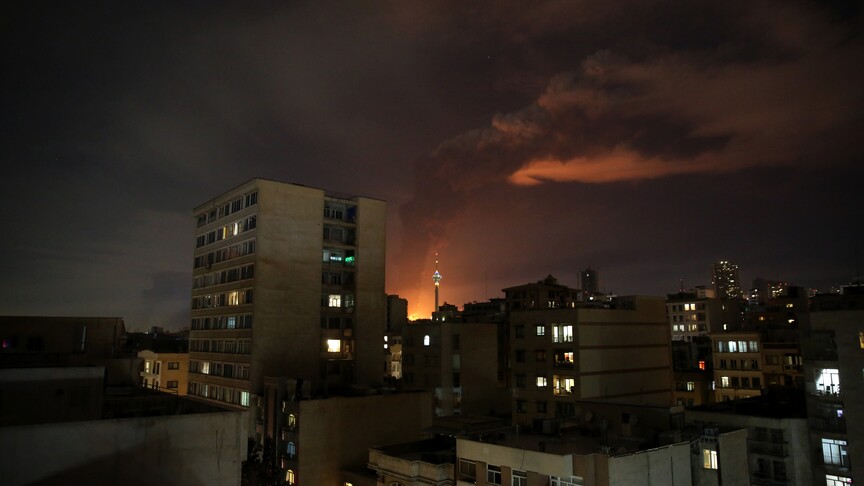
The United States military completed a 12th consecutive night of airstrikes against Iranian targets late Wednesday, July 22, 2026. According to US Central Command (CENTCOM), the operation focused on degrading Iranian maritime capabilities, missile and drone storage facilities, coastal surveillance sites, and air defense assets. This sustained campaign, which has targeted dozens of military sites across Iran over the past three weeks, coincides with a naval blockade intended to restrict traffic to and from Iranian ports. CENTCOM reported that US naval forces have redirected nine commercial vessels and disabled one in recent weeks to enforce this blockade.
The regional security situation has deteriorated rapidly since the collapse of a ceasefire agreement on July 8. UN Secretary-General Antonio Guterres addressed the United Nations Security Council, warning that the region is "teetering on the edge of the unimaginable" and describing the conflict as an "ever-widening circle of confrontation" where one escalation triggers the next. US Secretary of State Marco Rubio argued that Iranian leadership has misled the Houthi movement into entering the conflict, noting that Tehran has consistently broken commitments made during previous peace negotiations.
Related media


Retaliatory Strikes and Regional Impact
Tehran has actively retaliated against US interests across the region. The Iranian Revolutionary Guards (IRGC) claimed strikes against multiple US-associated bases in Kuwait, specifically identifying the Ali Al Salem air base and the Camp Udairi landing zone. Reports from the IRGC assert that these attacks targeted military equipment warehouses, helicopter hangars, and drone facilities. While the Kuwaiti military confirmed that its air defenses engaged hostile drones, it did not provide specific details regarding damage or casualties. The Iranian army also reported attacks on the Arifjan and Doha bases in southern Kuwait.
The IRGC also claimed responsibility for a series of missile and drone barrages launched against Jordan. While the IRGC stated it destroyed radar components for US THAAD and Patriot missile defense systems, the Jordanian military provided a different account. According to an official statement, the Jordanian air force and air defense systems successfully intercepted three missiles and six drones. One additional missile reportedly landed in an uninhabited area, and the Jordanian military maintained that there were no casualties or material damage within its borders.
Diplomatic and Economic Developments
The conflict has expanded to include the Bab el-Mandeb Strait, as Houthi rebels in Yemen claimed to have targeted two Saudi oil tankers in the Red Sea. EU foreign policy chief Kaja Kallas condemned these strikes as illegal and reaffirmed the commitment of the European Union to protecting freedom of navigation. The escalation in maritime threats has impacted energy markets, pushing the price of Brent crude above $100 per barrel for a portion of Thursday, July 23.
Diplomatic activity continues alongside the fighting. The United States and Saudi Arabia signed a civilian nuclear cooperation agreement, a move the office of Israeli Prime Minister Benjamin Netanyahu suggested could potentially broaden the "circle of peace" in the region. US President Donald Trump stated that the nuclear deal is contingent upon Saudi Arabia joining the Abraham Accords. Meanwhile, in Pakistan, Iranian Interior Minister Eskandar Momeni held meetings with Pakistani military leadership to discuss potential frameworks for preventing further regional escalation.
Ongoing Humanitarian and Military Status
As the conflict continues, the military and human cost remains high. CENTCOM maintains that more than 50,000 US service members are currently deployed across the Middle East and remain "highly vigilant, focused, lethal, and ready."
The conflict is currently unfolding across multiple fronts, with global attention focused on the security of key energy infrastructure and shipping routes. Future developments may depend on the success of ongoing mediation attempts by regional partners and whether the current exchange of strikes leads to further expansion or a resumption of negotiations.
Archypedia is dedicated to independent, evidence-backed reporting. This briefing was synthesized from primary source reporting, corroborated across independent newsrooms, and verified against our Editorial Standards.
Transparency record
Evidence behind this report
This report synthesizes 4 distinct sources. Open the source ledger below to compare the underlying coverage.
Prepared under the Archypedia Editorial Policy by the Samir Haddad editorial desk profile. AI-assisted tools may support drafting and verification; public accountability remains with Archypedia. Report an error.