US strikes Iran for 8th night
US Central Command has concluded a wave of airstrikes targeting IRGC facilities in response to a deadly drone attack at a Jordanian military base.
The United States has concluded its eighth consecutive night of airstrikes against Iran, according to US Central Command. At the direction of President Trump, the latest wave of operations began at 6 p.m. ET on Saturday, and ended at approximately 11:30 p.m. ET. The strikes targeted Iranian Revolutionary Guard forces believed to have launched a Friday attack that killed at least two US soldiers on a Jordanian military base.
CENTCOM stated the operations were designed to swiftly punish
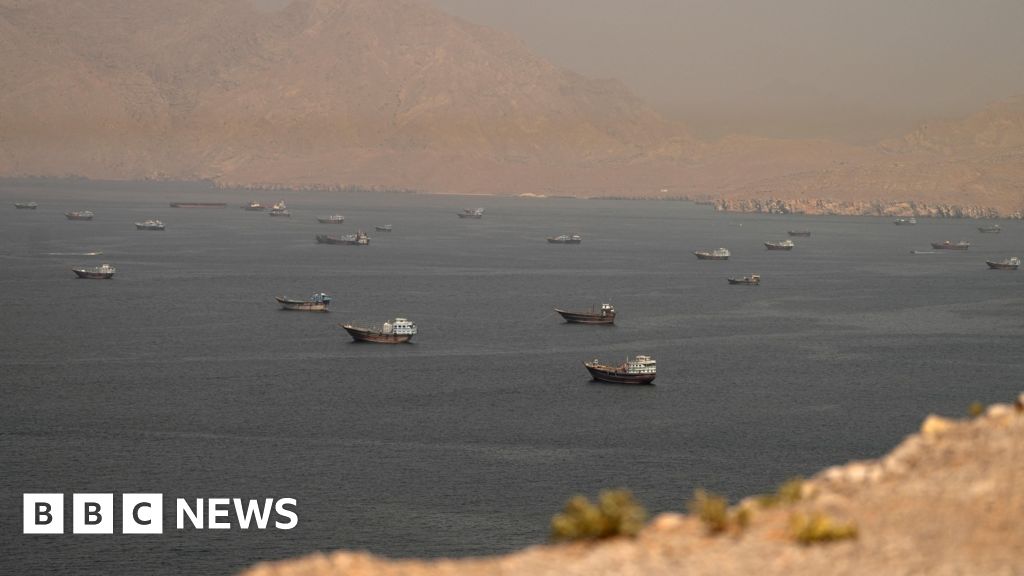
the Islamic Revolutionary Guard Corps and further degrade Iran's ability to threaten commercial shipping in the Strait of Hormuz. The military reported successful hits on maritime capabilities, missile and drone storage sites, as well as air defense and coastal surveillance facilities.
Related media


The escalation follows a drone and missile attack Friday at Muwaffaq Salti Air Base in Jordan. In addition to the two fatalities, one US service member remains missing in action. Four other soldiers were medically evacuated to a Jordanian hospital and subsequently discharged, while others were treated for minor injuries. Defense Secretary Pete Hegseth reacted to the deaths on X, stating, Their sacrifice only stiffens our resolve.
These deaths bring the total number of US service members killed since the war began on February 28 to 16. Previous fatalities include six killed in a March attack on a base in Kuwait, six who died in an Iraq refueling plane crash in March, and one killed by an Iranian strike on the Prince Sultan Air Base in Saudi Arabia. Most recently, a US Navy pilot died during an emergency helicopter landing at sea last month.
Iranian Supreme Leader Mojtaba Khamenei, who has not appeared in public since the war began, released a statement read by a spokesperson on state TV. He described President Trump's signature on a recent interim peace deal as utterly worthless and devoid of credibility
and warned that the noble nation of Iran and the Resistance Front have unforgettable lessons in store
for the US.
The conflict has intensified over the control of the Strait of Hormuz, a waterway that provided roughly a fifth of the world’s crude oil before Iran effectively closed it to shipping traffic. In response to the collapsing interim ceasefire, Iran's deputy foreign minister Kazem Gharibabadi and ambassador to Pakistan Reza Amiri Moghadam stated that Tehran is suspending its commitments under the memorandum of understanding (MOU) signed about a month ago, claiming the US violated the terms first.
The military campaign has caused significant infrastructure damage in Iran. Reported targets include an electricity and desalination plant in Hormozgan province, specifically near the village of Bonji. US strikes damaged two tunnels and a bridge, disrupting a main highway toward Bandar Abbas. Iranian Health Ministry spokesperson Hossein Kermanpour reported that US attacks since July 6 have killed at least 50 people and wounded more than 500.
Iran has retaliated by targeting US allies. In Kuwait, Iranian ballistic missiles and drones struck an oil facility and a water desalination plant—the second such attack on a desalination plant in two days in a country that relies on the process for 90% of its drinking water. The Kuwait Fire Force reported injuries to firefighters and an oil sector worker. Kuwait briefly closed its airspace, and Kuwait Airways rescheduled flights.
Additional Iranian attacks targeted:
- Jordan: The Jordanian army reported shooting down 10 Iranian missiles.
- Bahrain: air sirens sounded multiple times in Bahrain, according to the government.
- Iraq: Iraqi forces shot down drones over Irbil.
Jasem Mohamed Albudaiwi, secretary general of the Gulf Cooperation Council, condemned the Iranian strikes as war crimes
and a grave violation of international law
due to the deliberate targeting of civilian infrastructure.
The economic impact has surfaced in global oil markets. Brent crude rose above $88 a barrel on Friday, its highest level in a month. Additionally, the US has reimposed a naval blockade on Iranian ports; CENTCOM reported redirecting four commercial ships and disabling one by firing a missile at its smokestack.
The US State Department issued a global travel advisory on Saturday, urging Americans to exercise increased caution
and warning that groups supportive of Iran may target US interests worldwide.
Timeline of Conflict and Diplomacy
- February 28: War begins with US and Israeli strikes on Iran.
- March 2: Israel expands operations in southern Lebanon; 33 Lebanese soldiers have died since this date.
- Mid-June: US and Iran sign an interim MOU to restore peace.
- July 6: US attacks kill at least 50 and wound over 500 in Iran.
- July 11: US resumes intense strikes; President Trump declares the MOU dead.
- July 18: Iranian attacks kill two US soldiers in Jordan; US begins 8th consecutive night of strikes.
Next Steps
Lebanese President Joseph Aoun is scheduled to meet with President Trump at the White House on July 21. The summit will focus on the conflict between Israel and Hezbollah, the disarmament of the militia, and the restoration of security in southern Lebanon.
Archypedia is dedicated to independent, evidence-backed reporting. This briefing was synthesized from primary source reporting, corroborated across independent newsrooms, and verified against our Editorial Standards.
Transparency record
Evidence behind this report
This report synthesizes 11 distinct sources. Open the source ledger below to compare the underlying coverage.
- apnews.com
- cbsnews.com
- cnbctv18.com
- toronto.citynews.ca
- mandurahmail.com.au
- usatoday.com
- dailymail.com
- nypost.com
- latimes.com
- boston.com
- yahoo.com
Prepared under the Archypedia Editorial Policy by the Mara Ionescu editorial desk profile. AI-assisted tools may support drafting and verification; public accountability remains with Archypedia. Report an error.