Supreme Court rejects Trump bid to end birthright citizenship
In a 6-3 decision, the Supreme Court struck down a Trump executive order attempting to terminate birthright citizenship. The ruling reaffirms the 14th Amendment's protection for individuals born on U.S. soil.
Supreme Court rejects Trump bid to end birthright citizenship
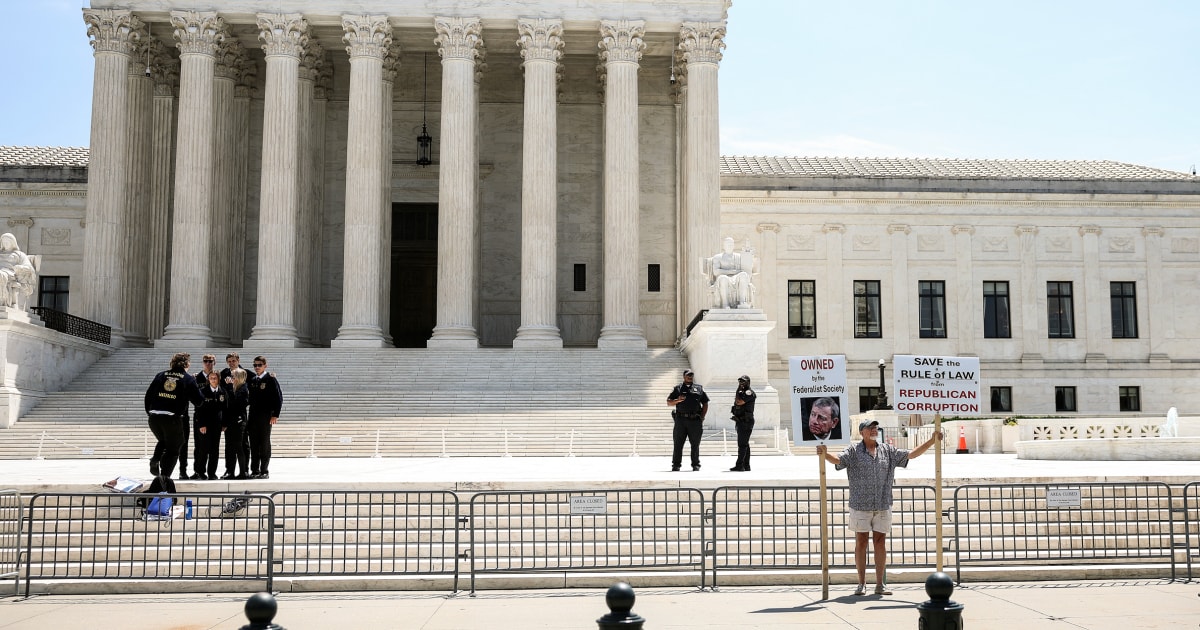
The Supreme Court of the United States issued a final ruling on Tuesday, 30 June 2026, rejecting President Donald Trump’s attempt to unilaterally terminate birthright citizenship via executive order. In a 6-3 decision, the high court upheld the long-standing interpretation of the 14th Amendment, which has guaranteed citizenship to individuals born on U.S. Soil since its ratification in 1868. The case, Trump v. Barbara, centered on an executive order titled “Protecting the Meaning and Value of American Citizenship,” which the President signed on 20 January 2025—his first day back in office.
Chief Justice John Roberts authored the majority opinion, asserting that the Constitution maintains its promise to extend citizenship to every person born within the nation’s borders.
"Citizenship, then and now, was the right to have rights— to freely participate in our political community. The Framers of the Fourteenth Amendment extended that promise to 'every free-born person in this land.' We keep that promise today."
Related media
Image via theverge.comImage via reason.comImage via yahoo.com
Chief Justice John Roberts, Supreme Court of the United States
The administration’s defense, presented by Solicitor General D. Sauer, argued that noncitizens and their children are not “subject to the jurisdiction” of the United States because their primary loyalty rests with a foreign power. During oral arguments, Justice Neil Gorsuch challenged this perspective, noting, “it’s the same Constitution.” However, Gorsuch ultimately dissented, joining Justices Clarence Thomas and Samuel Alito. In his dissenting opinion, Thomas argued for a narrow reading of the 14th Amendment, suggesting that birthright citizenship should only apply to those whose parents are subject to the government’s full jurisdiction.
Justice Brett Kavanaugh, while signing onto the majority opinion, issued a separate partial dissent. He argued that the constitutional question was not straightforward and suggested that Congress might hold the authority to alter citizenship policies through legislation, citing the Nationality Act of 1940 and the Immigration and Nationality Act of 1952. Kavanaugh noted that in 1898, the Supreme Court identified four groups not considered “subject to the jurisdiction” of the United States, such as children of foreign sovereigns. He suggested this category could potentially be expanded.
Roman Palomares, national president of the League of United Latin American Citizens, hailed the outcome, stating,
"The Court has made clear that no president can override the Constitution by decree."
Roman Palomares, National President, LULAC
Similarly, Angelica Salas of the Coalition for Humane Immigrant Rights of Los Angeles remarked, "No matter who is president of the U.S., our Constitution is above the president."
Political reactions were split along ideological lines. President Trump expressed his dissatisfaction on Truth Social, writing that the outcome was "too bad for our Country." He encouraged Congress to enact his goal through legislation, asserting, "No long and unwieldy Constitutional Amendment is necessary!" Conversely, several Senate Republicans, including Rand Paul and Eric Schmitt, argued that the ruling effectively necessitates a constitutional amendment to change the policy. Senator Lindsey Graham of South Carolina expressed his intent to prioritize this issue, saying, "When I am chairman of the Senate Judiciary Committee next year, I will make this one of my top priorities."
The court’s final session also included other significant rulings. In a 6-3 decision, the justices struck down federal limits on how much national political parties can coordinate with individual candidates, characterizing the restrictions as a violation of First Amendment speech rights. Justice Elena Kagan dissented, warning that the move invites "quid pro quo corruption." Additionally, the court upheld state laws barring transgender individuals from participating in girls' and women's sports. The ruling permits states such as Idaho to enforce bans based on biological sex, a decision celebrated by Governor Brad Little and Attorney General Raul Labrador as a victory for "common sense" and protected athletics, but condemned by others as a discriminatory attack on the queer community.
Looking Ahead: Legislative and Judicial Milestones
Constitutional Amendment Efforts: Republican lawmakers have renewed calls for a constitutional amendment to redefine citizenship.
Upcoming Term: The Supreme Court is scheduled to return in October 2026 to hear cases challenging the legality of local and state bans on semiautomatic rifles, specifically involving regulations in Connecticut and Cook County, Illinois.
READER INTELLIGENCE PULSE
How significant is this development?
Contribute your assessment to the aggregated reader intelligence ledger.
Click an option to register your anonymous assessment.
Editorial Standards & Verification
Archypedia is dedicated to independent, evidence-backed reporting. This briefing was synthesized from primary source reporting, corroborated across independent newsrooms, and verified against our Editorial Standards.