AfD re-elects leaders as thousands protest party convention in Erfurt
Thousands of demonstrators gathered in Erfurt to protest the AfD national convention as party leadership secured re-election despite significant opposition.
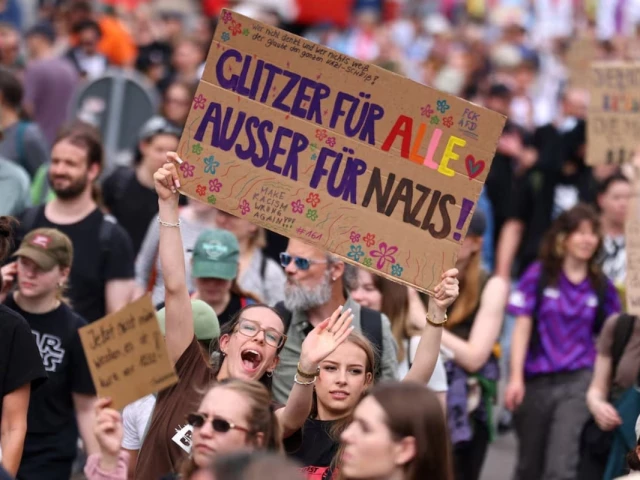
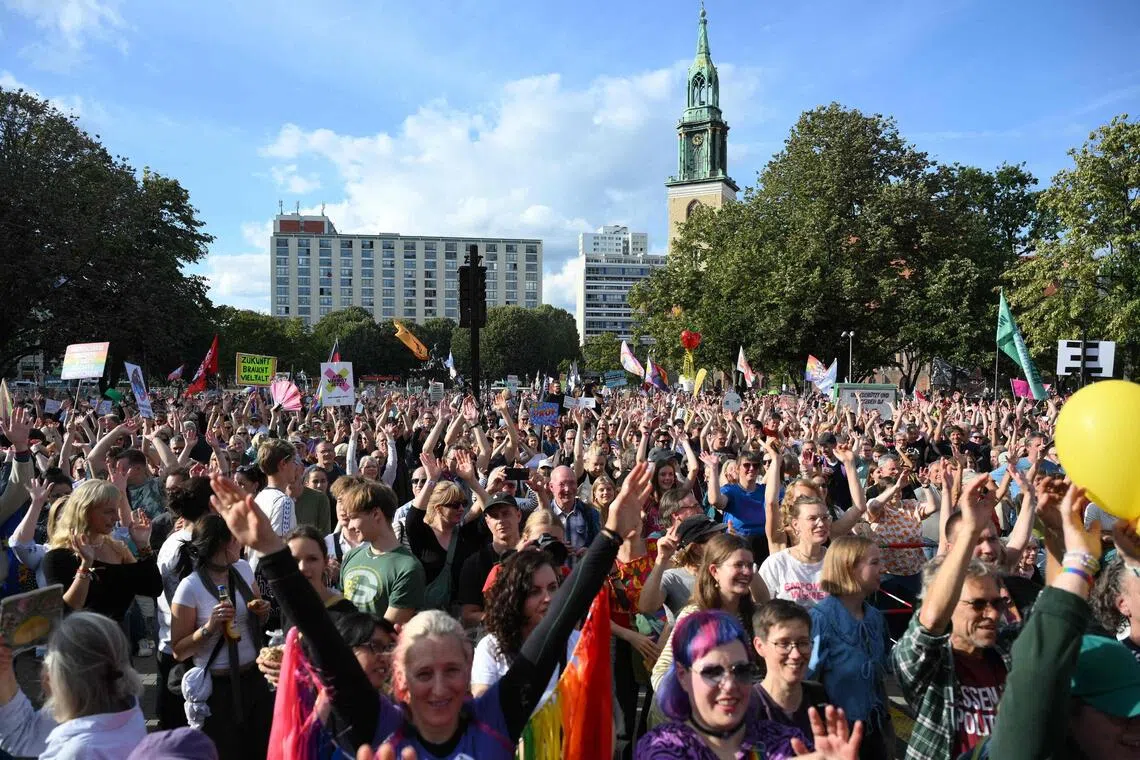
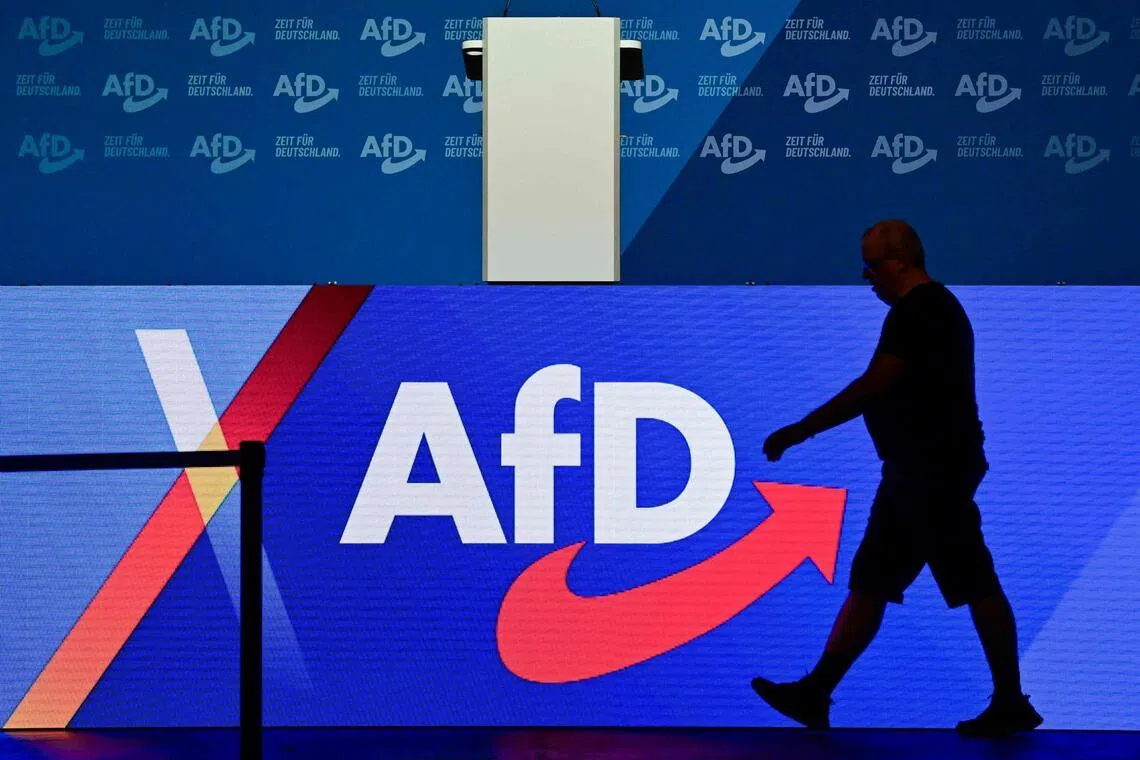
In the eastern German city of Erfurt, thousands of demonstrators converged on Saturday, to challenge the annual conference of the Alternative for Germany (AfD). The mass protest, which saw participants block major highways and local transit routes to impede the gathering, unfolded alongside the party’s re-election of its national leadership. While organizers claimed that at least 50,000 people attended, police estimates for the protest turnout reached 31,000 participants.
The unrest underscored a deepening polarization in German politics. Protesters, representing a coalition of unions, civil society organizations, and left-wing parties, employed various tactics to obstruct access to the venue. Some demonstrators abseiled from a motorway bridge to block traffic, while others engaged in sit-ins on tram tracks within the city center. Despite these efforts, most AfD delegates reached the convention center, and the party’s proceedings commenced on schedule. Law enforcement maintained a heavy presence, deploying thousands of officers, including reinforcements from across the country; authorities reported the use of pepper spray during isolated clashes.
Related media

Leadership and Political Ambition
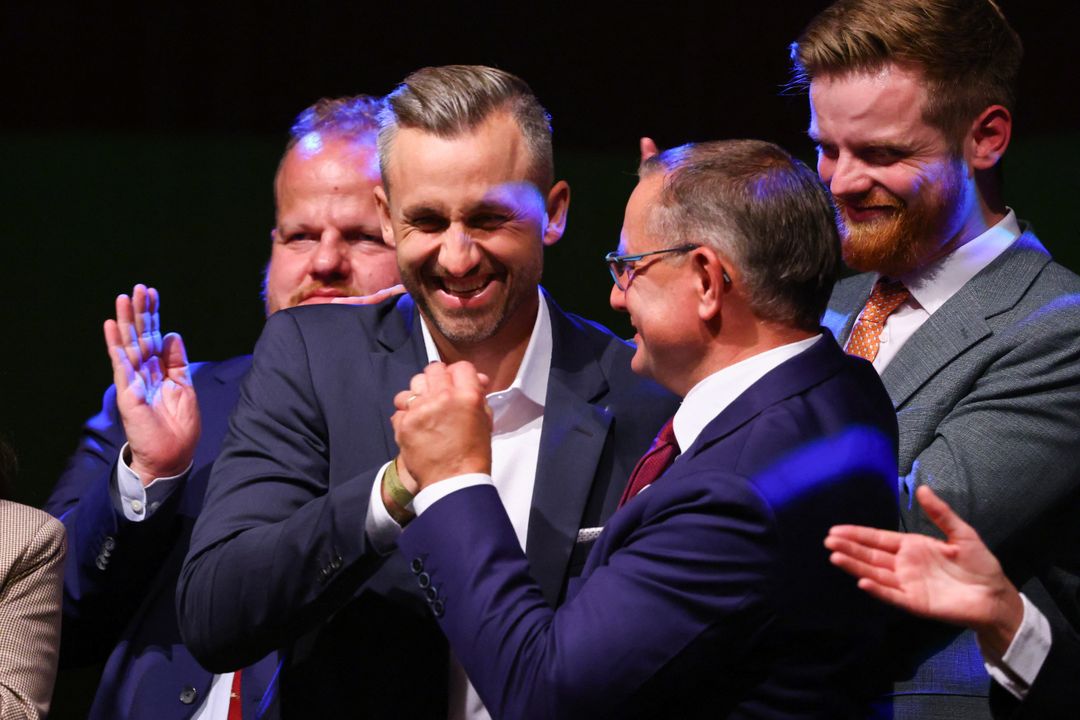
During the conference, the AfD re-elected co-leaders Alice Weidel and Tino Chrupalla without opposition. However, the internal support for both figures shifted compared to previous votes. Weidel, a former Goldman Sachs analyst from western Germany, received 81 percent of the vote, while Chrupalla, a trained painter and varnisher from the eastern state of Saxony, secured 70 percent. This represented a reversal of their previous standing, as Chrupalla had historically secured a higher share of support.
In their opening addresses, leadership framed the AfD as the primary alternative to the current political status quo. Chrupalla described the party’s trajectory toward government, telling the congress,
The leadership dismissed the protesters as anti-democratic, with the opening speeches mocking and lambasting the protesters as anti-democratic. Weidel further emphasized the party's platform, stating,"We will govern. First at a regional level, then at national level,"
and calling for rigorous deportations of criminals and illegal migrants."For this remains our last chance to save our country,"
The conference follows the AfD's surge in national opinion polls, where the party has recently outperformed the conservative CDU/CSU alliance led by Chancellor Friedrich Merz. Party members and speakers highlighted themes of national identity and sovereignty, utilizing slogans such as "Send them back" and offering cards with the message "YOU will be deported."
Opposition and Constitutional Concerns
Opponents of the AfD, including the umbrella group "Widersetzen" ("Resist"), argue that the party's rhetoric threatens Germany's constitutional order. Georg Becker, a spokesperson for the group, stated,
Many participants cited historical memories of the period from 1933 to 1945 as a motivating factor for their presence. Other activists explicitly demanded that the state impose a ban on the party."We want to make it clear that we simply won't tolerate this, that fascism is on the rise here in Germany,"
The political climate remains tense as mainstream parties continue to enforce a "firewall" strategy, formally ruling out coalition partnerships with the AfD. Despite this isolation, the party is preparing for significant tests in upcoming regional elections. Specifically, the AfD is focusing on the eastern states of Saxony-Anhalt and Mecklenburg-Vorpommern, where the party has historically found its strongest support and hopes to demonstrate its viability for future governance.
What to Watch Next
- September Elections: State elections in Saxony-Anhalt and Mecklenburg-Vorpommern are expected to serve as a bellwether for the party’s potential to secure its first regional mandates.
- Legal Status: The party continues to navigate ongoing legal proceedings regarding the domestic intelligence agency’s classification of its activities.
As the party looks to consolidate its base in the former communist east, the ongoing struggle between the AfD’s momentum and the resistance movement led by civil society groups shows no sign of immediate resolution.
How significant is this development?
Contribute your assessment to the aggregated reader intelligence ledger.
Archypedia is dedicated to independent, evidence-backed reporting. This briefing was synthesized from primary source reporting, corroborated across independent newsrooms, and verified against our Editorial Standards.
Transparency record
Evidence behind this report
This report synthesizes 12 distinct sources. Open the source ledger below to compare the underlying coverage.
- apnews.com
- tribune.com.pk
- yahoo.com
- aol.com
- straitstimes.com
- arabnews.pk
- en.wikipedia.org
- dw.com
- devdiscourse.com
- aljazeera.com
- thelocal.de
- theguardian.com
Prepared under the Archypedia Editorial Policy by the Samir Haddad editorial desk profile. AI-assisted tools may support drafting and verification; public accountability remains with Archypedia. Report an error.