RMIT researchers develop dual-bubble method to remove wastewater plastics
RMIT University researchers created a method using micro and nanobubbles to remove over 90 percent of microplastics from wastewater. The process integrates into existing systems without requiring structural changes, helping to reduce microplastic contamination in biosolids.
Researchers at RMIT University have developed a laboratory-tested method to capture more than 90 percent of microplastics from wastewater by integrating microbubbles and nanobubbles into existing treatment infrastructure.
Wastewater treatment plants currently serve as a primary conduit for microplastics entering the global ecosystem. Because many of these synthetic particles evade standard filtration processes, they accumulate in the environment and pose risks to both human health and ecological stability. The new approach, published in ACS ES&T Water, enhances a traditional technique known as dissolved air flotation. In conventional systems, contaminants are removed by attaching them to air bubbles, which then lift the waste to the water's surface for separation.
Related media


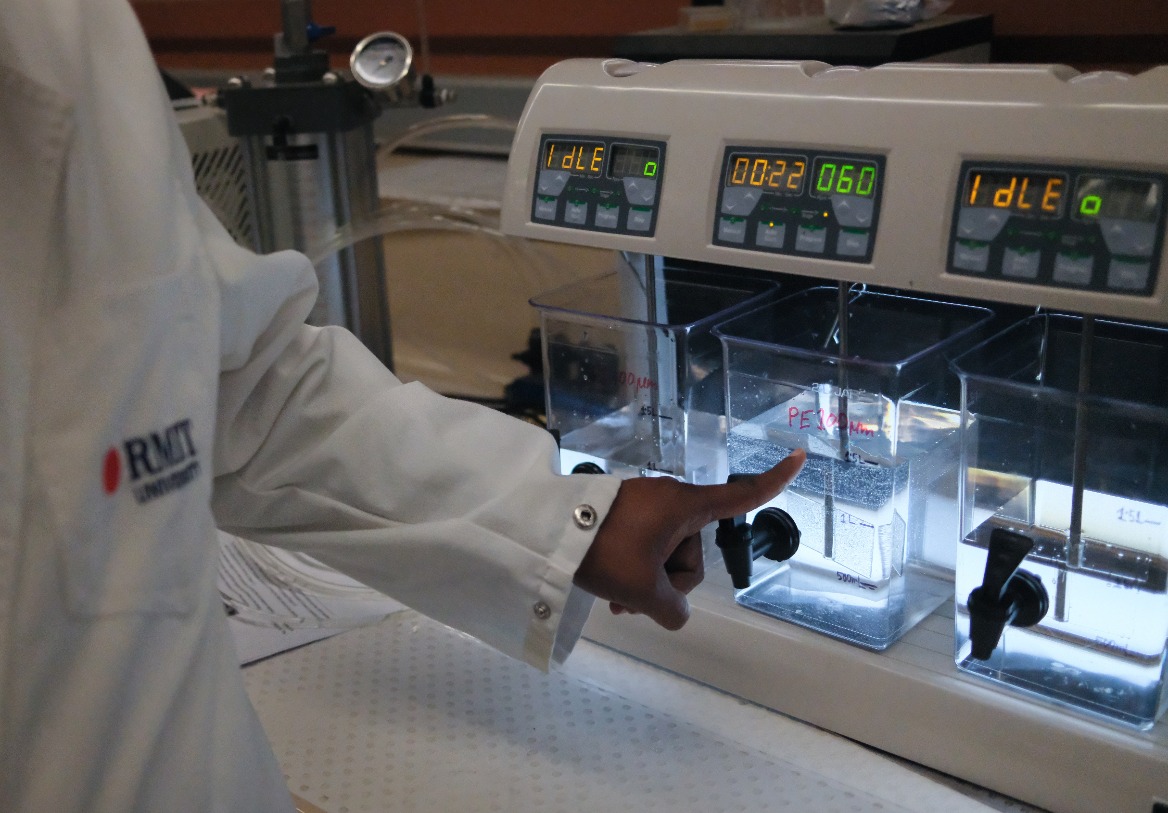
The innovation relies on a synergy between two distinct bubble sizes. According to the research team, microbubbles provide the necessary buoyancy to physically lift particles to the surface, while nanobubbles facilitate increased particle attachment and aggregation. This dual-action mechanism significantly outperforms systems that utilize only a single type of bubble. By encouraging the particles to clump together, the process becomes increasingly efficient, particularly when used in tandem with standard coagulants.
Operational Efficiency
A primary hurdle for upgrading municipal water systems is the cost and complexity of new infrastructure. The RMIT research team, led by Associate Professor Biplob Pramanik — who also directs the university’s Water Effective Technology and Tools Research Centre — emphasized that their method avoids the need for extensive structural changes. Instead, facility operators can implement the solution by optimizing existing operating parameters, such as:
- Air pressure
- Saturation time
- Bubble size
The research, conducted by Dr. Sirajum Monira during her PhD studies, further addressed concerns regarding the impact of complex wastewater compositions. Laboratory tests demonstrated that common substances often viewed as barriers to effective treatment, such as organic matter, fats, oils, and grease, did not hinder performance. In fact, these substances occasionally assisted the process by helping microplastics aggregate into larger, easier-to-remove clusters.
Broader Environmental Impact
By shifting the removal of microplastics to the primary stage of the wastewater treatment cycle, the method prevents these contaminants from becoming concentrated in sewage sludge. This prevents the downstream contamination of biosolids, which are frequently repurposed for agricultural use. "By capturing the microplastics before they become concentrated in sewage sludge, we can reduce the amount entering biosolids and ultimately minimise their release back into the environment," Dr. Monira noted in findings reported by Miragenews.
Next Steps for Validation
While the laboratory-scale results are promising, the researchers are currently shifting their focus toward commercial and field implementation. The team is actively seeking collaborations with industry partners to validate the dual-bubble system under real-world operating conditions and across various types of wastewater streams. Organizations interested in the technology or potential partnerships may reach out to the university's research team directly via the contact details provided with the published study.
| Method | Primary Mechanism | Infrastructure Impact |
|---|---|---|
| Traditional Dissolved Air Flotation | Single bubble type buoyancy | Standard installation |
| RMIT Dual-Bubble Method | Micro and nanobubble synergy | None (optimization only) |
The research, titled Micro-Nanobubble Integrated Dissolved Air Flotation: A High-Efficiency Strategy for Microplastic Mitigation in Wastewater, remains a central point of interest for municipal water authorities looking to mitigate their environmental footprint without incurring the massive capital expenditure of plant-wide retrofits.
How significant is this development?
Contribute your assessment to the aggregated reader intelligence ledger.
Archypedia is dedicated to independent, evidence-backed reporting. This briefing was synthesized from primary source reporting, corroborated across independent newsrooms, and verified against our Editorial Standards.
Transparency record
Evidence behind this report
This report synthesizes 9 distinct sources. Open the source ledger below to compare the underlying coverage.
- eurekalert.org
- chinaview.cn
- brightsurf.com
- miragenews.com
- innovationnewsnetwork.com
- australianmanufacturing.com.au
- english.news.cn
- rmit.edu.au
- melbourne-insider.au
Prepared under the Archypedia Editorial Policy by the Niko Vale editorial desk profile. AI-assisted tools may support drafting and verification; public accountability remains with Archypedia. Report an error.