Barnard’s Star planets found to be uninhabitable and mineral-rich
Scientific analysis has ruled out habitability for the four exoplanets orbiting Barnard's Star due to extreme heat, volatile geology, and atmosphere loss.
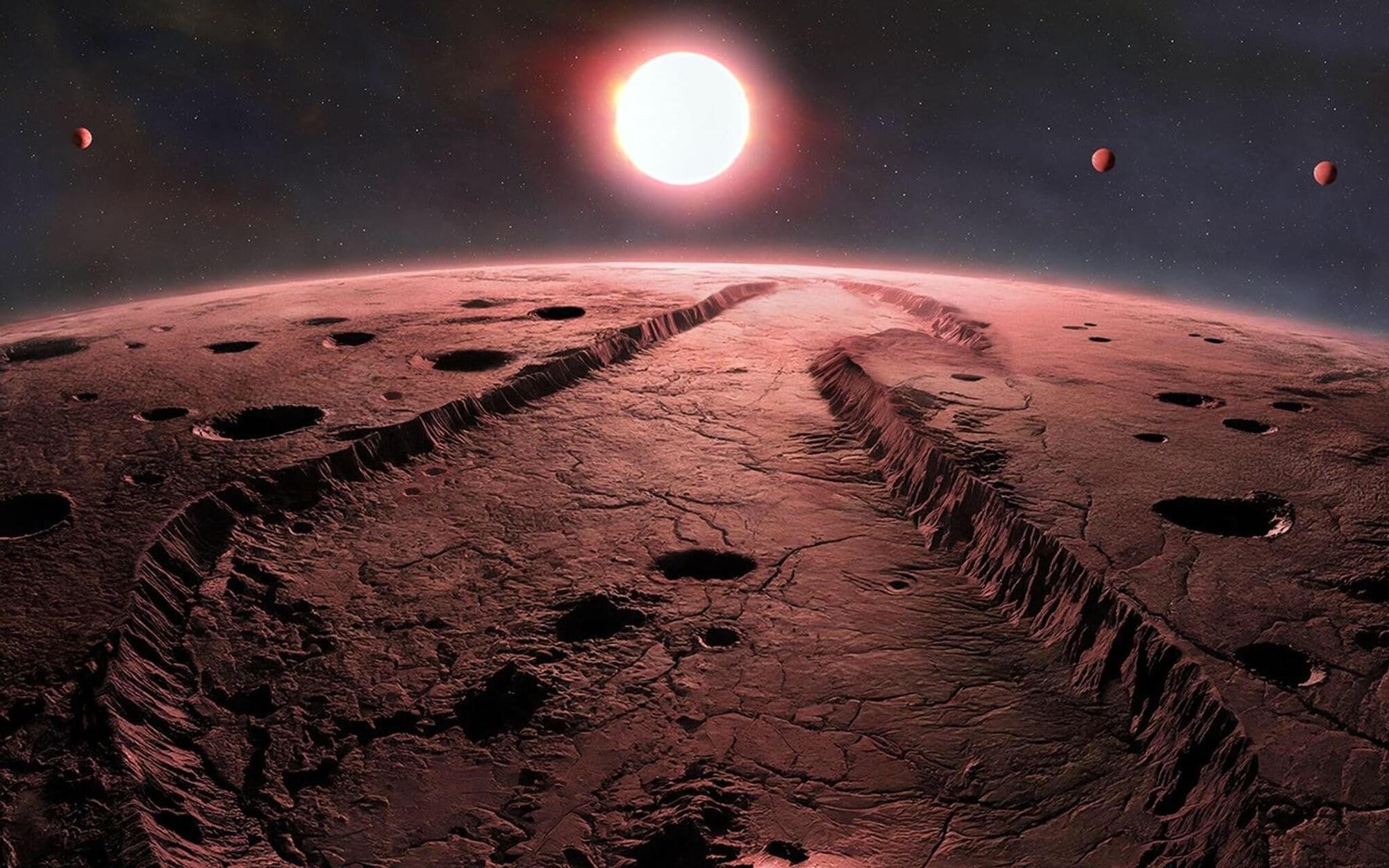
Researchers have confirmed that the four planets orbiting Barnard’s Star are inhospitable, mineral-rich, and entirely devoid of the conditions necessary to support life. This planetary system, which resides just under six light-years from Earth, has been the subject of study for decades due to its proximity. While the system was definitively identified in its current configuration in 2025, the latest scientific analysis depicts a neighborhood defined by extreme heat and volatile geological conditions rather than biological potential.
The system consists of four worlds that are smaller than Earth and Venus but larger than Mars—a class of planet not represented in our own solar system. According to the Institute of Astronomy at the University of Cambridge, these planets are likely rich in magnesium. While Earth’s magnesium typically forms olivines, which are capable of storing water, the high magnesium content within the Barnard’s Star system results in a surplus of periclase. This mineral is typically found hundreds of kilometers beneath the Earth's surface and is ineffective at storing water, further diminishing the prospects for a habitable environment.
Related media

Extreme conditions in our cosmic backyard
The planets occupy a tight, compact system, with the outermost world orbiting closer to its host star than Mercury does to the Sun. This proximity, combined with the planets' low gravity, suggests that any initial atmospheres have likely been stripped away by the star. Research published in the Monthly Notices of the Royal Astronomical Society indicates that these planets may have retained their atmospheres for at most two billion years, a fraction of the system’s 10-billion-year history.
Furthermore, the planets are tidally locked, meaning they present the same hemisphere to their host star at all times. This creates a permanent divide between a hemisphere of eternal daylight and one of constant night. Despite these challenges, the system maintains a degree of stability through orbital resonance, where the inner three planets exist in a 9:12:16 ratio—a mathematical harmony similar to that which stabilizes the moons of Jupiter and protects the system from gravitational disarray.
Advancements in detection
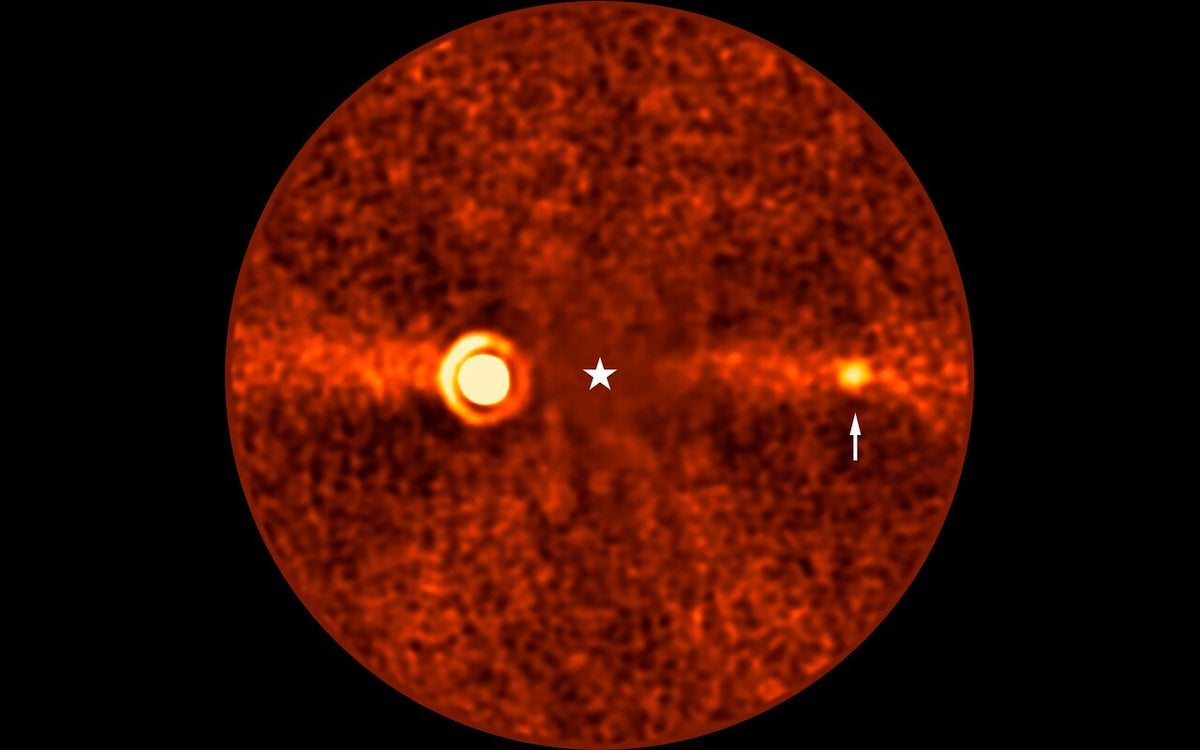
Scientists utilized radial velocity measurements, tracking the minute "wobbles" of Barnard’s Star as it responds to the gravitational influence of its orbiting companions. These signals were remarkably subtle, with shifts as slow as a human walking pace, often buried beneath the "noise" of stellar activity. Researchers successfully separated these signals by creating mathematical models of the star's natural quakes and jitters, allowing them to remove the background interference.
The discovery involved data from the MAROON-X instrument on the Gemini North telescope and the ESPRESSO spectrograph on the Very Large Telescope. The following table summarizes the confirmed planets:
| Planet | Mass (Relative to Earth) | Orbital Period |
|---|---|---|
| d | 26% | 2.34 days |
| b | 30% | 3.15 days |
| c | 33.5% | 4.12 days |
| e | 19% | 6.74 days |
What to watch next
While the four planets around Barnard’s Star have been ruled out as habitable, the detection techniques refined during this project are expected to influence future searches. Upcoming missions, such as the European Space Agency’s PLATO, will improve the ability to detect small, rocky worlds that were previously invisible to human instrumentation. As research progresses, the scientific focus remains on identifying planets further from their host stars, where temperatures might allow for the presence of liquid water. Scientists involved in the project emphasize that their analysis linking the compositions of the star and its planets could be a vital consideration in determining whether other exoplanets could support life.
Archypedia is dedicated to independent, evidence-backed reporting. This briefing was synthesized from primary source reporting, corroborated across independent newsrooms, and verified against our Editorial Standards.
Transparency record
Evidence behind this report
This report synthesizes 9 distinct sources. Open the source ledger below to compare the underlying coverage.
- ast.cam.ac.uk
- lifeboat.com
- myscience.org
- news.uchicago.edu
- scitechdaily.com
- space.com
- smithsonianmag.com
- scientificamerican.com
- nypost.com
Prepared under the Archypedia Editorial Policy by the Niko Vale editorial desk profile. AI-assisted tools may support drafting and verification; public accountability remains with Archypedia. Report an error.


