Beta Pictoris d discovered as the faintest exoplanet imaged from Earth
Researchers have confirmed the discovery of Beta Pictoris d, a gas giant 63 light-years away, while a separate study revealed four previously obscured stellar remnants.
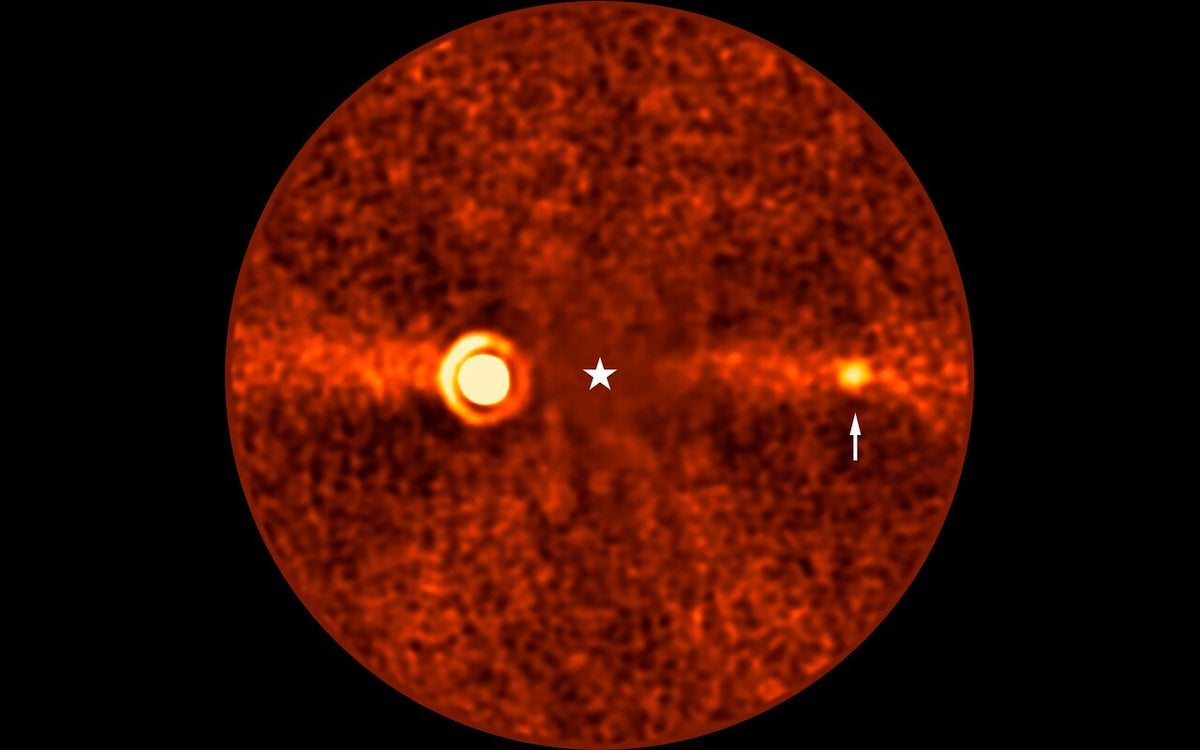
Astronomers have recently unveiled a series of discoveries that reshape our understanding of the local stellar neighborhood, confirming both the faintest exoplanet ever imaged from Earth and the existence of four previously hidden "dead" stars within 65 light-years of the sun.
Beta Pictoris d: The Faintest Exoplanet Imaged
Researchers have officially identified Beta Pictoris d, a gas giant orbiting a young star in the constellation Pictor. Located 63 light-years from Earth, the planet was discovered serendipitously. Ben Sutlieff of the University of Edinburgh originally utilized the European Southern Observatory’s Very Large Telescope (VLT) in Chile to study the atmosphere of a known companion, but instead noticed a faint, persistent speck in the mid-infrared data. Subsequent analysis using machine learning confirmed the object was not instrument noise but a legitimate orbiting body.
Related media

The planet, which is approximately 2.4 times the mass of Jupiter, exists in a system only 20 million years old. It maintains a wide orbit, completing a revolution around its host star every 91 years. The discovery was confirmed by two independent teams—one led by Sutlieff and Markus Bonse and another by Aidan Gibbs of the University of California San Diego—who both utilized archival data from the VLT and NASA’s James Webb Space Telescope.
The planet is currently considered the faintest ever imaged directly from a terrestrial telescope. While it is significant, experts view this as a preview of future capabilities. As John Monnier, a professor at the University of Michigan, noted, the discovery serves as an appetizer
for the launch of the Extremely Large Telescope in 2029, which is expected to identify a significantly higher volume of similar exoplanets.
Four Hidden White Dwarfs Found Locally
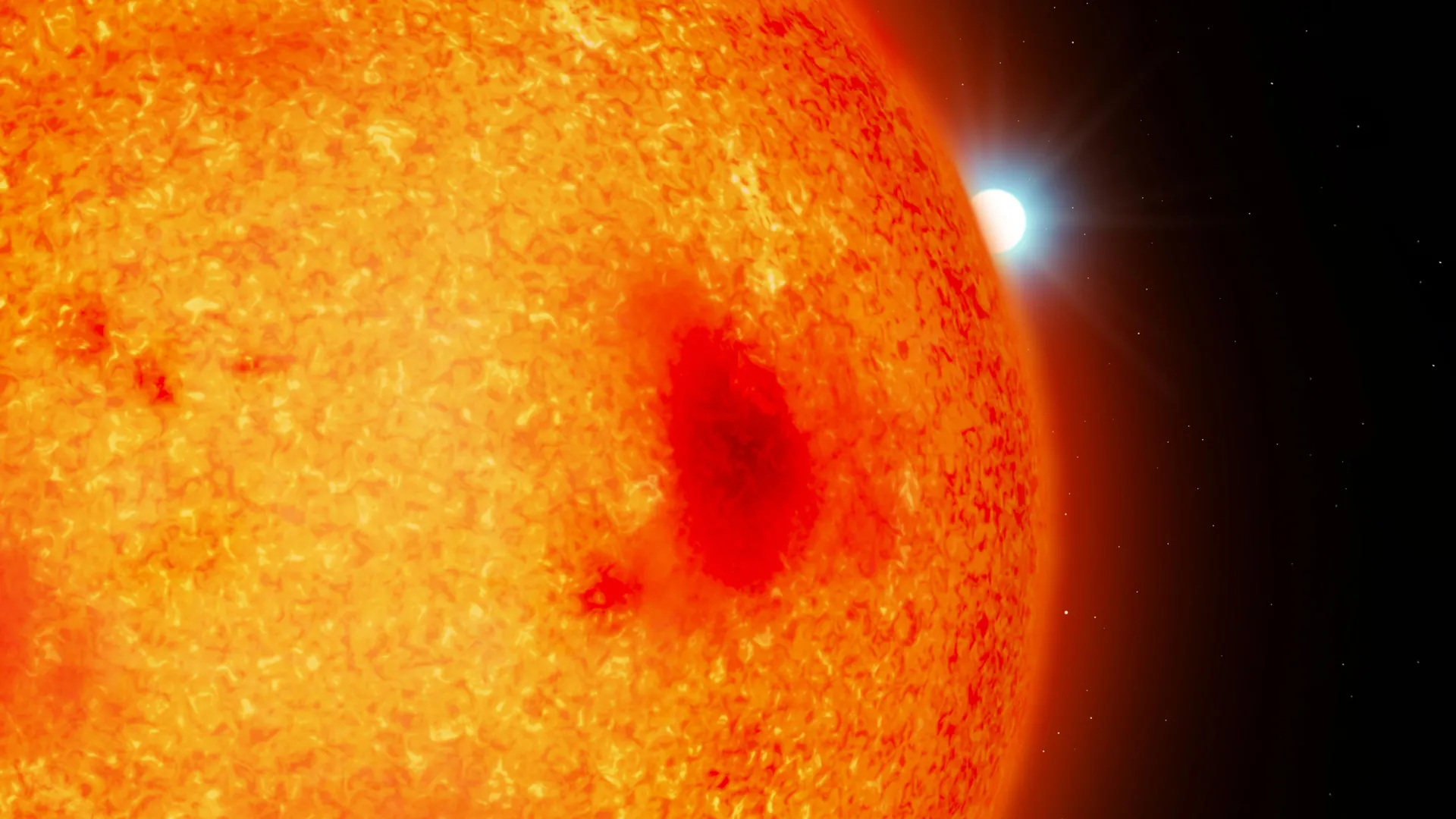
While one team looked toward new planetary formation, another group led by Mairi O’Brien of the University of Warwick and David Wilson of the University of Colorado Boulder has completed a long-standing census of stellar remnants in our immediate cosmic vicinity. Published in the Monthly Notices of the Royal Astronomical Society, the study confirmed four white dwarf stars that had been obscured for decades by the glare of brighter red dwarf companions.
These systems were initially flagged due to a substantial radial wobble,
a gravitational effect where the motion of the visible red dwarf betrayed the presence of an unseen, massive companion. Because these remnants were masked by visible light, the team employed ultraviolet spectroscopy via the Hubble Space Telescope to isolate the signature of the white dwarfs.
"Nearby isolated white dwarfs are usually easy to find, but we couldn’t see these four stars directly in visible wavelengths because their red dwarf companions were drowning out their light. It’s a reminder that even in our own cosmic neighborhood, we can still find surprises if we look in the right way, at the right wavelengths."
Mairi O'Brien, Research Fellow at the University of Warwick, via BBC
Among these systems, G 203-47 is particularly notable. Located 25 light-years away, it is now the ninth-closest known white dwarf to the sun. The system defies standard evolutionary models; while its stars orbit each other every 14.9 days, the red dwarf rotates once every 100 days or more. This lack of tidal synchronization suggests the system underwent a relatively gentle interaction during its formation, whereas other similar binaries experienced more violent, prolonged gravitational lock-in.
Future Developments in Local Observation
However, astronomers suggest the search is incomplete, as only about 30 percent of nearby red dwarfs have been surveyed for such companions. Researchers are now looking toward the upcoming Gaia satellite data release, expected at the end of 2026, to identify candidates for follow-up study with Hubble.
| Object | Discovery Context | Key Characteristic |
|---|---|---|
| Beta Pictoris d | Accidental imaging | Faintest planet directly imaged from Earth |
| G 203-47 | Radial wobble follow-up | 9th closest white dwarf to the Sun |
What to watch next:
- The release of new data from the Gaia mission, scheduled for late 2026, which is expected to reveal more red dwarfs showing radial wobbles.
- Potential follow-up observations of candidate binaries using ultraviolet sensors to confirm the presence of additional hidden white dwarfs.
- Continued monitoring of the Beta Pictoris system as researchers aim to refine the atmospheric profile of the newly identified gas giant.
Archypedia is dedicated to independent, evidence-backed reporting. This briefing was synthesized from primary source reporting, corroborated across independent newsrooms, and verified against our Editorial Standards.
Transparency record
Evidence behind this report
This report synthesizes 11 distinct sources. Open the source ledger below to compare the underlying coverage.
- bbc.com
- scientificamerican.com
- apnews.com
- courthousenews.com
- sciencedaily.com
- knowridge.com
- yahoo.com
- earth.com
- lifeboat.com
- newsbytesapp.com
- miragenews.com
Prepared under the Archypedia Editorial Policy by the Niko Vale editorial desk profile. AI-assisted tools may support drafting and verification; public accountability remains with Archypedia. Report an error.