Astronomers detect first atmosphere on rocky exoplanet LHS 1140b
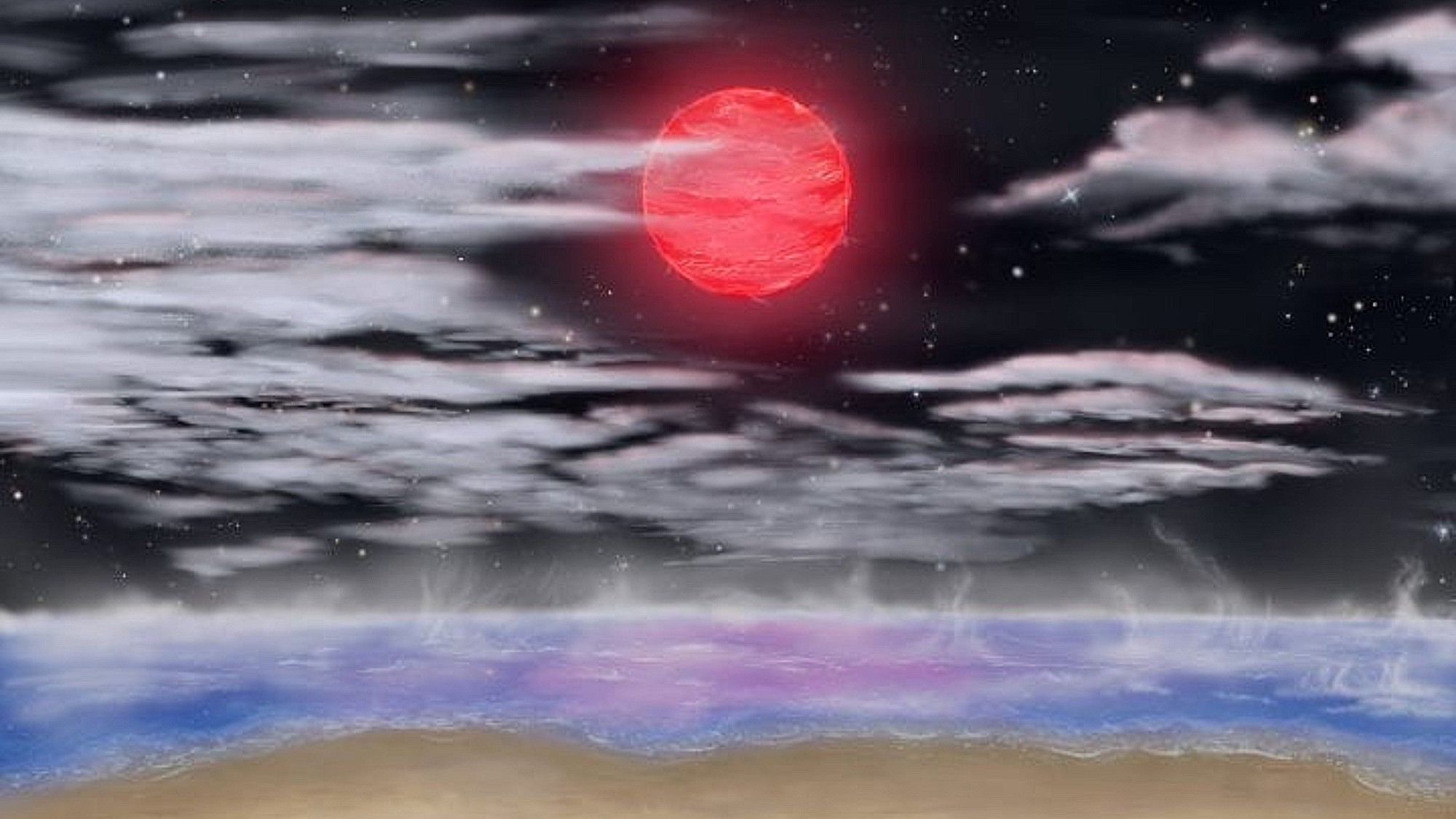
Researchers led by Collin Cherubim identified a helium-rich atmosphere on the rocky exoplanet LHS 1140b, marking a milestone in the study of terrestrial worlds.

Astronomers have detected the first atmosphere surrounding a rocky exoplanet located within the habitable zone of its host star. The discovery, published July 16, 2026, in the journal Science, provides what researchers call the strongest evidence to date that worlds with conditions similar to Earth exist beyond our solar system.
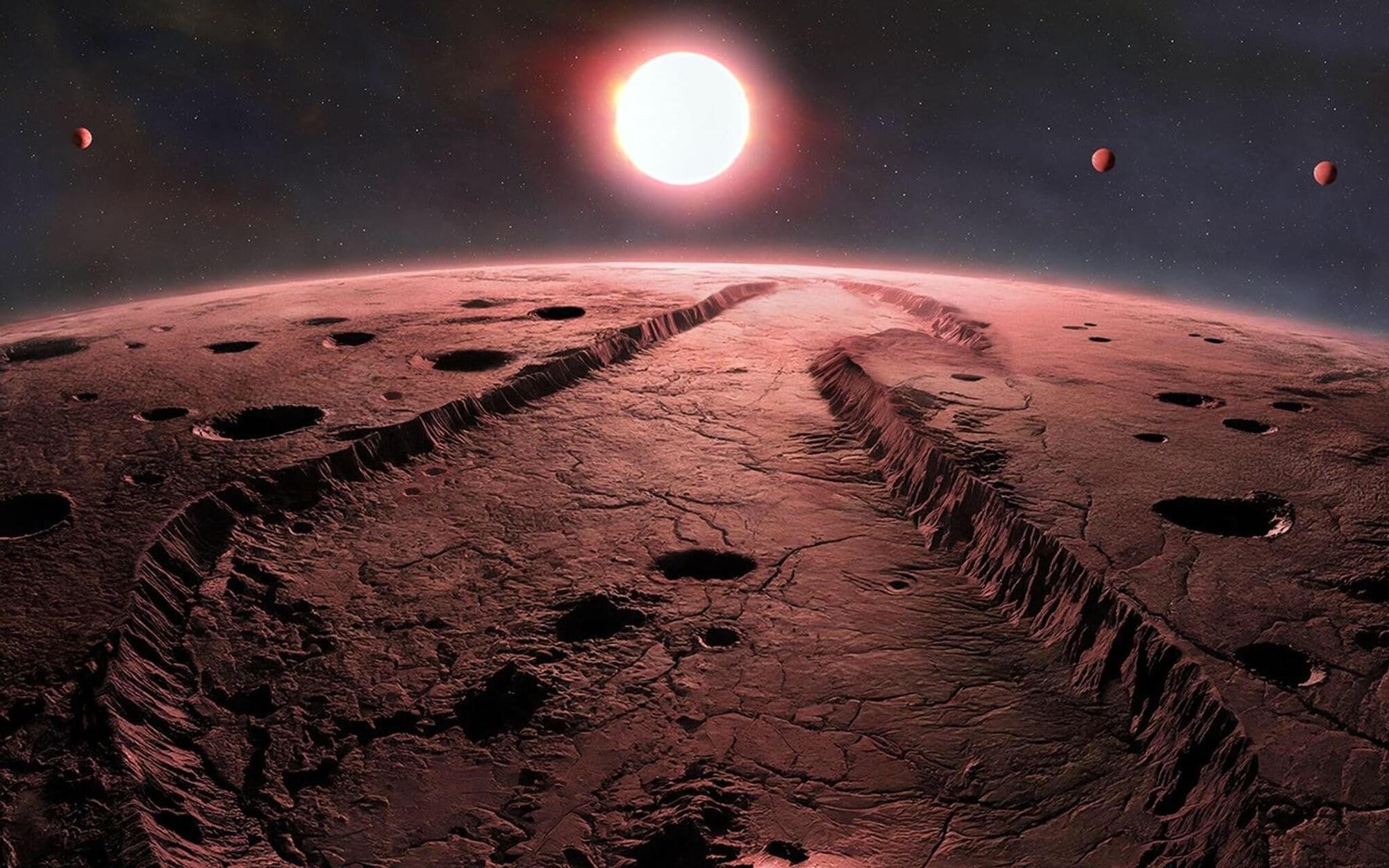
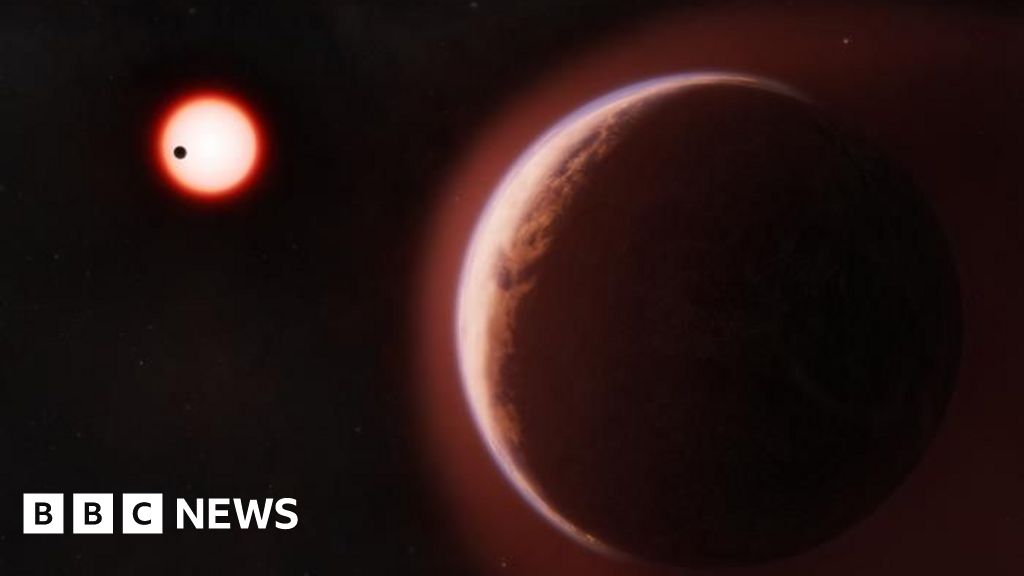
The planet, known as LHS 1140b, is located approximately 48 to 49 light-years from Earth in the constellation Cetus. While thousands of exoplanets have been discovered, most rocky worlds orbiting M-class red dwarfs are stripped of their atmospheres early in their life cycles by high-energy radiation and solar winds. Until this finding, Earth was the only rocky planet observed with an intact atmosphere. This discovery marks a transition in the field; as Robin Wordsworth, a professor of Earth and planetary sciences at Harvard, noted, scientists have moved from wondering if terrestrial planets existed to confirming that at least one has managed to retain an atmosphere.
Related media

The "Helium World" Discovery
The identification of the atmosphere resulted from a computer model developed by lead author Collin Cherubim, a PhD graduate from Harvard University. The model simulated the evolution of exoplanet atmospheres over billions of years, predicting a class of "helium worlds"—rocky planets that lose their hydrogen but retain helium. To test this, Cherubim and his team used the WINERED spectrograph on the Magellan Clay telescope at Las Campanas Observatory in Chile.
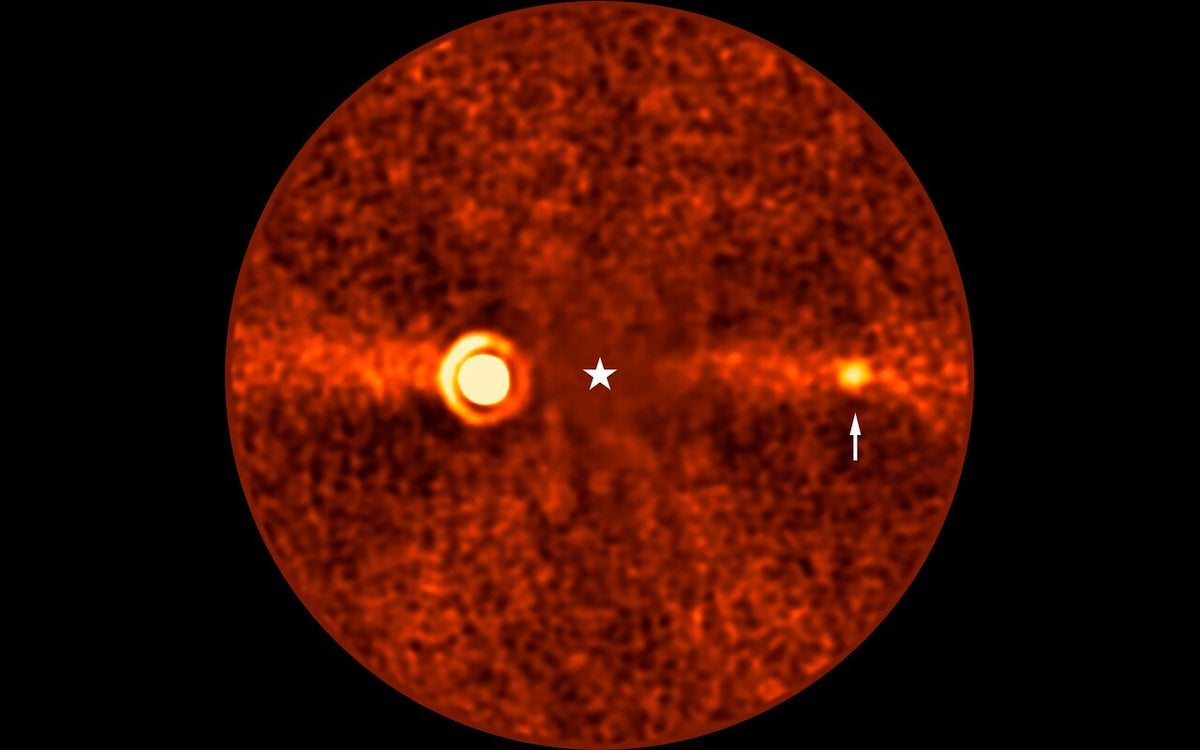
During a transit in September 2024, where the planet passed in front of its star, researchers detected helium escaping from the planet into space at a rate of hundreds of thousands of kilograms per second. This outflow, heated to more than 4,700 degrees Celsius, served as a marker for a denser atmospheric structure beneath. However, the detection was not constant. Observations in 2025 failed to detect the helium, a result Cherubim described as a shock that prompted a rigorous re-analysis to rule out false positives, including contamination from Earth's own atmosphere.
The team also observed a sibling planet, LHS 1140c, orbiting the same star, but found no evidence of an atmosphere there.
Habitability and Constraints
LHS 1140b sits in the "Goldilocks zone," meaning its distance from the red dwarf star allows for temperatures that could support liquid water. According to Cherubim, the planet possesses three key requirements for life: a rocky composition, a temperature supporting liquid water, and an atmosphere to stabilize surface temperatures and shield the surface from radiation.
Despite these promising factors, the planet differs significantly from Earth:
- Composition: It is a "super-Earth" with a mass 5.6 times that of Earth and a radius approximately 70% larger.
- Gravity: Due to its size, gravity on LHS 1140b is nearly twice as strong as on Earth.
- Rotation: The planet is tidally locked, meaning one side faces the star in permanent daytime while the other remains in permanent night.
- Atmospheric Chemistry: The identified upper atmosphere is almost entirely helium, which cannot support life as known on Earth.
Cherubim's models suggest the lower atmosphere may contain gases more conducive to life, such as carbon dioxide, water, and small amounts of molecular oxygen. He noted that climate models predict a significant amount of water on the planet, though it remains unknown if the surface is rocky or entirely covered by an ocean.
Scientific Perspectives and Divergence
While the discovery is hailed as a milestone, some experts maintain a cautious outlook regarding its implications for alien life. Dr. Yamila Miguel of Leiden Observatory noted that the observations pertain to gas escaping from the upper atmosphere rather than the regions close to the surface where life would evolve. Consequently, Miguel stated she does not believe these results have direct implications for detecting life.
Other researchers, such as Professor Jayne Birkby of the University of Oxford, view the variable helium signal as a way to understand how exoplanet atmospheres react to the extreme ultraviolet radiation of red dwarfs.
The star itself is described as a "quiet" red dwarf.
Comparative Context: Other Potential Worlds
| Planet/System | Key Feature | Current Status/Challenge |
|---|---|---|
| LHS 1140b | Confirmed helium atmosphere in habitable zone | Tidally locked; upper atmosphere is non-life-sustaining helium |
| K2-18b | Sub-Neptune with possible water-rich interior | 2025 NASA reanalysis found dimethyl sulfide signals too weak to confirm |
| TRAPPIST-1 | Seven Earth-sized rocky planets | JWST ruled out atmosphere on TRAPPIST-1d; TRAPPIST-1e remains inconclusive |
| Mars | Neighboring rocky planet | Remains the top candidate due to identified biosignatures in soil |
What to watch next: Researchers intend to use Cherubim's mathematical models to locate similar "helium worlds." Future observations will focus on characterizing the lower atmosphere of LHS 1140b to determine if it hosts oceans or other life-friendly features.
Archypedia is dedicated to independent, evidence-backed reporting. This briefing was synthesized from primary source reporting, corroborated across independent newsrooms, and verified against our Editorial Standards.
Transparency record
Evidence behind this report
This report synthesizes 11 distinct sources. Open the source ledger below to compare the underlying coverage.
- bbc.com
- cnet.com
- yahoo.com
- usatoday.com
- gizmodo.com
- theguardian.com
- sciencealert.com
- time.com
- iz.ru
- nature.com
- mashable.com
Prepared under the Archypedia Editorial Policy by the Niko Vale editorial desk profile. AI-assisted tools may support drafting and verification; public accountability remains with Archypedia. Report an error.