Antarctica fossil found in museum drawer confirmed as first dinosaur bone
A long-overlooked fossil collected in 1985 has been identified as a titanosaur vertebra, marking the first confirmed dinosaur find on the continent.
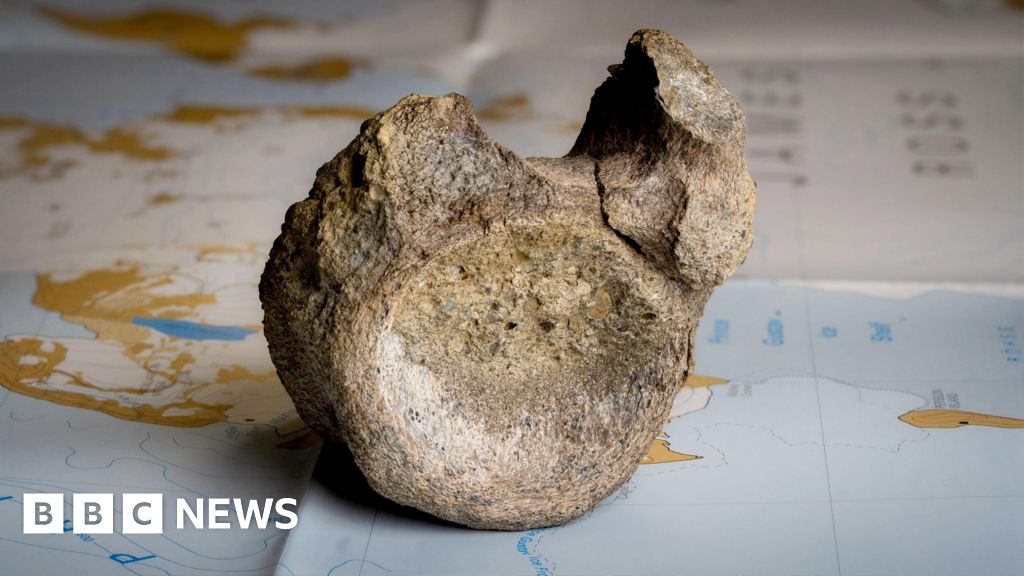
A specimen long relegated to storage has officially rewritten the history of paleontological discovery in the southernmost reaches of the planet. A fossilized bone, which remained unidentified in a drawer at the British Antarctic Survey (BAS) in Cambridge for four decades, has been confirmed as the first dinosaur bone ever unearthed in Antarctica. The discovery, detailed in the journal Acta Palaeontologica Polonica, confirms that the titanosaurs — a group known for including some of the largest creatures to ever traverse the Earth — once inhabited the now-frigid continent.
The fossil was originally collected on 9 December 1985 by geologist Dr. Mike Thomson during an expedition to James Ross Island. At the time, the geological team was focused on mapping rock layers and identifying marine reptiles to assist with chronological dating. Dr. Thomson, described as a meticulous record-keeper, noted the discovery in his field diary, sketching the object and labelling it as a vertebra of large reptile
measuring approximately 10 centimetres wide. Following the expedition, the specimen was placed into the BAS geology collection, where it remained in relative obscurity for nearly 40 years.
Related YouTube video
The re-examination of the collection by Dr. Mark Evans, the current collections manager at the BAS, led to the breakthrough. After encountering the bone while reviewing thousands of specimens, Dr. Evans suspected its true origin.
"It's only when you start thinking 'what's in this drawer', that sometimes you come across something and you think, 'Ah, this looks interesting'"
To verify his suspicions, Dr. Evans collaborated with Professor Paul Barrett of the Natural History Museum (NHM) in London. Upon physical inspection, the distinct anatomy of the bone, specifically the hollow and rounded ball-and-socket joints characteristic of titanosaur vertebrae, confirmed the identification. According to BBC reporting, this structural signature is unique to the group. Dr. Thomson, who passed away in 2020, did not live to see his field find reclassified as a major dinosaur discovery.
Fossil Significance and Biodiversity
While the broader titanosaur family includes giants measuring over 35 metres in length and weighing upwards of 60 tonnes, the Antarctic specimen is considerably smaller. Researchers estimate the animal reached a length of approximately 6 to 7 metres. Experts suggest the individual was either a juvenile or a smaller species, potentially representing a unique variant of the group.
The bone was found in a marine rock layer dated to the Late Cretaceous, approximately 82 million years ago. During this epoch, Antarctica served as a vital part of the supercontinent Gondwana. Rather than the icy desert observed today, the continent was defined by temperate, lush forests that provided abundant resources for large herbivores. As noted by Yahoo News, this environment facilitated the movement of dinosaurs across the southern hemisphere, linking populations between South America, Australia, and Antarctica.
Challenges in Antarctic Paleontology
The scarcity of dinosaur records on the continent is primarily due to the extensive ice cover that obscures the majority of the rock strata. According to Abc, only about a dozen dinosaur fossils have been identified in the region to date. Finding terrestrial fossils requires a confluence of rare events: an animal dying near a river or coastline, its carcass being deposited into a marine setting, and the eventual exposure of the fossilized remains through the gradual retreat of ice.
The Dailymail reports that researchers believe many more specimens remain waiting to be found. As global temperatures continue to influence the rate of ice retreat, scientists anticipate that new exposed rock faces may yield further evidence of prehistoric biodiversity in the polar region.
What Happens Next
The identification of this bone underscores the scientific necessity of maintaining comprehensive museum collections. As new analytical technologies emerge, researchers are increasingly able to re-evaluate items that were previously misidentified or overlooked during initial field collections.
- Ongoing Research: Paleontologists will continue to compare this titanosaur vertebra with other sauropod remains to determine if the specimen represents a previously unknown species or a juvenile of a known type.
- Field Expeditions: Future survey efforts on the Antarctic Peninsula and adjacent islands will likely prioritize rock layers similar to the Santa Marta Formation where this bone was recovered.
- Climate Impact: Scientists will monitor how the ongoing retreat of ice in the Antarctic region facilitates access to previously buried prehistoric sites, potentially expanding the record of southern hemisphere dinosaur distribution.
How significant is this development?
Contribute your assessment to the aggregated reader intelligence ledger.
Archypedia is dedicated to independent, evidence-backed reporting. This briefing was synthesized from primary source reporting, corroborated across independent newsrooms, and verified against our Editorial Standards.
Transparency record
Evidence behind this report
This report synthesizes 12 distinct sources. Open the source ledger below to compare the underlying coverage.
- apnews.com
- bbc.com
- cbsnews.com
- abc.net.au
- yahoo.com
- dailymail.com
- aol.com
- nypost.com
- newsday.com
- abcnews.com
- gizmodo.com
- huffpost.com
Prepared under the Archypedia Editorial Policy by the Niko Vale editorial desk profile. AI-assisted tools may support drafting and verification; public accountability remains with Archypedia. Report an error.
